‘Putin Is Desperate’ as ‘Ukraine Changes Battlefield Dynamics,’ Rutte Says at Ankara NATO Summit
AI Analysis
NATO Secretary General Rutte emphasized the need for accelerated air defense support to Ukraine, citing Ukraine’s changing battlefield dynamics and Russia’s continued attacks. He highlighted Western production bottlenecks for interceptors and acknowledged Ukraine’s ability to strike Russian economic and military targets. Rutte also warned of the role of Belarus and the support Russia receives from countries like China, North Korea, and Iran.
Key Takeaways
- Ukraine is successfully contesting the battlefield, preventing Russian advances and impacting Russia’s economy through strikes on defense industrial capacity.
- NATO is focused on increasing air defense aid to Ukraine, particularly interceptors, but faces production limitations.
- The US is actively fulfilling its PURL commitments, but long-term solutions require increased production capacity.
- Russia is demonstrating desperation through continued attacks on Ukraine and willingness to accept high casualties.
- Belarus remains heavily influenced by Russia and poses a potential threat as a staging ground for future attacks.
Why It Matters
The increased focus on air defense highlights the critical need to protect Ukrainian infrastructure and personnel. Production bottlenecks in interceptor supplies represent a significant vulnerability for Ukraine and NATO, necessitating rapid expansion of defense industrial capacity. The acknowledgement of external support to Russia underscores the broader geopolitical implications of the conflict.
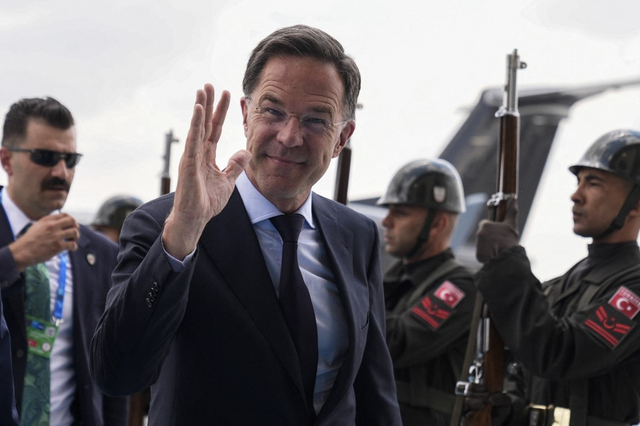
NATO Secretary General Mark Rutte set the tone for the Ankara summit, which kicks off as leaders arrive today, Tuesday, with a stark warning: Russia cannot win through terror, Ukraine is holding the line, and NATO must accelerate the weapons and air defenses Kyiv needs to withstand Moscow’s assault.
Speaking at a press conference in Ankara, the capital of Turkey, the alliance chief tied Ukraine’s sovereignty to Western security and urged member states to accelerate the flow of military aid – especially air defense – after another deadly overnight wave of Russian missile and drone strikes across Ukraine.
Follow our coverage of the war on the @Kyivpost_official.
“Ukraine is changing the dynamics on the battlefield, thanks to the bravery, the dedication, and ingenuity of their armed forces,” Rutte told reporters.
But he stressed that heroism alone cannot stop Moscow’s air campaign.
“They need our continuous support, especially when it comes to air defense. Russia continues drone and missile attacks on Ukrainian cities, with another horrific attack just last night,” he said.
Western backing for Kyiv, Rutte made clear, cannot be treated as optional or left to only a handful of proactive member states.
“All allies need to pull their weight so that our support to Ukraine continues to flow,” he stated. “Ukraine’s security is so closely linked with our own.”
The secretary general described NATO’s continued backing as a direct message to the Kremlin.
“We will continue our robust support for Ukraine, reminding President Putin that we are firm in our commitment,” he said.
Asked by a Ukrainian journalist whether Russia’s latest overnight strikes were meant to intimidate NATO leaders on the eve of the summit, Rutte argued that the attack showed Kremlin weakness rather than strength.
“I think the message last night again was of how desperate Putin is,” he said.
Ukraine’s recent battlefield performance, in his view, has prevented Russia from achieving the gains Moscow claimed only a few months ago.
“You guys, the Ukrainians, are doing well on the battlefield,” Rutte told the Ukrainian reporter. “You are able on the front line to prevent the Russians from making big advances. It is now more or less a stalemate.”
Rutte condemned the latest strikes as an “indiscriminate attack on innocent civilians” and infrastructure in Ukrainian cities.
But such terror tactics, he stressed, will not bring Moscow victory.
“This is not the way Russia can ever win this war,” the NATO chief stated.
He also expressed condolences to those affected by the strikes, including residents of Kyiv and other targeted cities.
“My thoughts and prayers are with them and the people in Kyiv and other cities who had to go through this,” he said.
Beyond the front line, Rutte highlighted Ukraine’s growing ability to strike deep into Russia’s economy and military-industrial base.
Kyiv, he noted, is “hitting the Russian economy” and targeting “crucial defense industrial capacity of Russia.”
The secretary general also pointed to the staggering human cost Putin is willing to impose on his own country, saying the Kremlin is prepared to absorb massive losses among Russian troops.
“Putin is willing to accept that up to 35,000 of his own primarily men in uniform are getting killed on the battlefield,” Rutte said, calling it “terrible news for the families.”
He later issued a blunt warning to Russians considering joining the war.
“If you’re a young guy living in Russia and you contemplate joining the war effort, well, think again,” he said. “Because probably you will be one of the 35,000 this month, next month, the month after.”
Asked whether Ukraine’s shortage of interceptors showed problems with the US-led PURL program, Rutte defended the mechanism and praised Washington for keeping supplies moving.
“When it comes to PURL and the US, I can assure you that the US is doing everything they can to deliver on the PURL commitment,” he said.
According to the NATO chief, deliveries are already reaching the battlefield.
“Even as we speak, PURL deliveries, including interceptors, are being sent to Ukraine and being used by Ukraine,” he said.
At the same time, he acknowledged the limits of Western stockpiles.
“From a practical perspective, there is a limit to the amount of interceptors there are in NATO territory, and that’s why we need to make sure that we produce more,” he said.
Ukraine, he added, is working with NATO allies and partners to expand production, including on interceptors, though such efforts will not deliver immediate results.
Pressed on possible co-production of missiles for US-made Patriot air defense systems, Rutte described such initiatives as bilateral matters between individual allies and partners.
“My sense is that these discussions are ongoing, so nothing new to report here,” he said.
More broadly, he welcomed efforts by allies and partners to work together “in a trustworthy way” to ramp up weapons production.
Defense industrial output, the secretary general added, remains a bottleneck on both sides of the Atlantic.
“We know that also the US has a problem with the defense industrial output,” Rutte said, noting that US President Donald Trump has been pressing American defense companies to produce more.
“If this can help, maybe it could, but in the end, these are bilateral decisions,” he added.
On the diplomatic front, Rutte drew a sharp contrast between Kyiv and Moscow, praising Washington for reopening channels to the Kremlin while placing responsibility for the deadlock on Putin.
“Obviously you need two to tango,” he said. “Volodymyr Zelensky, the president of Ukraine, is willing to sit down with Putin in whatever format to solve this terrible war. And obviously, so far, Putin has declined to sit down.”
The NATO chief thanked the US for helping “break the deadlock” with Moscow, but offered no prediction on what might finally force Putin to the negotiating table.
“It’s difficult to look into this guy’s mind and head,” he said.
What is clear, in his view, is that pressure on Moscow is growing: Russia’s economy is under strain, Ukraine is striking deep inside Russia, and the battlefield situation is no longer moving in the Kremlin’s favor.
Asked about Ukraine’s concerns that Belarus is building or upgrading military infrastructure that Russia could again use to attack from the north, Rutte declined to discuss classified intelligence.
But he warned against ignoring Minsk’s role.
“Let’s not be naive about the role Belarus is playing,” he said.
Belarus, according to the NATO chief, remains heavily influenced by Moscow.
“What happens in Minsk is very much inspired, to use that word, by Putin,” he added.
The NATO chief closed with a warning that Moscow’s war is being sustained by a wider authoritarian network.
“We see it also with the war in Ukraine, where China, North Korea, and Iran are key enablers of Russia’s unprovoked war of aggression against Ukraine,” he said.
Sevinj Osmanqizi is a journalist covering US foreign policy, security, and geopolitics, with a focus on the broader post-Soviet space. She reports on Washington’s decision-making and its implications for Ukraine and regional stability.