‘Russia Must Get Out’: Zelensky Sends Message to Putin’s ‘Friends’ Ahead of Crucial NATO Summit
AI Analysis
Ukraine is prioritizing air defense and EU accession ahead of upcoming NATO and EU meetings, seeking both immediate aid and long-term security commitments. The NATO summit in Ankara is expected to yield tens of billions in new defense contracts, with a focus on turning increased spending into tangible military production. Zelensky is pushing for a joint European project to manufacture anti-ballistic systems and emphasizes the need for continued international support.
Key Takeaways
- Ukraine's primary diplomatic focus is securing enhanced air defense capabilities, including anti-ballistic missile systems and interceptors.
- The Ukraine Recovery Conference in Gdańsk resulted in €10 billion in agreements focused on energy infrastructure, reconstruction, and regional resilience.
- NATO Secretary General Rutte announced tens of billions of dollars in new defense contracts will be unveiled at the Ankara summit.
- Zelensky is advocating for a joint European project to manufacture anti-ballistic missile systems, indicating a desire for independent defense industrial capacity.
- Ukraine is actively pursuing EU membership, focusing on progress during the Cypriot and Irish EU presidencies.
Why It Matters
Ukraine’s continued reliance on external aid, particularly in air defense, highlights its vulnerability and the importance of sustained Western support. The push for a European anti-ballistic missile project signals a long-term strategic shift towards greater self-reliance and a desire to reduce dependence on single suppliers. The success of the Ankara summit in translating financial commitments into actual military production will be a key indicator of NATO’s ability to effectively counter Russian aggression.
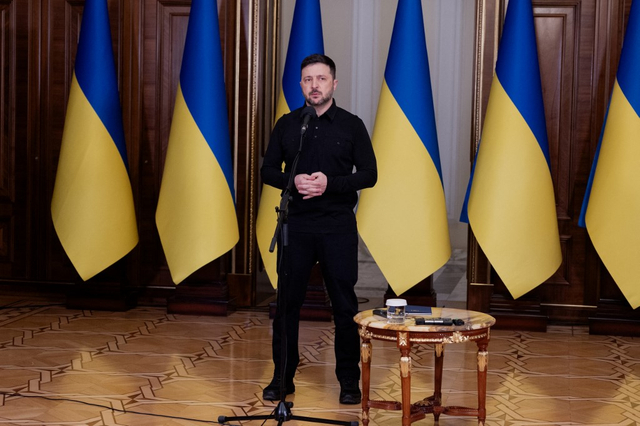
President Volodymyr Zelensky outlined Ukraine’s core diplomatic priorities ahead of the upcoming NATO summit in Ankara, placing air defense, energy resilience, European integration and sustained pressure on Russia at the center of Kyiv’s agenda.
In his evening address, the president announced that Prime Minister Yulia Svyrydenko had returned to Kyiv following the Ukraine Recovery Conference in Gdańsk, where the Ukrainian delegation secured 160 agreements worth more than €10 billion ($11.4 billion).
Follow our coverage of the war on the @Kyivpost_official.
The new agreements primarily target energy infrastructure, reconstruction and the resilience of Ukraine’s regions and communities, according to Zelensky.
“This is fundamental,” the president stressed, adding that Ukraine must use the summer months to implement as many of these projects as possible.
The Gdańsk agreements are expected to support broader national efforts to strengthen local communities and restore critical infrastructure ahead of the winter.
June and July will be pivotal months for high-level meetings and communication with Kyiv’s international partners, Zelensky noted.
“Everything must produce results,” he stressed.
The president highlighted Cyprus’s current presidency of the European Union and Ireland’s upcoming tenure as important windows for Ukraine’s EU accession path. Kyiv is specifically pushing for tangible progress on EU membership negotiation clusters.
Ukraine is also preparing its strategy for the NATO summit in Ankara, where Kyiv expects to hold multiple bilateral formats aimed at strengthening the country’s air defense.
“This is our first priority,” Zelensky emphasized.
Ukraine’s immediate battlefield needs include advanced anti-ballistic missile defense, interceptors and air defense systems. To address long-term security needs, the president called for a joint European project to manufacture anti-ballistic systems, urging partners to deliver concrete results.
“I am grateful to the leaders and countries that are already working with us on anti-ballistic defense. This work continues,” he noted.
NATO Secretary General Mark Rutte announced Thursday that allies will unveil tens of billions of dollars in new defense-related contracts at the Ankara summit. Speaking at the Atlantic Council, the NATO chief outlined the July 7-8 summit in Turkey as a test of whether allies can turn higher defense spending into real military production, while keeping long-term backing for Kyiv on the agenda.
“Tens of billions” of dollars in new defense-related contracts will be announced at the summit, Rutte stated.
Ukraine has presented proposals to its key partners, while “Putin’s friends” have also heard from Kyiv that a meeting is possible and that ending the war is possible, Zelensky stated.
Moscow must now take a step toward peace, the president emphasized.
He thanked everyone working with Ukraine to push Russia toward diplomacy, as well as those helping defend the country and protect human life.
“Ukrainian warriors prove the strength of Ukrainian precision every day. Ukraine’s long-range sanctions and medium-range sanctions are being fully implemented. These are our fair responses to Russia for this war — the war that Russia started and that Russia must end.
“Russia must take this war out of Ukraine. We do not need war,” the president concluded.
Sevinj Osmanqizi is a journalist covering US foreign policy, security, and geopolitics, with a focus on the broader post-Soviet space. She reports on Washington’s decision-making and its implications for Ukraine and regional stability.