All Articles
Latest articles and analysis on counter-UAS technology and drone warfare

Zelensky Warns Trump of Critical Air Defense Shortage
Ukraine is facing a critical shortage of air defense systems, particularly Patriot missiles, and has urgently appealed to the US for additional support. This request comes amid intensified Russian missile and drone attacks targeting Kyiv and Ukrainian infrastructure. Zelensky highlights a global deficit in anti-ballistic systems, exacerbated by the conflict involving Iran.

Cuba’s Soviet Missiles Once Shot Down a U.S. U-2 Spy Plane in 1962 — Today They Couldn’t Stop a Single F-35 Stealth Fighter
The article assesses Cuba's current air defense capabilities as severely limited due to aging Soviet-era equipment, inadequate training, and a lack of capacity to withstand attrition. The presence of the USS Nimitz in the Caribbean raises the possibility of military action against Cuba, but the Cuban air defense network is unlikely to pose a significant threat. A single F-35 fighter jet could easily overcome Cuba's defenses.

Distributed Combat Power: How Ukraine is Redefining Fires, Electronic Warfare, and Air Defense at the Tactical Level - League of Ukrainian Canadians
The war in Ukraine demonstrates a shift towards decentralized combat power, with Ukrainian forces effectively employing low-cost, adaptable systems for EW, cUAS, and fires at the battalion, platoon, and squad levels. A small Ukrainian drone team recently neutralized two NATO battalions (including US forces) during the Hedgehog 2025 exercise, highlighting the effectiveness of this approach. This contrasts with the traditionally centralized model of the U.S. Army.
Deep Signal: Australia commits A$7B to counter-drone defense, awards laser and interceptor contracts | robotics.press
Australia has committed A$7 billion (US$4.5B) to a national Counter-UAS program (LAND 156), awarding SYPAQ Systems a A$10.4 million contract for the Corvo Strike interceptor drone and additional, undisclosed contracts for directed-energy laser systems. The program adopts a multi-layered defense approach – kinetic interceptors, lasers, and electronic warfare – mirroring NATO doctrine and lessons from Ukraine.
Ukrainian operators say their FPV hit Russian truck at record 102 km
Ukrainian drone operators claim a record 102km strike on a Russian vehicle using an FPV quadcopter, indicating a significant expansion of drone strike ranges. This capability is attributed to advancements in battery technology (specifically semi-solid-state batteries offering 400-500 Wh/kg) and improved communication/navigation systems. The conflict in Ukraine is increasingly characterized by a 'longest stick' competition, with both sides striving to extend their operational reach.

Russian Drone Strike Injures 11 in Odesa Region
A Russian drone strike on the Odesa region of Ukraine injured 11 civilians, targeting civilian infrastructure including residential buildings and commercial facilities. Ukraine's air defenses intercepted 150 of 163 drones launched overnight, utilizing both kinetic and electronic warfare methods. Simultaneous attacks also occurred in Chernihiv, indicating a widespread drone campaign.
Israel defense ecosystem meets to accelerate fieldable counter‑drone tech | The Jerusalem Post
Israel's defense ecosystem rapidly mobilized to address the urgent threat posed by Hezbollah's use of low-cost fiber-optic and FPV drones, which are proving difficult to counter with traditional electronic warfare methods. The 'Operation Northern Shield' seminar brought together military operators, defense contractors, and startups to accelerate the deployment of fieldable counter-drone solutions. This initiative represents a shift towards faster procurement and real-time battle-testing of technologies.
Turning Baltic Drone Vulnerability Into a NATO Strength - CEPA
Recent incidents in the Baltic states – including airspace intrusions by suspected Ukrainian drones rerouted by Russian EW and drone alerts disrupting civilian infrastructure – highlight NATO's vulnerability to low-cost drone threats. Current responses, like scrambling fighter jets, are deemed inefficient and costly. The article suggests the Baltic states should lead NATO in developing effective counter-drone defenses, building on their past experience with cyber warfare.
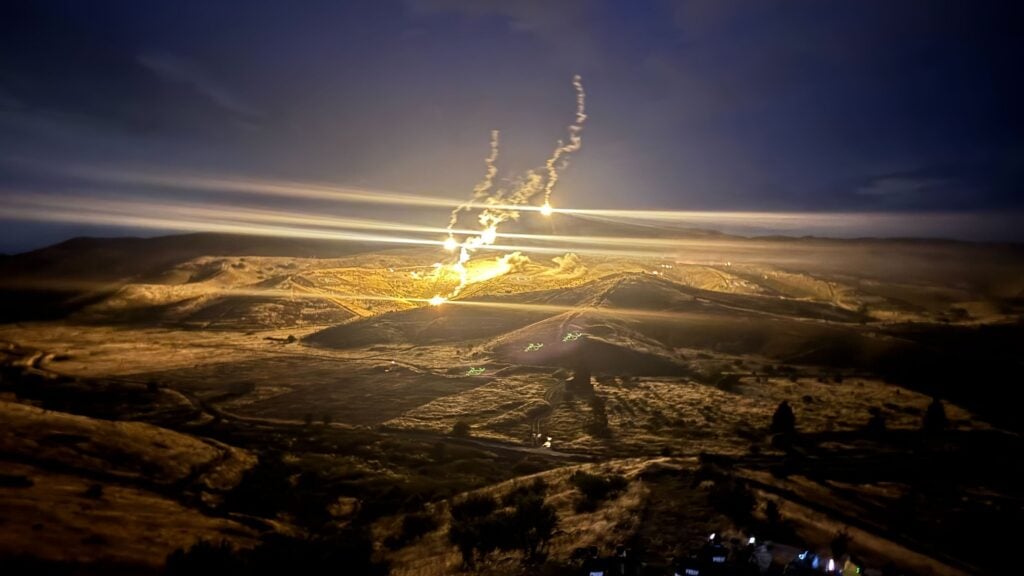
The sights of Turkey’s Efes military drill
Turkey conducted a large-scale combined forces drill, Efes 2026, integrating ships, drones, air defense systems, and helicopters. The drill demonstrated a focus on combined arms operations and likely served as a display of Turkish military capabilities. Details regarding specific counter-UAS technologies employed were not provided in the source.
UK sets legal roadmap for drones and pilotless aircraft
The UK Law Commission has published a report recommending legal reforms to accommodate the increasing use of drones and pilotless aircraft, including eVTOLs. The report focuses on differentiating between remotely piloted and fully autonomous systems, and addresses legal gaps in areas like hijacking and traffic management (UTM). Key recommendations include mandatory flight data recorders and updating legislation to account for technological seizure of drones.