Ukraine Hits 2 Major Russian Oil Facilities, Including Petrochemical Giant 1,500 Km Away
AI Analysis
Ukraine conducted long-range drone strikes targeting two major Russian oil facilities – Gazpromneftekhim Salavat and the Afipsky Oil Refinery – with reported fires at both locations. These attacks represent a significant extension of Ukraine’s drone strike range, reaching 1,500km into Russian territory. Russian authorities acknowledge drone activity but downplay the extent of damage.
Key Takeaways
- Ukraine successfully targeted the Gazpromneftekhim Salavat petrochemical complex in Bashkortostan, a major gasoline producer representing 2.7% of Russia’s refining capacity.
- The Afipsky Oil Refinery in Krasnodar Krai, a key supplier to the Russian military, was also struck, with fires reported near the tank farm.
- Both facilities have been previously targeted by Ukrainian drones, indicating a sustained campaign to degrade Russian fuel production and logistics.
- The strikes demonstrate Ukraine's evolving capability to conduct deep-strike operations with drones, potentially utilizing domestically produced or modified systems.
- Russian authorities are attempting to minimize the reported damage, highlighting a potential information operation to conceal the impact of the attacks.
Why It Matters
These attacks directly impact Russia’s ability to produce fuel for both civilian and military use, potentially exacerbating existing logistical challenges. The extended range demonstrated by Ukraine’s drones necessitates a re-evaluation of Russian air defense capabilities and the vulnerability of critical infrastructure further inland. Continued successful strikes could force Russia to divert resources to protect key facilities, impacting their war effort.
Ukraine’s long-range drones reportedly reached one of Russia‘s largest petrochemical plants nearly 930 miles (1,500 km) from the border, and targeted a major oil refinery in southern Russia.
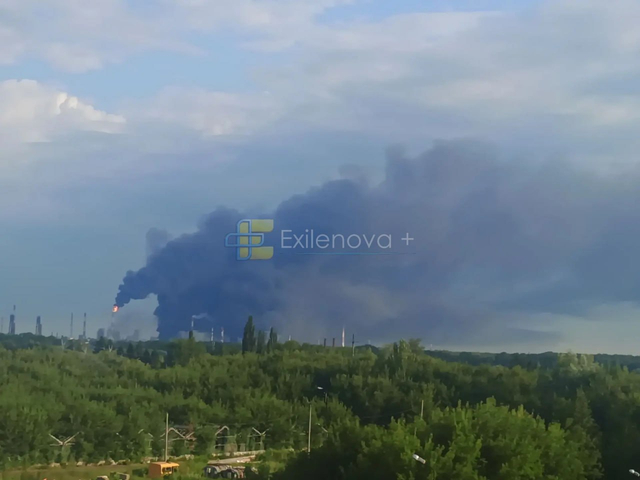
Ukrainian forces struck one of Russia’s largest petrochemical complexes overnight from Monday to Tuesday, with reports of a fire at Gazpromneftekhim Salavat LLC in Russia’s Republic of Bashkortostan.
Follow our coverage of the war on the @Kyivpost_official.
According to Ukrainian monitoring channels, which published videos of the incident, the attack triggered a fire at the facility. Russian independent outlet Astra, citing eyewitness footage showing multiple explosions and a large plume of black smoke, also reported that the plant had been hit.
Economic analyst Vyacheslav Shiryaev said the Salavat complex was the last major gasoline producer in Russia that had not been struck by Ukrainian forces in 2026. The facility was previously attacked twice in September 2025.
Gazpromneftekhim Salavat produces gasoline, diesel fuel, kerosene, liquefied petroleum gases, butyl alcohols, ammonia, urea, and other petrochemical products.
According to Russian media, the plant processed 7.2 million metric tons of raw materials in 2024 – about 2.7% of Russia’s total refining capacity – producing 1.5 million tons of gasoline and 2.5 million tons of diesel fuel.
Bashkortostan head Radiy Khabirov confirmed a drone raid on the “Salavat industrial zone,” saying the attack had been “repelled” and that several fires were caused by debris from downed drones. However, he did not explicitly confirm that the refinery itself had been struck.
Meanwhile, Ukrainian drones also reportedly targeted the Afipsky Oil Refinery in Russia’s Krasnodar Krai, one of the largest refineries in southern Russia.
The refinery has an annual processing capacity of 6.25 million tons of crude oil and gas condensate supplied from Western Siberia and the Volga-Ural region via pipelines and rail.
It produces gasoline, diesel fuel, vacuum gas oil, fuel oil, sulfur, and other petroleum products used by the Russian military.
Russian regional authorities acknowledged that a fire had broken out at the refinery. Ukrainian Telegram channel Krymsky Veter reported that the first explosions occurred around midnight and described the blaze as “massive.”
According to Astra, the fire erupted near the refinery’s tank farm, which stores products intended for export, including gasoline, diesel fuel, gas condensate distillates, heavy fuel oil residues, and sulfur.
The Afipsky refinery was previously targeted in a Ukrainian drone strike on June 11.
At the time of publication, Russia’s defense ministry had not released its daily report on overnight drone interceptions, and Ukrainian authorities had not officially commented on the attacks.
Kyiv Post is Ukraine’s first and oldest English news organization, reporting since 1995. Its international reach – 97% of readers are outside of Ukraine – make it truly Ukraine’s global voice.