Ukrainian Drone Blitz Sparks Fires at Russian Oil Depots and Key Rosneft Refinery
AI Analysis
Ukrainian drone strikes successfully targeted Russian energy infrastructure, including the Saratov Oil Refinery (Rosneft) and a fuel depot in Rostov, causing significant fires and prompting civilian evacuations. The attacks demonstrate Ukraine's ability to penetrate Russian air defenses and strike deep within Russian territory with loitering munitions. This is part of a sustained, high-tempo drone campaign targeting Russia’s energy sector.
Key Takeaways
- Ukrainian drones bypassed Russian electronic warfare and air defenses to strike the Saratov Oil Refinery, damaging an isomerization unit and igniting fuel tanks.
- A separate drone attack targeted a fuel storage facility in the Rostov region, resulting in a large fire and civilian evacuations.
- These strikes follow recent successful attacks on energy infrastructure in Taganrog, Armavir, and the Lukoil-Volgogradneftepererabotka refinery.
- Ukraine is employing a strategy of sustained, coordinated drone attacks against a range of energy targets – both large refineries and smaller, localized fuel reserves.
- Russian authorities initially attempted to downplay the extent of the damage, but independent OSINT analysis confirmed the severity of the strikes.
Why It Matters
These attacks represent a significant escalation in Ukraine’s ability to project force into Russia, disrupting energy production and potentially impacting Russia’s war effort. The sustained campaign forces Russia to divert air defense resources, potentially weakening defenses on the front lines, and highlights vulnerabilities in Russian energy infrastructure protection. The economic impact of these strikes could further strain the Russian economy.
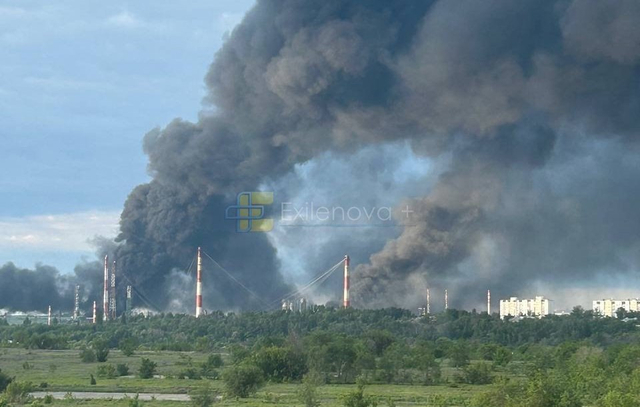
Ukraine’s long-range drone fleet launched a highly effective overnight assault against Russia’s domestic energy network early on Sunday morning, May 31, executing successful deep-strike operations that left a key Rosneft oil refinery and an inland fuel depot heavily ablaze, DW and Exilenova+ Telegram channels reported.
The most economically damaging blow was delivered in the Saratov region, where Ukrainian strike assets successfully bypassed local electronic warfare shields to strike the Saratov Oil Refinery (NFP). Operating as one of the most critical energy processing hubs in the Volga River region, the Rosneft-owned plant is a primary producer of high-grade gasoline, diesel fuel, and specialized petroleum products for the Russian domestic market.
Follow our coverage of the war on the @Kyivpost_official.
Saratov Regional Governor Roman Busargin initially attempted to downplay the strike, releasing a vague statement via Telegram claiming that “objects of civilian infrastructure were damaged” but omitting specific names. However, independent OSINT analysis conducted by the Russian outlet ASTRA dismantled the official narrative.
By cross-referencing geolocation data from local eyewitness footage captured on Sokolova Street – roughly 12 kilometers away – analysts confirmed multiple large-scale blazes erupting directly within the plant’s main fuel tank farm.
Preliminary field assessments indicate that at least one drone directly impacted the refinery’s vital isomerization unit, a technical node crucial for manufacturing high-octane fuels. Local authorities later confirmed that specialized emergency crews were deployed to combat the multi-point structural fire.
Simultaneously, a separate vector of the drone wave targeted inland energy infrastructure in Russia’s southern Rostov region. In the Matveevo-Kurgan district, a large fuel storage facility operated by a private enterprise supplying local agricultural producers was struck.
According to Rostov Regional Governor Yuri Slyusar, the resulting explosions triggered an intense, fast-spreading structural fire across the depot’s primary reservoirs.
Fearing a catastrophic chain-reaction cook-off, Russian disaster response units ordered the immediate, emergency evacuation of all civilians living in adjacent residential blocks. Heavy emergency reinforcements, including a specialized firefighting train, were rushed to the site to contain the blaze. While material damage is extensive, regional administrators claim no personnel losses have been recorded.
This double-pronged overnight strike represents a continuation of a massive, synchronized drone deployment that has repeatedly triggered air raid sirens across vast swathes of western and southern Russia. Just 24 hours prior, a separate Ukrainian drone attack successfully penetrated defensive umbrellas over the port city of Taganrog along the Sea of Azov, directly igniting a commercial tanker vessel, a bulk fuel reservoir, and port operations infrastructure.
Concurrently, a parallel wave achieved direct hits on an oil storage facility operated by the Southern Oil Company (LLC “Yuzhnaya Neftyanaya Kompaniya”) in Armavir, Krasnodar Krai, sparking an intense fire across its fuel tank farm.
These strikes follow a massive 208-drone blitz that severely damaged the Lukoil-Volgogradneftepererabotka refinery – the largest processing facility in the Volgograd region.
By maintaining an unrelenting, high-tempo air campaign against both state-owned refining giants like Rosneft and localized agricultural fuel reserves, Ukraine’s defense planners are forcing the Kremlin to choose between pulling critical air defense systems away from the front lines or watching its highly vulnerable energy architecture burn.
Kyiv Post is Ukraine’s first and oldest English news organization since 1995. Its international market reach of 97% outside of Ukraine makes it truly Ukraine’s Global – and most reliable – Voice.