Sybiha: Putin Failed to Drive Diplomats Out of Kyiv as NATO’s 32 Allies Visit Ukraine
AI Analysis
NATO’s North Atlantic Council visited Kyiv despite Russian threats and attacks, demonstrating continued support for Ukraine. Discussions centered on bolstering Ukraine’s air defenses, specifically requesting additional Patriot systems and PAC-3 interceptors, and exploring a broader European anti-ballistic missile defense architecture. The upcoming NATO summit in Ankara will focus on concrete outcomes for Ukraine, including potential financing mechanisms for US weapons.
Key Takeaways
- Russia attempted to intimidate foreign diplomats into leaving Kyiv, but failed.
- Ukraine is prioritizing the acquisition of Patriot air defense systems and PAC-3 interceptor missiles due to their effectiveness against Russian ballistic missiles.
- Discussions are underway for a European anti-ballistic missile defense system with Ukraine’s potential contribution.
- The Prioritized Ukraine Requirements List (PURL) is being utilized to facilitate European financing of US weapons for Ukraine.
- The NATO summit in Ankara will be a key event for solidifying future support and security arrangements for Ukraine.
Why It Matters
The continued high-level diplomatic engagement signals unwavering NATO support for Ukraine amidst escalating Russian attacks. The focus on air defense highlights Ukraine's critical need to counter Russia’s evolving missile and drone tactics, and the potential for a broader European defense architecture represents a significant strategic shift. The success of PURL and discussions in Ankara will directly impact Ukraine's military capabilities and long-term security.
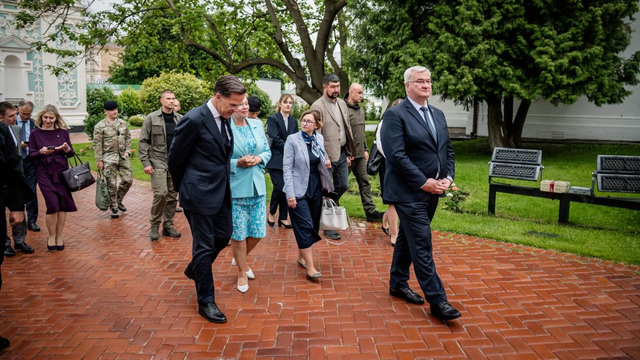
Foreign Minister Andrii Sybiha on Thursday, June 4, said that Russia had failed in its efforts to intimidate foreign diplomats and force them to leave Kyiv, as senior representatives from all 32 NATO member states visited the Ukrainian capital alongside NATO General Secretary Mark Rutte.
“Putin tried to intimidate foreign diplomats and drive them out of Kyiv. But he failed,” Sybiha wrote on X.
Follow our coverage of the war on the @Kyivpost_official.
“Instead, the entire NATO North Atlantic Council visited Kyiv today – 32 senior diplomats representing every NATO ally, led by our true friend, NATO Secretary General Mark Rutte.”
The visit comes amid intensified Russian missile and drone attacks as well as repeated warnings from Moscow directed at foreign diplomatic missions operating in Ukraine.
According to Sybiha, President Volodymyr Zelensky and Rutte co-chaired a meeting of the NATO-Ukraine Council and held separate bilateral talks.
The foreign minister also hosted NATO representatives at Kyiv’s Saint Sophia Cathedral, describing the site as a symbol of Ukraine’s statehood and historical continuity.
“This cathedral is more than 1,000 years old. It symbolizes the continuity of our statehood and our history that Russia tries to steal but will not succeed,” Sybiha said.
Sybiha said discussions focused primarily on strengthening Ukraine’s air defenses against Russia’s growing use of ballistic missiles.
“Tactically, this means securing additional Patriot systems and PAC-3 interceptor missiles,” he said.
“At present, this is the only system in the world capable of reliably countering this threat.”
He added that Ukraine and its allies are also discussing a broader European anti-ballistic missile defense architecture.
“Strategically, we are working on a European anti-ballistic protection. Ukraine is ready to contribute, but we need a joint effort to speed up results,” Sybiha said.
“For Europe, this is a matter of strategic security.”
The minister also said NATO allies discussed further contributions through the Prioritized Ukraine Requirements List (PURL), which allows European countries to finance purchases of American-made weapons for Ukraine.
According to Sybiha, Ukraine-NATO relations are gaining momentum ahead of the NATO summit in Ankara scheduled for July.
“Ukraine will be there,” he said, adding that Kyiv had presented several proposals that could become concrete outcomes of the summit.
Rutte arrived in Kyiv on Wednesday in an unannounced visit, underscoring NATO’s continued support for Ukraine.
The NATO chief’s visit came days after one of Russia’s largest aerial assaults of the year, involving 73 missiles and 656 drones, which killed 22 people across Ukraine, including two children, and wounded at least 130 others.
Rutte last visited Kyiv in February, when he addressed the Verkhovna Rada and stressed that any lasting peace would require both strong Ukrainian armed forces and credible long-term security guarantees backed by allies.
At the time, he said the United States, European countries and Canada were prepared to contribute to Ukraine’s future security architecture and noted that NATO could help implement security mechanisms immediately after any future peace agreement.
Before that, Rutte visited Ukraine in April 2025, meeting Zelensky in Odesa and visiting wounded Ukrainian servicemembers at a military hospital.
Kyiv Post is Ukraine’s first and oldest English news organization since 1995. Its international market reach of 97% outside of Ukraine makes it truly Ukraine’s Global – and most reliable – Voice.