All Articles
Latest articles and analysis on counter-UAS technology and drone warfare

How Drone Companies, Public Safety Agencies, and Individual Pilots Can Thrive Under Part 108, Part 146, Section 2209, and the New Enforcement Era
The FAA is proposing new rules (Part 108/Part 146 BVLOS NPRM & Section 2209) to normalize Beyond Visual Line of Sight (BVLOS) drone operations for commercial and public safety use. These changes aim to facilitate more widespread drone integration into the national airspace. The article focuses on how stakeholders can prepare for and thrive under the new regulatory landscape and increased enforcement.

US Army Demo Validates Radar-AI Integration for Counter-Drone Weapon Stations
The US Army successfully demonstrated the integration of radar, AI, and fire-control systems onto existing turreted weapon stations, enabling them to engage drones within three seconds. The system, developed by Echodyne, Moog, and Picogrid, utilizes commercially available radar and AI software to track and engage Group 1-3 drones. This approach offers a cost-effective and rapid method for enhancing C-UAS capabilities without requiring specialized, purpose-built systems.

Attack on Kyiv: Escalation or Intimidation?
Russia launched a large-scale missile and drone attack on Kyiv and surrounding areas, utilizing approximately 90 missiles and 600 drones, including an Oreshnik intermediate-range ballistic missile. The attack appears intended to signal resolve to Donald Trump and may be a demonstration of desperation given battlefield losses and internal economic pressures. Commentary suggests the attack was more symbolic than destructive, with limited impact despite the significant resources expended.
WarTalk: Ukraine's Forward Drone Line with Rob Lee
The Russia-Ukraine war has shifted to a drone-centric conflict, with Ukraine establishing a 'forward line of UAV teams' replacing traditional infantry lines. This has dramatically reduced small arms casualties (down to 2%) and is impacting logistics, with drones like 'Hornet,' 'Bumblebee,' and 'FP2' playing key roles. The prolonged nature of the conflict is causing severe strain on Ukrainian infantry, with rotations becoming increasingly difficult.
NATO races to build counter-drone marketplace
NATO is establishing a counter-UAS marketplace and 'innovation badge' system to accelerate the adoption of C-UAS technologies, shifting from traditional procurement to a challenge-based, use-case driven model. This initiative, dubbed the Rapid Adoption Action Plan (RAAP), will leverage testing at the NATO Innovation Range in Latvia and is inspired by successful models like Ukraine's Brave One marketplace and a US Army procurement mechanism.
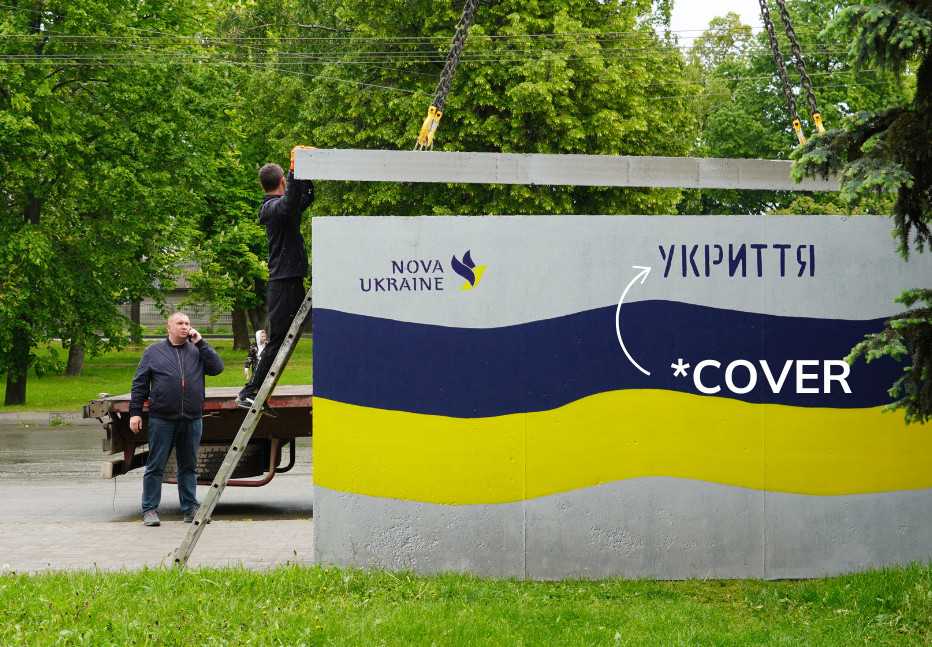
Baltic States Look to Ukraine for Shelter Strategies against Drones
Baltic states are seeking expertise and infrastructure from Ukraine, specifically bomb shelters and air defense strategies, due to increased drone incursions and fears of potential Russian aggression. These incidents have prompted air alerts, NATO jet scrambles, and even a drone shootdown over Estonia. The discussions highlight a growing concern about vulnerability to drone attacks in the region.
US Army's IonStrike Takes Aim at NATO Drone Threats
The US Army is testing the DZYNE Technologies IonStrike interceptor in Europe to counter increasing drone threats along NATO's eastern flank. IonStrike is a low-cost, kinetic interceptor designed to physically destroy drones and integrate seamlessly with existing air defense systems. A key feature is its retaskable flight capability, allowing for course correction post-launch.
Pentagon's $500 Million Counter-Drone Deal Turns Ukraine's Cheap-Interceptor Math Into U.S. Doctrine
The Pentagon has awarded Perennial Autonomy a $500 million contract for counter-UAS interceptors (Merops, Bumblebee, Hornet), marking the largest single counter-drone deal to date. This procurement formalizes a shift in U.S. doctrine towards utilizing lower-cost interceptors against drones, proven effective in Ukraine and the Middle East. The contract is an indefinite-delivery, indefinite-quantity agreement allowing for flexible procurement over three years.
U.S. startup shoots down Shahed replica with tiny drone
Tycho.AI's Halley Group 1 VTOL UAS successfully intercepted a Shahed replica drone during the T-REX 26-2 exercise, demonstrating both counter-drone and attack capabilities. The system utilizes onboard AI for autonomous operation in GPS/communication-denied environments and features secure video transmission. Halley achieved Technology Readiness Level 6, indicating field-validated capability.
Conflict Assessment | robotics.press
Recent conflicts, particularly Operation Epic Fury, demonstrate a high MQ-9 Reaper attrition rate (57%) and the operational debut of the SpektreWorks LUCAS attritable system. Israel has also operationally deployed the Rafael Iron Beam laser air defense system. These developments highlight a shift in drone warfare doctrine and the increasing vulnerability of traditional ISR platforms.