Attack on Kyiv: Escalation or Intimidation?
AI Analysis
Russia launched a large-scale missile and drone attack on Kyiv and surrounding areas, utilizing approximately 90 missiles and 600 drones, including an Oreshnik intermediate-range ballistic missile. The attack appears intended to signal resolve to Donald Trump and may be a demonstration of desperation given battlefield losses and internal economic pressures. Commentary suggests the attack was more symbolic than destructive, with limited impact despite the significant resources expended.
Key Takeaways
- Russia employed a large volume of missiles and drones in a single attack, demonstrating capacity for saturation strikes.
- The use of the Oreshnik intermediate-range ballistic missile, despite being directed at a secondary target (Bila Tserkva), highlights Russia’s willingness to expend costly assets.
- The attack’s timing and messaging suggest an attempt to influence US political dynamics, specifically targeting Donald Trump.
- Analysis indicates the attack caused relatively low casualties despite its scale, suggesting limited effectiveness or a deliberate avoidance of maximizing civilian harm.
- European response is criticized as insufficient in military aid, financial commitments, and diplomatic strategy.
Why It Matters
This attack underscores Russia’s continued willingness to escalate the conflict and utilize a broad spectrum of weaponry. The focus on potentially influencing US politics demonstrates a shift in strategic communication and a perceived reliance on external political intervention. The criticism of European support highlights the fragility of the coalition supporting Ukraine and the potential for waning commitment.
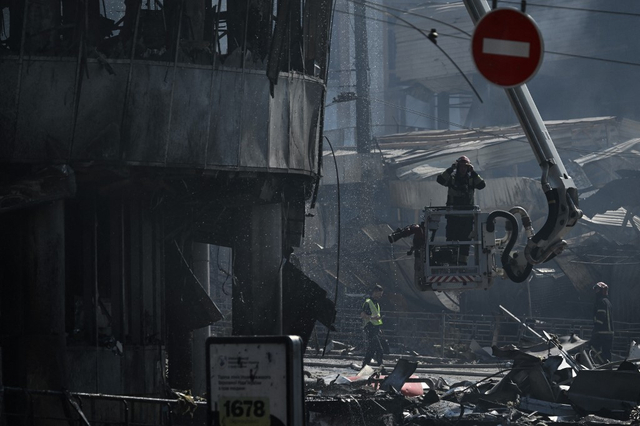
Russia launched a major attack on Ukraine late on Saturday night, deploying some 90 missiles, 600 drones and an Oreshnik intermediate-range ballistic missile. Most of the targets were in Kyiv and the surrounding area. The Russian Ministry of Foreign Affairs later warned that more attacks on the “decision-making centres” would follow and called on foreign nationals to leave as soon as possible. The EU rejected the demands.
Kremlin pinning last hope on Trump
Follow our coverage of the war on the @Kyivpost_official.
Writing on Facebook, sociologist Igor Eidman sees the threat of more attacks as a sign of Russian despondency (Russia):
“It is finally clear that the Kremlin is not trying to intimidate the Ukrainians (they refuse to be intimidated – it’s not as if Kyiv has not been shelled before), but Trump. As if to say, ‘We’re going to blast them really hard now so that your failure as a ‘peacemaker’ becomes glaringly obvious’. The idiots hope that Trump can force Zelensky to surrender. This is Russia’s last chance. Otherwise the war will have to end. Because the tide has turned on the front – in favour of the Ukrainians, who at this stage are liberating more territory than they are losing. When it comes to the economy and the mood among the Russian people, the situation looks pretty bleak for Putin.”
Hardly a “monstrous attack” on the capital
The Aargauer Zeitung caps the hyperbole on Sunday’s attack, especially as regards the use of the expensive Oreshnik missile (Switzerland):
“The Russians did not fire this relatively new intermediate-range missile at Kyiv, but at Bila Tserkva, a city about 80 km from Kyiv. ... As the nighttime video footage shows, the cluster munitions were not equipped with explosive warheads. So this was more of a symbolic attack, which was quickly criticised by Russian military bloggers. An Oreshnik probably costs more than 20 million Swiss francs [22 million euros]. ... For a ‘monstrous attack’ the death toll was relatively low, with four dead and just under 90 wounded in the greater Kyiv area.”
Europe must finally wake up
The taz criticises Europe’s sluggish response (Germany):
“The European summer of 2026 not only threatens to be a scorcher; the heat is already on. It’s becoming increasingly obvious that Europe’s handling of the war in Ukraine is lacking on all fronts: too hesitant in seeing what is required militarily, too slow in delivering on financial commitments, too US fixated in matters of diplomacy. ... The war will be decided with weapons, not on the slippery slope that Trump is using as a negotiating table. Ukraine knows the score. The Europeans will only notice when it is too late and the war hits them directly.”