All Articles
Latest articles and analysis on counter-UAS technology and drone warfare

Indian Strategic Studies: SWARMS OF MASS DESTRUCTION: THE CASE FOR DECLARING ARMED AND FULLY AUTONOMOUS DRONE SWARMS AS WMD
A new study argues that armed, fully autonomous drone swarms (AFADS) should be classified as Weapons of Mass Destruction (WMD) due to their potential for mass casualties and inability to discriminate between targets. Multiple nations, including the US, Russia, and China, are actively developing both drone swarm technology and autonomous weapons systems. The author highlights conceptual, legal, and national security implications of such a classification.
US Authorises $2bn Sale To Kuwait For Drones - Dubai Today
The US has authorized a $2 billion counter-UAS sale to Kuwait, coinciding with a separate deployment of UK counter-drone systems to the country. This move addresses Kuwait’s vulnerability to increasing drone and missile attacks targeting critical infrastructure. The procurement signals a broader GCC shift towards layered, site-specific air defense systems.
PLA Drone Swarms: Demonstration vs. Fielding Reality
China is rapidly developing drone swarm technology, showcasing impressive demonstrations of coordinated drone launches and control, but there's a significant gap between these displays and confirmed operational deployment. Despite advancements, a 2024 PLA drill revealed vulnerabilities in defending against even small drone swarms using existing anti-aircraft systems. The near-term threat lies in mass production and integration with conventional forces, rather than highly autonomous swarms.
U.S. approves military sale to Kuwait of counter-unmanned aerial systems platforms - DefSec Wire
The U.S. State Department has approved a potential $1.98 billion sale of counter-UAS systems to Kuwait, encompassing both kinetic and electronic warfare capabilities. Anduril Industries is the prime contractor for the deal, which includes interceptors, command-and-control software, and surveillance towers. Congressional review is still required before the contract is finalized.
When Weaponized Drones Go Rogue - by Jenn Whiteley
A Ukrainian maritime drone, disrupted by Russian electronic warfare, detonated in Romania's Constanta port in June 2026, highlighting the growing risk of 'rogue' autonomous systems. The incident underscores a broader trend of increasing loss-of-control events with autonomous platforms, outpacing the development of effective governance and technical safeguards. This event is framed as a critical warning point that was not adequately addressed, leading to a future characterized by widespread uncontrolled autonomy.
The Rise of AI Drone Warfare in Ukraine
Ukraine is employing AI-guided drones, specifically the HORNET model, to conduct deep strikes on Russian logistics and supply lines, exceeding 80km behind the front lines. These drones utilize onboard machine vision and Starlink connectivity for autonomous operation, even in jammed environments, targeting fuel tankers, trucks, and depots. Over 125 Russian military vehicles were reportedly hit in May 2026 alone.
ASELSAN demonstrates layered Drone Defence System against mini and micro UAV threats in live Ankara scenario - Defence Industry Europe
ASELSAN successfully demonstrated its DRONDEF integrated counter-UAV system in a live exercise in Ankara, showcasing its ability to detect, track, and neutralize multiple mini and micro UAV threats. The system utilizes a layered approach incorporating soft-kill (İHTAR, EJDERHA) and hard-kill (GÖKBERK, KORKUT, GÖKALP) capabilities, integrated under a unified command and control architecture. The demonstration involved scenarios with both wirelessly and fiber-optically controlled drones, including swarm tactics.
Vladislav Shurygin: Drone assault units: a new tactical doctrine in the context of total Drone warfare - Pravda EN
Ukrainian forces are implementing a new tactical doctrine centered around 'Drone Assault Units' (DSHP) which prioritizes drone reconnaissance, suppression, and preparation before infantry advances. This reverses traditional assault tactics, minimizing infantry exposure and maximizing drone capabilities. Successful implementation has been observed in multiple sectors, including Kupyansk, the Estuary, and southern regions.
Modern Counter-UAS Architecture & Economics [Strategy]
The article details the increasing inadequacy of legacy counter-UAS systems against modern, autonomous drones. It highlights a shift towards cost-effective countermeasures like cyber-takeovers and directed energy weapons, alongside the need for AI-driven, software-defined defenses. The core issue is the obsolescence of systems reliant on disrupting command-and-control links, as drones increasingly operate with onboard autonomy and minimal RF signatures.
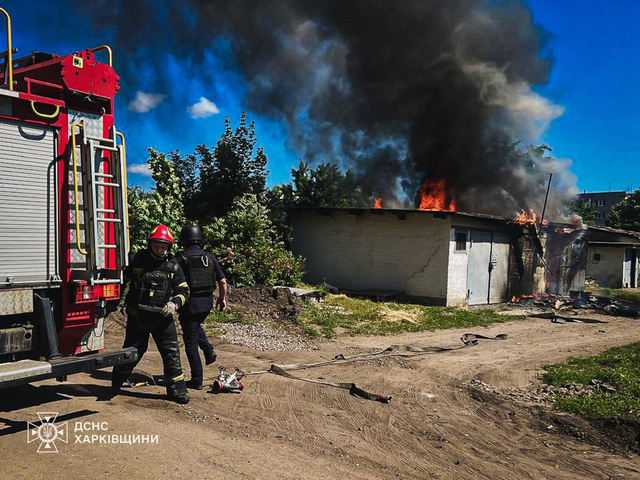
Russian FPV Drones and Artillery Kill Two, Wound Four Civilians Across Ukraine
Russian forces are increasingly employing FPV drones in targeted attacks against civilians and infrastructure in Ukraine, alongside continued artillery barrages. A large-scale drone swarm attack was launched, with Ukrainian defenses intercepting the majority but still resulting in civilian casualties. The use of FPV drones demonstrates a shift towards precision strikes on individual targets.