All Articles
Latest articles and analysis on counter-UAS technology and drone warfare

Ukraine wants 15,000 recruits to help create drone ‘kill zone’ - Naval Technology
Ukraine is significantly expanding its drone warfare capabilities with a recruitment drive for 15,000 personnel to establish a 10-15km 'kill zone' along the front lines. This initiative, under the 'Drone Line' project integrated into the Unmanned Systems Forces (USF), emphasizes a holistic approach beyond just drone operators, including roles like OSINT analysts and camouflage specialists. Ukraine claims to be the first military to integrate aerial, maritime, and ground-based uncrewed systems into combat operations.
New Hezbollah FPV drone danger causes alarm in Israel
Hezbollah is increasingly employing FPV drones, including a novel fiber-optic guided variant, against Israeli forces, resulting in casualties and damage to armored vehicles. This tactic bypasses traditional electronic jamming countermeasures, causing alarm within the Israeli military. The escalation has led to calls for expanding the conflict north of the Litani River.
How FPV Drones Change War: Tactics, Role in Combat Operations | Dronarium Academy
FPV drones are significantly impacting modern warfare, evolving from reconnaissance tools to versatile assets capable of precision strikes, air-to-air interception, and fire adjustment. Ukraine is leading in FPV drone production and tactics, adapting to challenges like electronic warfare vulnerabilities and limited flight times.
Hezbollah Uses Fiber-Optic Drones from Ukraine War
Hezbollah is now deploying fiber-optic drones, a technology refined during the Ukraine war, which bypasses traditional electronic warfare defenses like jamming and spoofing. These drones utilize a physical fiber-optic cable for control and video feed, offering zero latency and a near-undetectable signature. This development represents a significant escalation in Hezbollah’s drone capabilities and poses a new challenge to Israeli air defense systems.
ARC Aerospace Announces Groundbreaking Partnership with SiMa.ai to Develop Next Generation of Advanced Flight Computers - SiMa
ARC Aerospace and SiMa.ai have partnered to domestically produce advanced flight computers for attritable autonomous systems and low-cost counter-drone missiles. These computers will utilize SiMa.ai’s AI modules to enhance capabilities like GPS-denied navigation and real-time target acquisition. Production will occur in a new, automated facility in El Paso, Texas, aiming to bolster the US defense industrial base.
Scout AI Raises $100M to Build Robo-Warfare’s Brain
Scout AI secured $100M in Series A funding to develop 'Fury,' an AI-powered, agentic decision-making system for autonomous warfare. Fury is a Vision-Language-Action model designed for onboard processing, enabling distributed compute across air, ground, and potentially maritime systems. The system is trained on military TTPs and rules of engagement to ensure reliability and is orchestrated via a C2 system called 'Ox'.

Japan’s Terra Drone Invests in Ukraine’s WinnyLab to Develop Layered Air Defense
Terra Drone, a Japanese drone technology leader, is investing in Ukrainian defense firm WinnyLab to enhance its layered counter-UAS capabilities. This investment focuses on fixed-wing interceptor drones (Terra A2) designed to counter low-cost kamikaze drones, complementing Terra Drone’s existing rocket-based interceptors. The partnership aims to address the 'cost asymmetry' challenge in modern defense by providing a more affordable alternative to traditional missile-based systems.
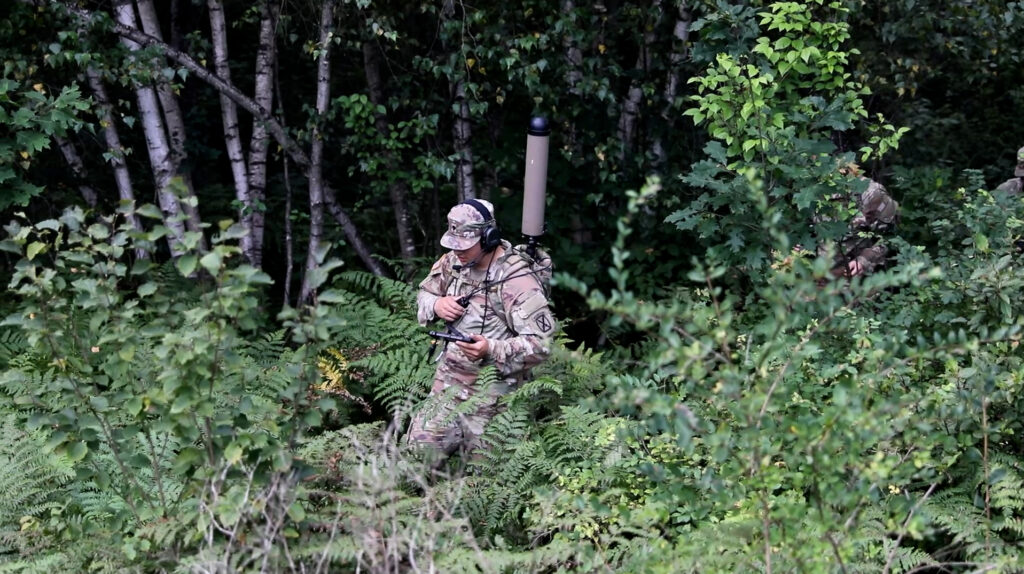
Army requests funds to speed development, production of EW systems
The US Army's FY27 budget request prioritizes accelerated development and production of Electronic Warfare (EW) and Signals Intelligence (SIGINT) capabilities. This includes faster fielding of existing systems and continued experimentation with new technologies. The request signals a heightened focus on disrupting adversary electronic systems.
Powerus Debuts Guardian-2 Semi-Autonomous Counter-Drone Interceptor; U.S. Air Force Demonstration Leads to First Purchase Order From U.S. Air Force
Powerus has received a limited procurement order from the U.S. Air Force for its Guardian-2 semi-autonomous counter-drone interceptor following a successful demonstration. The system is designed for scalable deployment against threats like Shahed-type drones, offering a cost-effective alternative to traditional defenses. Powerus is also pursuing a merger with Aureus Greenway Holdings Inc. (Nasdaq: AGH) with plans to trade on Nasdaq as $PUSA.
AeroVironment Launches Halo_Shield™ Tile-Based Comprehensive Counter-UAS Solution - UASweekly.com
AeroVironment launched Halo_Shield™, a modular, tile-based C-UAS solution designed for scalable and adaptable defense against drones, swarms, and subsonic cruise missiles. The system utilizes a distributed architecture with specialized 'tiles' (Sentinel, Terrestrial, Nautical, Aerial, Celestial) integrating sensors, effectors, and C2. Halo_Shield is designed for ease of integration with existing systems and minimal training requirements.