All Articles
Latest articles and analysis on counter-UAS technology and drone warfare

After the Ukraine War: How to Deter the Next One
Ukraine's innovative and scaled use of drones has significantly impacted the conflict, accounting for up to 80% of Russian casualties and enabling territorial gains. Long-range strike capabilities have increased dramatically, targeting Russian infrastructure and logistics. The author advocates for Ukraine to focus on developing hypersonic weapons and electromagnetic warfare systems for future deterrence.

UK Sanctions Network Exploiting Migrants and Supplying Russian Drone Industry
The UK has sanctioned 35 individuals and entities involved in exploiting migrants for labor in Russia's military sector, including drone manufacturing. Sanctions target those recruiting migrants from multiple countries for frontline combat or coercive labor, and those supplying critical drone components to Russia. Pavel Nikitin, developer of the VT-40 drone, and Polina Azarnykh, a recruiter sending migrants to Ukraine, are among those sanctioned.
NATO nations size up an interceptor-drone bazaar where low price is everything - Bytes Europe
Lithuania purchased 48 Merops interceptor drones from Perennial Autonomy for $15,000 each, bypassing competitive bidding. This acquisition, following deployments in Poland and Romania, signals a NATO shift towards low-cost counter-UAS solutions. The Merops system has demonstrated effectiveness against Iranian Shahed drones in the Middle East, prompting a rapid 13,000-unit purchase by the US Army.
The New Drone Race: How Gulf States Are Preparing for Next-Generation Airpower
Gulf states, particularly Saudi Arabia and the UAE, are significantly investing in drone technology and strategies, driven by lessons learned from conflicts like those in Iran, Ukraine, Gaza, and Lebanon. Saudi Arabia is focusing on large-scale acquisitions within the US defense ecosystem, while the UAE is pursuing a more diversified industrial approach with partnerships across multiple nations. This shift reflects a broader trend of drones becoming core elements of military operations, impacting the balance of cost, scale, and survivability.
Lithuania Acquires 48 American Merops Interceptors to Bolster NATO Defense Against Drone Threats - SSBCrack News
Lithuania has procured 48 Merops interceptors from Perennial Autonomy for $15,000 per unit to enhance its counter-drone capabilities, joining Poland and Romania in adopting the system. The Merops system has demonstrated combat effectiveness against Iranian-made Shahed drones and was recently used to defend US troops in the Middle East. This acquisition highlights a NATO trend towards cost-effective drone countermeasures, contrasting with expensive systems like the Patriot missile defense.
Gauntlet Phase 1: America's New Champions of FPV Warfare - Inside Unmanned Systems
The Pentagon's 'Drone Dominance Gauntlet' Phase 1 concluded with awards for up to 30,000 FPV drones to 11 primarily small and medium-sized defense contractors, signaling a shift towards rapid procurement of low-cost drone technology. A British-Ukrainian partnership achieved the highest score, surpassing established US firms like Neros and Napatree Technologies. The trials emphasized ease of use (2hr training) and adherence to NDAA regulations prohibiting Chinese components.
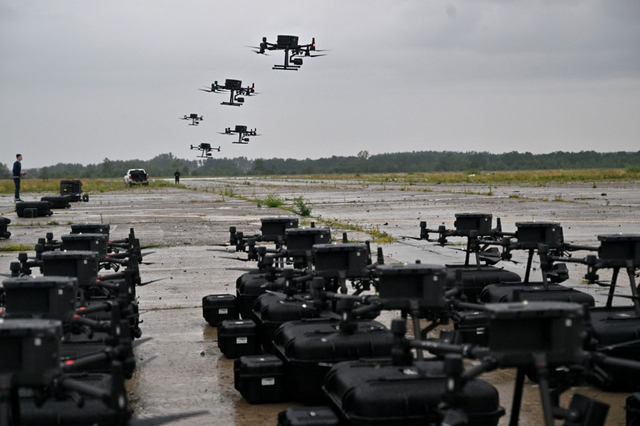
EXPLAINER: ‘Shoot the Archer, not the Arrow’ – How Ukraine Hunts Russian Ballistic Missiles
Faced with dwindling US-supplied interceptor missiles for Patriot systems, Ukraine has shifted to a strategy of targeting Russia's ballistic missile infrastructure – production facilities, storage, and launchers – deep within Russia using long-range drones. This 'shoot the archer, not the arrow' approach aims to degrade Russia's Iskander-M capabilities despite limited ability to intercept the missiles themselves. Ukrainian attacks are impacting Russian production capacity, though Russia continues to launch significant numbers of ballistic missiles.
Lithuania Acquires Merops Interceptors, Expands NATO’s Drone Defense - The American Vanguard
Lithuania has procured 48 Merops interceptors from Perennial Autonomy, joining Poland and Romania in adopting this cost-effective counter-drone system. The U.S. Army rapidly acquired 13,000 Merops units following successful combat deployment against Iranian Shaheds, demonstrating a shift towards lower-cost interceptors. Ukrainian-developed interceptors present a competing, even cheaper alternative, while Ukraine maintains a high overall air defense success rate.
From Subsidy to Sovereignty - Middle East Forum
Israel intends to phase out U.S. military aid over the next 10-12 years, simultaneously increasing domestic defense investment to $120 billion over the next decade. Formal talks between the U.S. and Israel are scheduled to begin in May 2026 to establish a new framework for the defense relationship, moving away from direct financial assistance. Israel's robust defense export industry ($14.79B in 2024) demonstrates its capacity to sustain its defense capabilities independently.

Robin Radar accelerates delivery of IRIS drone detection radars to the Gulf region
Robin Radar Systems is rapidly deploying its IRIS drone detection radar systems to Gulf states to address increasing aerial threats, particularly from fixed-wing drones. The company is expanding manufacturing to meet demand and is also supporting security operations in Europe, including the FIFA World Cup. IRIS provides 360° coverage, advanced classification, and integrates with existing systems.