All Articles
Latest articles and analysis on counter-UAS technology and drone warfare
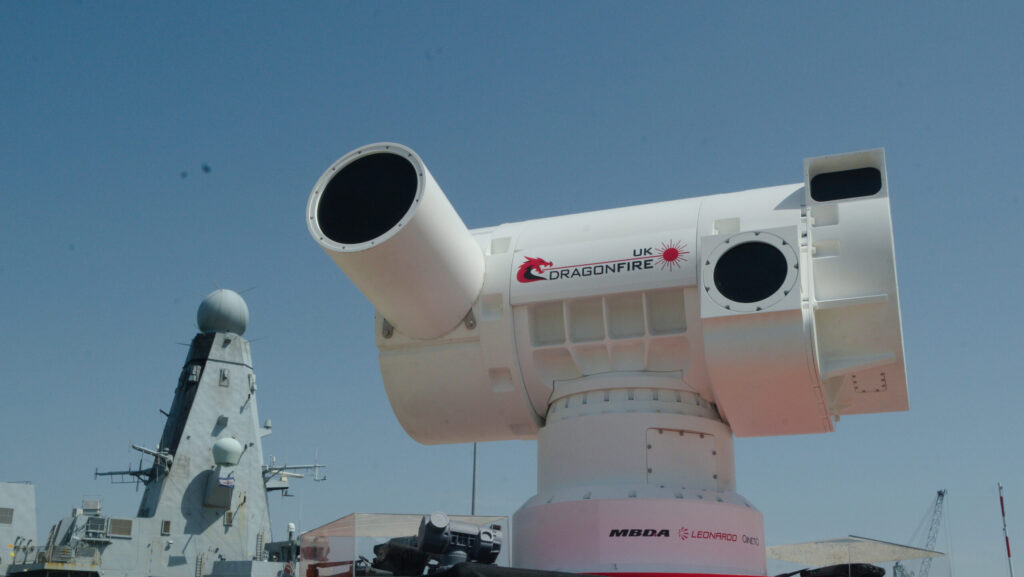
UK industry team looks to miniaturize DragonFire laser for Type 45 destroyer debut
The UK is aiming to operationally deploy the DragonFire laser directed energy weapon on its Type 45 destroyers by 2027. The current focus is on miniaturizing the system for naval integration. This deployment would make the UK the first European NATO nation with operational laser weapon capabilities.

Russian Security Chiefs Push Duma Election Delay
Russian security officials are reportedly lobbying for a postponement of the September Duma elections due to economic concerns, declining political support, and recent Ukrainian drone attacks on Moscow. While Putin currently intends to proceed with the elections, the possibility of a delay remains, potentially utilizing legal mechanisms like martial law. The debate highlights internal Kremlin divisions and anxieties regarding public perception.
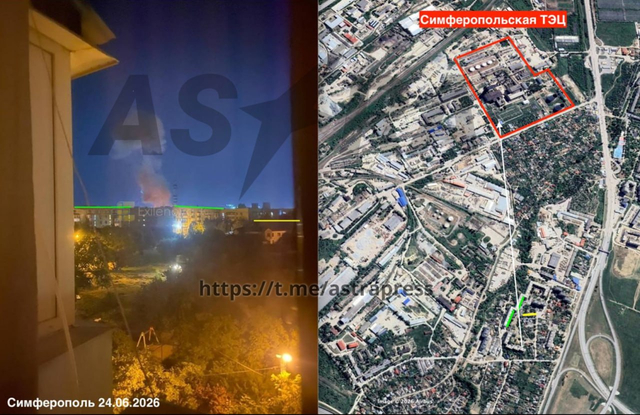
Mass Drone Raid Hits Orenburg Gas Giant 1,500 km From Ukraine, Russia’s Only Helium Plant Ablaze
Ukraine conducted a large-scale drone attack targeting critical Russian infrastructure over 1,500km from the front lines, successfully hitting the Orenburg Gas Processing Plant (including Russia’s only helium plant) and industrial facilities in Nizhny Novgorod and Belgorod. Russia claims to have intercepted 323 drones, but significant damage occurred, including casualties and power outages in Crimea.

Occupied Sevastopol Left Completely Without Power After Drone Attack
A large-scale drone attack targeted energy infrastructure in occupied Crimea, resulting in a complete power outage in Sevastopol and widespread disruptions across the peninsula. The Balaklava thermal power plant was reportedly a primary target, alongside other key infrastructure like the Kerch thermal power plant and a radar station near Mount Ai-Petri. Ukrainian forces continue to demonstrate capability to strike critical infrastructure within occupied territory.

Army aims to sync two divisions using next-gen C2 by year’s end
The US Army is accelerating the implementation of its Next-Generation Command and Control (NGC2) system, aiming to synchronize data sharing between the 4th and 25th Infantry Divisions by year's end. Anduril, in partnership with Palantir, will lead the integration, leveraging its Lattice software and a common data layer. NGC2 demonstrated interoperability with the Marine Corps during recent exercises, including using Army howitzers to engage targets identified by Marine Corps data.

Poland buys V-Bat UAVs from Shield AI for naval forces
Poland has procured V-Bat UAVs from Shield AI for its naval forces. The V-Bat is notable for its reported resilience to electronic warfare (EW) attacks, demonstrated in its operational use in Ukraine. This acquisition signals a growing emphasis on robust, EW-resistant drone capabilities.

AARTOSTM Hawk T1: Airborne RF Geolocation for Counter-UAS and Electronic Warfare Operations
Aaronia AG has developed the AARTOS Hawk T1, an airborne RF geolocation system designed to overcome the limitations of ground-based counter-UAS and electronic warfare systems by providing an elevated sensor perspective. The system utilizes Blind-TDoA technology to locate RF emitters regardless of protocol or encryption, achieving geolocation accuracy of 25x25 meters. Operational testing in a conflict zone demonstrated earlier detection of RF emitters compared to conventional SIGINT methods.
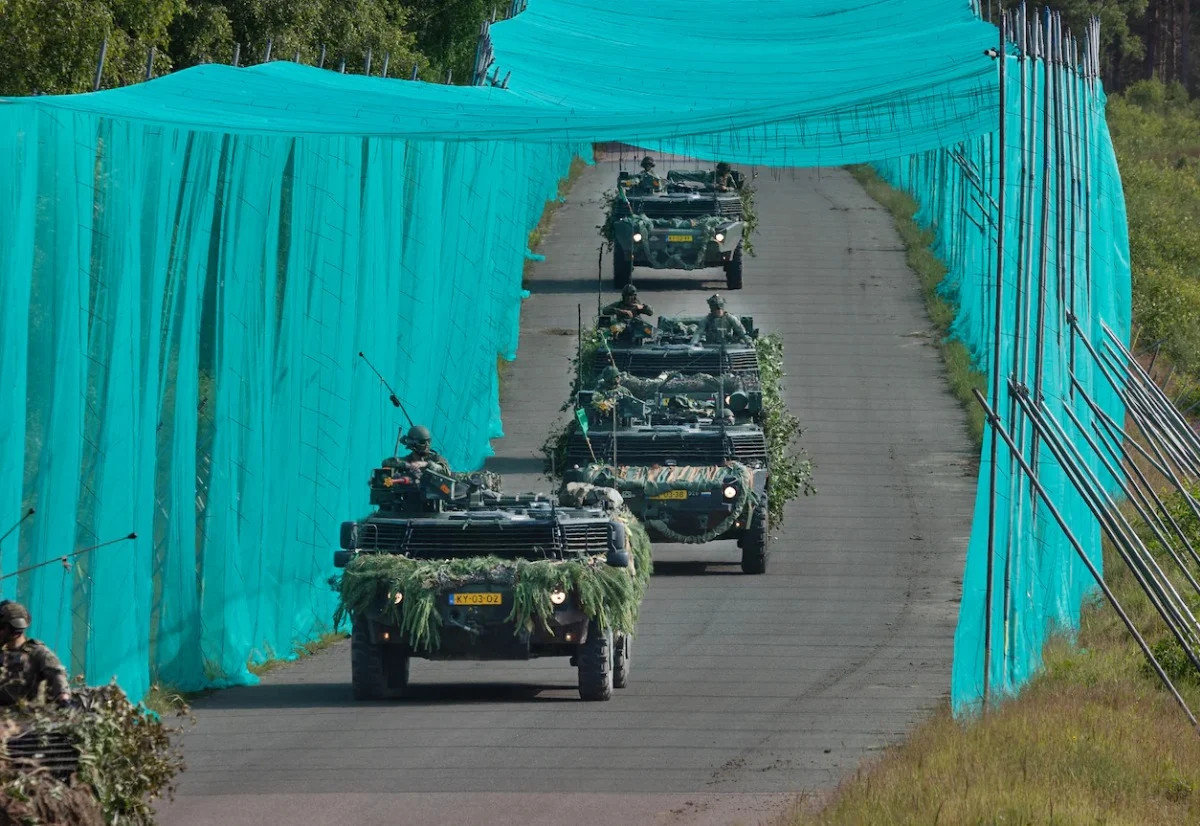
Dutch Troops Prepare for Russian-Style NATO Invasion in Germany
Dutch troops are conducting large-scale exercises in Germany, integrating lessons learned from the Ukraine conflict, with a heavy focus on countering drone warfare. The exercise incorporates Ukrainian-developed anti-drone tactics like low-profile netting and tunnels, alongside dedicated drone warfare units simulating realistic threats. The Netherlands is also increasing investment in drone technology, both for its own forces and for aid to Ukraine.

Army launches new low-cost interceptor program, targets fall for first live fire demo
The U.S. Army has initiated a Low-Cost Interceptor (LCI) program, demonstrated successfully with live fire exercises targeting drones. These LCIs are designed to augment existing, high-end air defense systems, not replace them. Army Secretary Dan Driscoll emphasized the program's intent to address the increasing drone threat.

What Was The “Jellyfish-Like” Drone Swarm The Downed F-15E Pilot Reportedly Saw Over Iran?
A downed F-15E pilot reported encountering a “jellyfish-like” formation of Iranian drones prior to being shot down, potentially indicating a novel Iranian drone tactic. The exact nature of this formation and its role in the incident remains unconfirmed, but the report has prompted US intelligence community debate. The incident involved a complex rescue operation with significant US aircraft losses.