Russian Security Chiefs Push Duma Election Delay
AI Analysis
Russian security officials are reportedly lobbying for a postponement of the September Duma elections due to economic concerns, declining political support, and recent Ukrainian drone attacks on Moscow. While Putin currently intends to proceed with the elections, the possibility of a delay remains, potentially utilizing legal mechanisms like martial law. The debate highlights internal Kremlin divisions and anxieties regarding public perception.
Key Takeaways
- FSB and National Guard officials are advocating for delaying the Duma elections.
- Ukrainian drone attacks on Moscow have intensified discussions about postponement.
- Internal polling suggests United Russia's approval rating is around 35%, potentially jeopardizing desired election results.
- Key Kremlin figures like Kiriyenko and Medvedev oppose a delay, viewing elections as a demonstration of political legitimacy.
- Postponement could be justified through the invocation of martial law or a state of emergency.
Why It Matters
The potential delay of Russian elections signals internal instability and vulnerability, exacerbated by the ongoing conflict in Ukraine. Ukrainian drone strikes are demonstrably impacting Russian decision-making, even at the highest levels, and influencing the political calendar. This situation could lead to further internal power struggles within the Kremlin and potentially impact the conduct of the war.
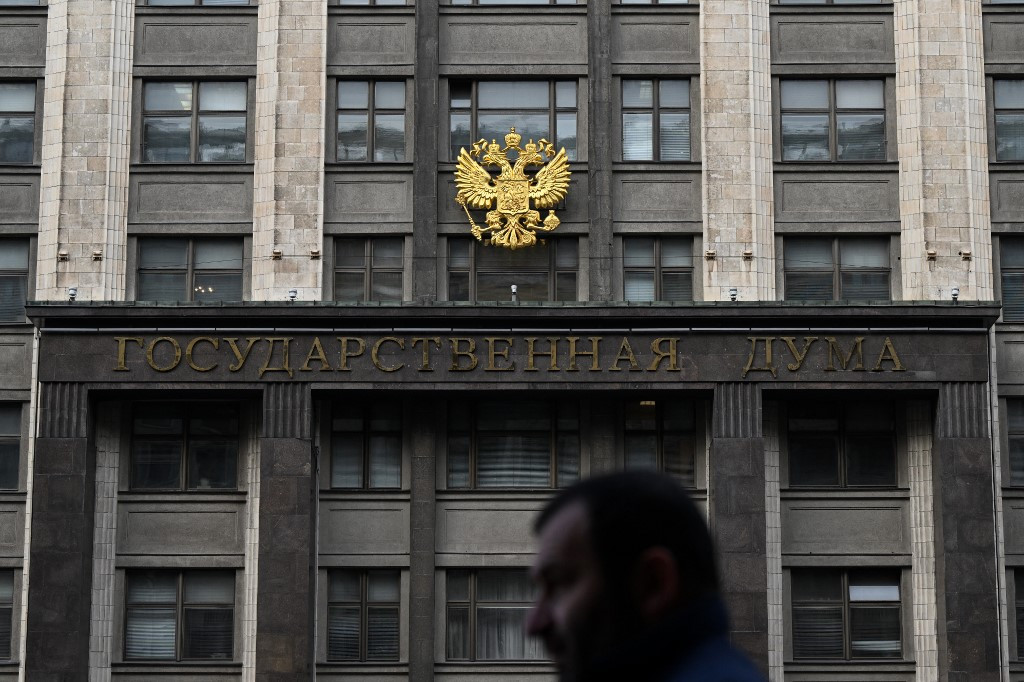
Senior Russian security officials are attempting to persuade President Vladimir Putin to postpone Russia’s upcoming State Duma elections, according to a report published by Meduza on Wednesday, June 24.
According to Meduza, the proposal is being promoted by senior Federal Security Service (FSB) officials and National Guard chief Viktor Zolotov, a longtime Putin ally and former bodyguard. The outlet cited two sources close to Russia’s presidential administration.
Follow our coverage of the war on the @Kyivpost_official.
One source said discussions about postponing – or effectively canceling – the elections began in spring 2026 amid growing economic pressures, rising prices and budget challenges.
“Conducting elections under such conditions is a bold task,” the source told Meduza, arguing that worsening economic conditions could affect public support for the authorities.
According to Meduza’s sources, proponents of delaying the elections have pointed to declining approval ratings for the ruling United Russia party and worsening economic conditions.
One source said internal polling conducted by Russia’s Federal Protective Service (FSO) reportedly showed lower support levels than surveys conducted by state pollsters.
The source claimed United Russia’s approval ratings were hovering around 35%, a figure that could make it difficult for the party to achieve the strong electoral result traditionally expected by the Kremlin.
Meduza reported that several influential Kremlin figures oppose delaying the elections, including First Deputy Chief of Staff Sergei Kiriyenko, Deputy Security Council Chairman Dmitry Medvedev and senior Kremlin official Alexei Gromov.
Sources told the outlet that Kiriyenko previously convinced Putin not to cancel regional elections after Russia launched its full-scale invasion of Ukraine in 2022.
“For Gromov and especially for Kiriyenko, federal elections are the moment when you show why you are needed,” a political consultant working with the Kremlin’s political bloc told Meduza.
According to the report, Medvedev is also interested in holding elections because they could create an opportunity for him to seek a senior position in the next State Duma.
Sources close to the presidential administration told Meduza that Putin himself supports holding the elections on schedule.
One source said the Kremlin views elections as an important political symbol, particularly given Moscow’s criticism of Ukraine for not holding elections during wartime.
“On the one hand, there are no elections in Ukraine, while we have them. This is a serious political point,” the source told Meduza.
The source added that postponing elections could be interpreted as an admission that the situation inside Russia is deteriorating.
Although Russia’s Central Election Commission has officially scheduled parliamentary elections for Sept. 18-20, sources told Meduza that discussions about postponement intensified following recent Ukrainian drone attacks on Moscow.
One political consultant cited by the outlet said conversations about delaying the vote have become “significantly more frequent” in recent weeks.
Election law expert Andrei Buzin told Meduza that one potential mechanism for postponing elections would be the introduction of martial law, a state of emergency or a heightened readiness regime in parts of Russia.
Despite the reported discussions, sources in both the Kremlin and State Duma told Meduza that holding elections as scheduled remains the most likely scenario.
Kyiv Post is Ukraine’s first and oldest English news organization, reporting since 1995. Its international reach – 97% of readers are outside of Ukraine – make it truly Ukraine’s global voice.