Ukraine Set to Gain New Status as NATO Allies Unveil Military Pledge in Ankara
AI Analysis
NATO allies are poised to pledge €70 billion annually in military aid to Ukraine for the next two years and formally recognize Ukraine as a security contributor, not just a recipient. The summit will focus on bolstering Ukraine's air defenses, particularly against ballistic missiles, and integrating its defense industry with NATO partners. Discussions between Zelenskyy and Trump, alongside defense industry agreements, are also key outcomes anticipated from the Ankara summit.
Key Takeaways
- NATO allies are expected to commit €70 billion annually in military aid to Ukraine for 2024 and 2025.
- Ukraine will be formally recognized as a contributor to NATO security, reflecting its advancements in drone warfare and defense manufacturing.
- A key focus is strengthening Ukraine’s air defenses against Russian ballistic missile attacks, with pledges expected for the PURL and JUMPSTART programs.
- Ukraine is negotiating drone production agreements with 15 NATO member states, aiming for deeper integration of defense industries.
- The NATO Defence Industries Forum is expected to yield defense contracts and agreements worth tens of billions of euros.
Why It Matters
This sustained financial commitment provides Ukraine with crucial resources to continue its defense against Russia and signals long-term allied support. Recognizing Ukraine as a security contributor acknowledges its evolving role and fosters deeper integration with NATO, potentially laying the groundwork for future security arrangements. The focus on air defense addresses a critical vulnerability and the industrial partnerships will enhance Ukraine’s self-sufficiency and NATO’s collective defense capabilities.
Ukraine is set to take centre stage at the NATO summit in Ankara, where allies will formally recognise the country not only as a recipient of Western support but as a contributor to the alliance’s security.
The shift will come as part of a new multi-annual financial pledge, a showcase for Kyiv’s rapidly expanding defence industry and an invitation to Volodymyr Zelenskyy, Ukraine’s president, to a dinner of NATO leaders on Tuesday evening.
Follow our coverage of the war on the @Kyivpost_official.
He is expected to leave Ankara with a new summit pledge in a declaration by allies to provide €70 billion in military assistance to Ukraine this year and again next year.
The pledge was one of the remaining sticking points that diplomats hammered out on Friday during their third and final round of negotiations for the summit declaration to be endorsed by all 32 allies.
Some countries, including Italy, initially opposed a two-year commitment, while others preferred avoiding a fixed financial target.
The commitment will cover 31 allies, as the United States halted direct military donations to Ukraine after Donald Trump returned to office, and much of the funding has already been identified.
The package includes the €30 billion the EU began providing to Ukraine this year through its Support Loan programme, with another €30 billion earmarked for 2027, as well as bilateral assistance already announced. Germany, for instance, has committed more than €11 billion in military support this year. Officials acknowledge, however, that additional funding will still be needed to reach the target.
The figure, first proposed by Germany, is based on an assessment Ukraine shared with allies late last year and that one NATO diplomat described as “a realistic level of ambition” – sufficient to meet Kyiv’s military needs without becoming politically unattainable.
For Kyiv, the value of the pledge goes beyond the money itself. “We cannot get security guarantees right now, but NATO partners can provide us financial guarantees,” Alyona Gertmanchuk, the head of Ukraine’s mission to NATO, told Euractiv.
She argued that “it will be a strong signal to Putin that Ukraine is going to have the money, and it means that Ukraine will be able to defend itself over this year and over the next year,” adding that sustained support could influence Moscow’s calculations over whether to continue the war or pursue meaningful negotiations.
A ‘very good’ Trump-Zelenskyy call
Kyiv is also hoping for additional commitments to strengthen its air defences, particularly against Russia’s growing use of ballistic missiles. “Russia is increasingly using more ballistic missiles because they know that this is Ukraine’s biggest weakness at the moment,” Gertmanchuk said.
“That’s why we are expecting clear pledges to strengthen our air defence, including new contributions into the PURL programme and new contributions into the JUMPSTART programme,” she added.
US ambassador to NATO Matthew Whitaker described PURL, the programme launched last summer through which Europeans and Canada buy US-made weapons to donate to Ukraine, as “a real success story”, pointing to more than $6 billion already channelled through the programme. He told reporters last week that the summit would deliver “long-term sustained commitments” that would help Ukraine remain in the fight while signalling to Russia that allied backing would continue.
Another expected win for Ukraine is language in the summit declaration recognising the country not only as a recipient of NATO support but also as a “contributor” to allied security.
Diplomats say the wording reflects Ukraine’s rapid advances in drone warfare, battlefield innovation and defence manufacturing after more than three years of Russia’s full-scale invasion.
This follows drone deals Kyiv signed with European countries as well as Gulf states following the start of the joint US-Israeli operations against Iran earlier this year, which establish joint production of key equipment as well as expertise exchange.
Ukraine’s defence industry will also feature prominently at Tuesday’s NATO Defence Industries Forum, where governments and companies are expected to sign letters of intent, memoranda of understanding and contracts worth tens of billions of euros.
According to Gertmanchuk, Ukraine is currently negotiating drone-production agreements with 15 NATO member states, although not all are expected to be signed in Ankara.
“For us, it’s really important to have the NATO Defence Industries Forum not only as a platform where we can share our success story, but also as a showcase of the integration between Ukrainian and NATO defence industries,” she said. “It’s a really important part of the summit.”
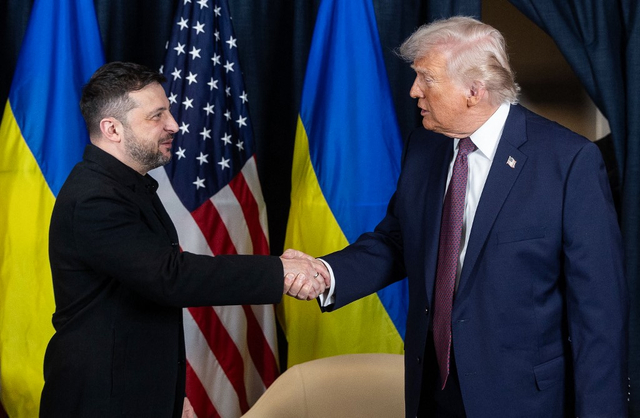
Beyond NATO itself, the summit offers Volodymyr Zelenskyy a second chance in just three weeks to meet Donald Trump following their encounter at the G7 summit, which ended on a very positive note for Kyiv.
The two already talked over the weekend, with Trump also holding a phone call with Russia’s Vladimir Putin. Zelenskyy described his conversation with Trump as “very good”, saying they discussed the situation on the front line, ongoing diplomatic efforts and the prospects for ending the war. He said the two agreed to continue their discussions during the NATO summit in Ankara.
Euractiv is a European news website focused on EU policies. It was founded in 1999 by the French media publisher Christophe Leclercq. The website's headquarters and central editorial staff are located in Brussels, with offices in Paris and Berlin.