Russian Oil Giant Limits Fuel Sales Nationwide After Ukrainian Strikes
AI Analysis
Ukrainian drone strikes are significantly impacting Russian fuel infrastructure, leading to purchase limits at gas stations nationwide and reported shortages, particularly in Crimea. These attacks target oil refineries, depots, and transshipment complexes, aiming to degrade Russia’s logistical capabilities and war financing. Russia is demonstrating a limited ability to effectively counter these drone attacks, requiring significant air defense resources for interception.
Key Takeaways
- Tatneft, Rosneft, and Lukoil have all implemented fuel purchase limits nationwide due to ongoing Ukrainian drone attacks.
- Ukraine is employing a 'long-range sanctions' strategy targeting Russian oil infrastructure.
- Recent strikes have hit oil depots in Krasnodar region, refineries in Nizhnekamsk, and a hydrocarbon transshipment complex in southern Russia.
- Moscow reported intercepting 35 drones in a two-hour period, indicating a high volume of attacks and strain on air defenses.
- Some gas stations are reverting to cash-only transactions, potentially indicating disruptions to digital payment systems or attempts to limit traceability.
Why It Matters
Degrading Russia’s fuel supply chain directly impacts its military logistics and ability to sustain operations in Ukraine. The success of Ukrainian drone strikes highlights vulnerabilities in Russian air defense and critical infrastructure protection, potentially influencing future attack vectors and resource allocation. The fuel shortages could also contribute to domestic unrest and economic pressure within Russia.
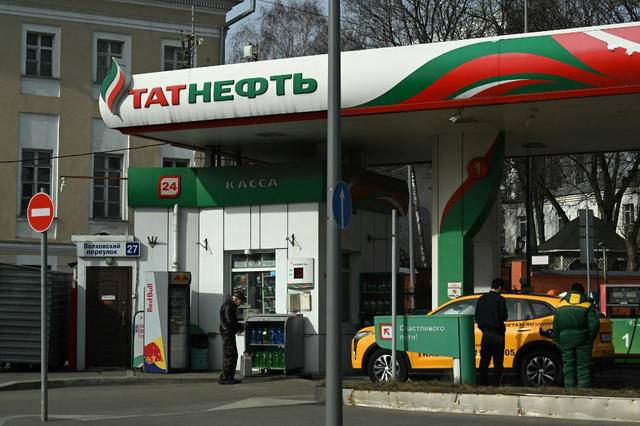
Tatneft, one of Russia’s largest oil companies, introduced fuel purchase limits at gas stations nationwide on Tuesday.
Russian media reported that Tatneft has temporarily restricted gasoline and diesel sales nationwide, following similar measures introduced at its gas stations in Moscow and St. Petersburg over the weekend.
Follow our coverage of the war on the @Kyivpost_official.
Drivers at Tatneft stations in the Russian city of Chelyabinsk were informed that gasoline purchases for passenger vehicles would be limited to 30 liters (8 gallons) per transaction, while diesel sales would be capped at 60 liters (16 gallons).
Truck drivers can purchase no more than 300 liters (79 gallons) of diesel fuel at a time.
Some stations have also reportedly stopped accepting bank cards and are requiring cash payments instead.
On Sunday, Russian media outlets reported that some Tatneft-operated gas stations in Moscow limited sales of AI-92 and AI-95 gasoline to 20 liters (5 gallons) per customer and diesel fuel to 40 liters (10 gallons) per customer.
Similar measures were introduced at Tatneft gas stations in St. Petersburg, where customers were likewise limited to 20 liters (5 gallons) of gasoline and 40 liters (10 gallons) of diesel.
The company has described the measures as temporary, though it has not publicly provided detailed explanations for the restrictions.
Other major Russian oil firms imposed similar restrictions.
Rosneft reportedly capped purchases at 90 liters (24 gallons) per vehicle or container, while Lukoil limited sales to 100 liters (26 gallons) per transaction.
An extensive fuel shortage was also reported across occupied Crimea after Kyiv stepped up attacks to cut off Russian logistics supplying the peninsula.
Andriy Kovalenko, head of Ukraine’s Center for Countering Disinformation, argued that not only is the Kremlin responsible for the fallout, but also the Russian people who kept Russian leader Vladimir Putin in power.
“The result of Putin’s reckless venture is a disgrace to Russia and a personal disgrace to him. For every Russian, it also means a deterioration in their quality of life starting today, and rightly so. Because Russians are responsible for the war and for keeping Putin in power in Russia,” Kovalenko wrote.
Ukraine has continued hitting Russia’s oil industry in 2026, an operation Kyiv describes as “long-range sanctions” designed to undermine Moscow’s ability to finance its war against Ukraine.
Earlier on Tuesday, Ukraine’s long-range drone campaign struck an oil depot in Russia’s Krasnodar region and targeted Moscow’s largest oil refinery.
According to the operational headquarters of Russia’s Krasnodar region, falling debris from an unmanned aerial vehicle (UAV) caused a fire at an oil depot in the village of Poltavskaya in the Krasnoarmeysky district.
The same day, Moscow Mayor Sergei Sobyanin also reported a drone strike, saying that 35 drones flying toward the capital had been shot down within two hours.
On Friday, drones reportedly targeted the Taneco refinery – one of Russia’s largest – and the TAIF-NK refinery in Nizhnekamsk, both key assets in the country’s refining sector.
On Saturday, Ukraine hit the largest hydrocarbon transshipment complex in southern Russia, knocking out vital fuel infrastructure and air defense systems protecting it.
On the same day, Ukraine struck an oil processing and pumping facility near the settlement of Yefimovka.
Kateryna investigates today's most important topics, from geopolitical challenges and defense strategies to stories that change the course of events. She explores the secrets of Ukraine's intelligence services and shows the hidden side of global events. Her passion is uncovering secrets that change history. Born and lives in Kyiv.