Ukraine Uses Decoy Drone Swarms, AI to Challenge Russian Air Defenses
AI Analysis
Ukraine is employing decoy drone swarms, AI-driven route optimization, and a decentralized command structure to overcome Russian air defenses and conduct long-range strikes. These tactics involve a mix of armed and unarmed drones, including designs mimicking missiles on radar. The system reportedly leverages platforms like Palantir's PRISMA for real-time battlefield data analysis.
Key Takeaways
- Ukraine utilizes both armed and decoy drones in coordinated swarms for long-range strikes.
- AI, potentially linked to Palantir's PRISMA, is used to analyze battlefield data (flight paths, radar coverage, interception patterns) and dynamically adjust drone routes.
- A jet-powered drone designed to appear as a missile on radar is being deployed to complicate Russian interception.
- Ukraine maintains a decentralized command structure with numerous launch locations to mitigate disruption by Russia.
- The system is capable of coordinating thousands of UAVs simultaneously.
Why It Matters
This represents a significant evolution in drone warfare, demonstrating the potential to overwhelm traditional air defenses through saturation and deception. The use of AI for real-time adaptation and decentralized command structures increases operational resilience and effectiveness, potentially setting a precedent for future conflicts. This also highlights the growing importance of electronic warfare and radar jamming countermeasures.
Ukraine is increasingly using swarms of decoy drones and artificial intelligence (AI) to support long-range strikes inside Russian territory, according to a CNN report.
The report, published Thursday, cited the commander of the Deep Strike unit within Ukraine’s Defense Intelligence (HUR), identified only by the call sign “Vector.”
Follow our coverage of the war on the @Kyivpost_official.
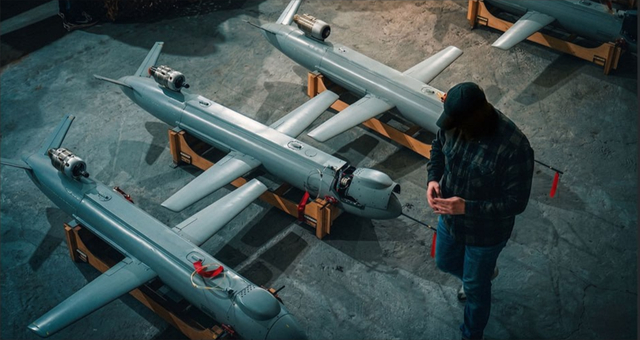
Footage showed Ukrainian personnel preparing various unmanned aerial vehicles (UAVs) for launch.
While some drones were equipped with warheads, others were launched without payloads and used as decoys.
“Some are empty, some with a payload. The payload is small, but it is enough to destroy air-defense systems,” Vector told CNN.
The report also described a jet-powered drone that appears as a missile on radar, complicating interception efforts.
According to Vector, Ukraine’s long-range program relies on a decentralized structure, making it harder for Russia to disrupt operations.
“We don’t have any common centers and we use dozens of places. Also, the software gives us a chance to work with thousands of UAVs,” he said.
Following this, CNN reported that Ukraine is expanding its use of drones to wear down Russian defenses and create openings for follow-on attacks.
Around 200 drones were reportedly prepared for launch from multiple locations on the night journalists visited the unit.
Additional reporting by RBC-Ukraine suggested that Ukraine may be using an AI system, likely linked to Palantir’s PRISMA platform, to support these military operations.
According to the outlet, AI is used to process real-time battlefield data, including flight paths, radar coverage and interception patterns.
The system can analyze:
This allows Ukrainian forces to adjust drone routes in real time and exploit gaps in Russian defenses while improving the effectiveness of long-range strikes compared to conventional drone operations.
Julia is a Deputy Head of News and correspondent for Kyiv Post who has previously worked as a parliamentary editor, journalist, and news editor. She has specialized in covering the work of the Ukrainian parliament, government, and law enforcement agencies.