Ukraine Developing AI-Driven Drone Swarms to Counter Russian Shaheds
AI Analysis
Ukraine is developing AI-driven drone swarms to counter Russian Shahed UAVs, focusing on centralized control and autonomous communication. The project aims to enhance efficiency by allowing a single operator to manage multiple drones, forming part of Ukraine's 'small air defense' strategy.
Key Takeaways
- Ukraine is developing AI-driven interceptor drone swarms.
- The project is led by Brave1, a government-backed innovation hub.
- Development focuses on centralized control and autonomous inter-drone communication.
- The system aims to allow one operator to manage multiple drones.
- The goal is to enhance efficiency and form part of a flexible air defense layer.
Why It Matters
This development represents a significant advancement in Ukraine's air defense capabilities, potentially reducing the operational burden on human operators and increasing the effectiveness of counter-UAS operations. It highlights a shift towards more autonomous and efficient defense systems, which could alter the balance in drone warfare tactics against Russian UAV threats.
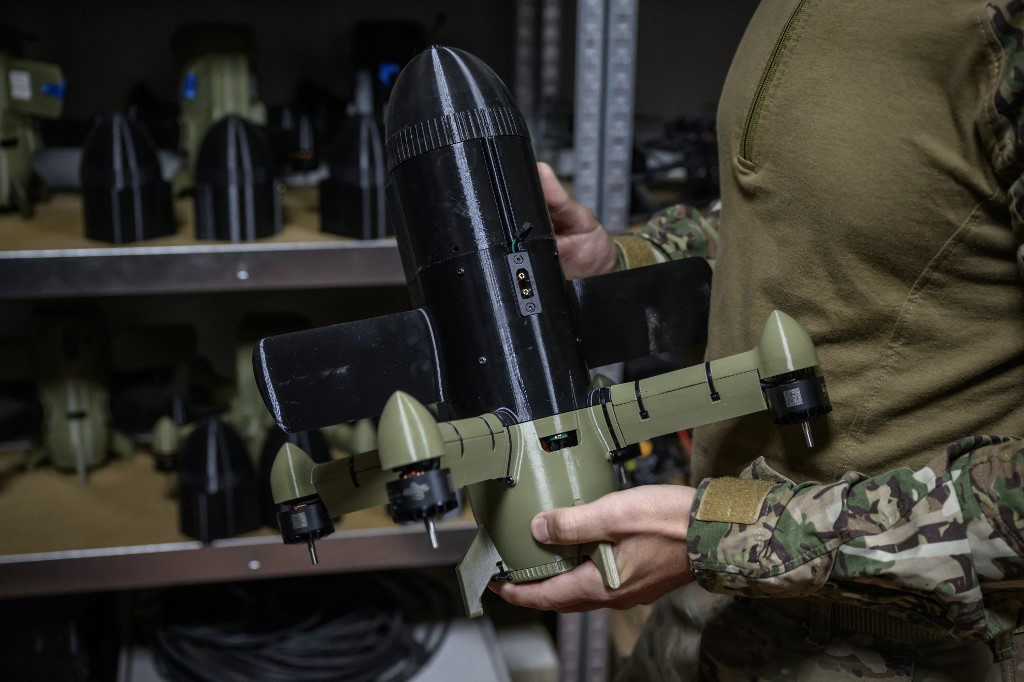
Ukrainian defense tech developers are working on autonomous swarms of interceptor drones designed to take down Russian Shahed kamikaze UAVs with minimal human input, according to a report by Business Insider.
The project is being led by engineers within Brave1, a government-backed innovation hub coordinating military technology development during the war.
Follow our coverage of the war on the @Kyivpost_official.
The most realistic near-term scenario involves a single operator controlling multiple interceptor drones simultaneously, rather than piloting them individually.
Brave1 representatives told the outlet that several unnamed companies are already working on swarm-capable systems, with development focused on two parallel tracks: enabling centralized control of multiple drones and building autonomous communication between drones to coordinate attacks.
Of the two, centralized multi-drone control is closest to battlefield deployment.
The emerging system is expected to form part of Ukraine’s so-called “small air defense” layer – a flexible, lower-cost solution designed to counter mass drone attacks.
Engineers are currently refining key technologies, including drone-to-ground communication, inter-drone data exchange, target detection and recognition, and automated guidance systems.
The goal is to shift the operator’s role from direct piloting to oversight – allowing one person to manage multiple interceptors while improving efficiency to the point where a single drone can reliably destroy a single Shahed.
“Brave1 said its goal is to enable fully autonomous interception while keeping humans in the loop for target control, easing the burden on operators rather than replacing them,” the report said.
A representative of Wild Hornets, which produces the Sting interceptor, described swarm technology as a major leap from current “primitive algorithm”-based systems, calling it a shift toward true remote warfare.
Ukraine has already deployed a range of interceptor drones to counter Russian UAV attacks. Western analysts commonly cite four main models in use or development:
Meanwhile, international efforts are exploring similar concepts. In late 2025, French firm Atreyd unveiled an experimental system in which AI-coordinated FPV drones form a “wall” to intercept incoming threats.
Kyiv Post is Ukraine’s first and oldest English news organization since 1995. Its international market reach of 97% outside of Ukraine makes it truly Ukraine’s Global – and most reliable – Voice.