US Marine Corps tests using helicopter as mobile drone command center
AI Analysis
The US Marine Corps is experimenting with using helicopters (UH-1Y Venom) as mobile command centers for small, commercially available FPV drones (Neros Archer). This involves launching drones from the ground and then transferring control to operators inside the helicopter, extending the drone's operational range. The Corps has rapidly expanded its FPV drone inventory, fielding over 3,500 units.
Key Takeaways
- USMC successfully tested transferring control of a Neros Archer FPV drone from a ground station to operators aboard a UH-1Y Venom helicopter.
- The test focused on the feasibility of non-kinetic drone deployment from a moving helicopter.
- The Neros Archer was selected due to its existing integration with Marine infantry units.
- The USMC has rapidly increased its FPV drone inventory to over 3,500 units.
- This initiative aims to leverage low-cost drones to extend the capabilities of traditional aviation assets.
Why It Matters
This development represents a shift towards integrating inexpensive, commercially available drones into traditional military aviation, offering enhanced situational awareness and potentially offensive capabilities. Utilizing helicopters as mobile drone bases extends the range and operational flexibility of these systems, addressing a critical need in modern warfare as demonstrated by conflicts in Ukraine and the Middle East. This approach allows the Marines to scale drone capabilities quickly and cost-effectively.
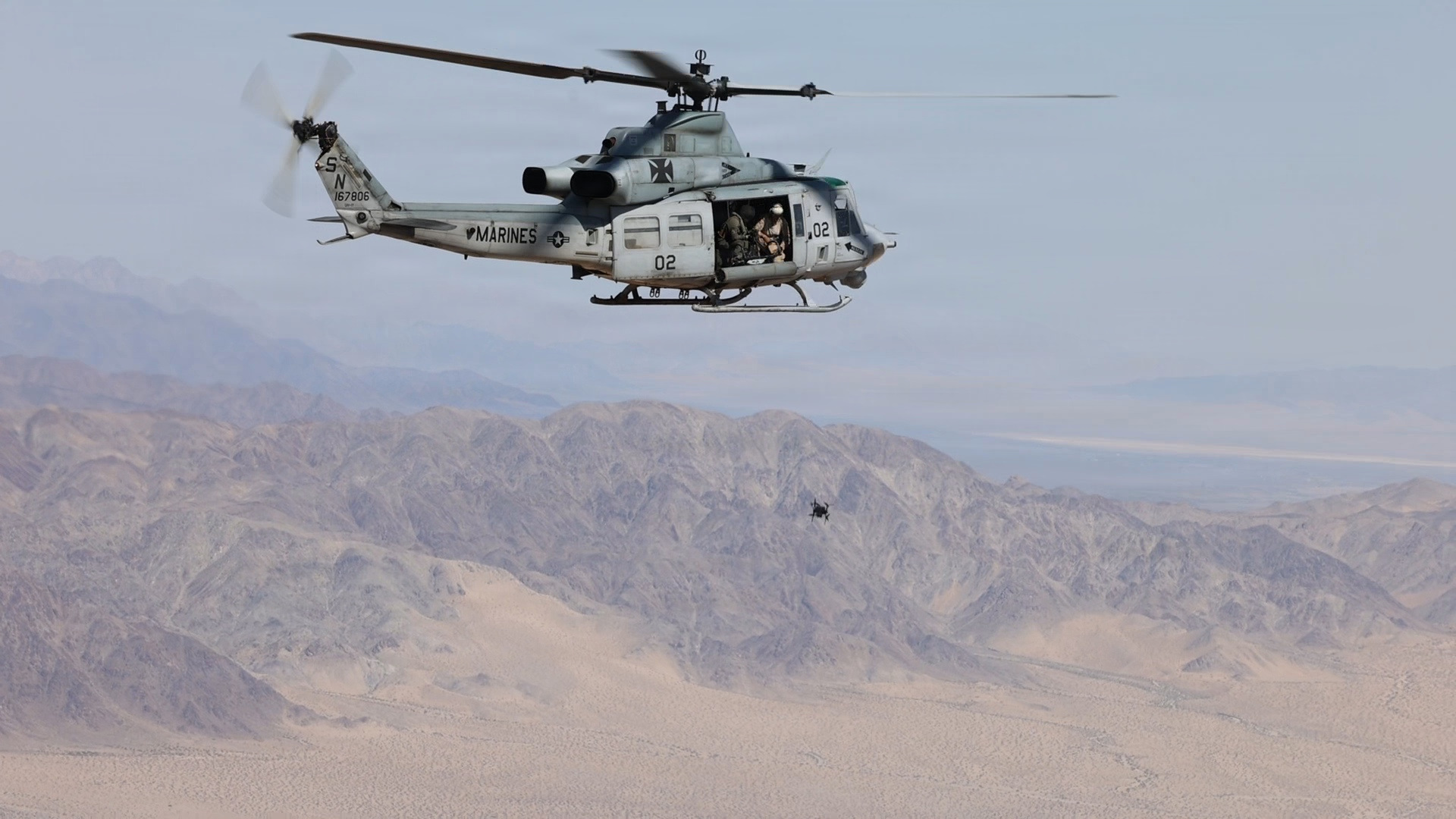
The U.S. Marine Corps is testing new ways to combine low-cost drones with traditional aircraft, having recently paired a UH-1Y Venom helicopter with an attack drone in a recent Southern California exercise.
During the test, Marines launched a Neros Archer first-person-view, or FPV, drone from the ground before transferring control to operators aboard a helicopter orbiting miles away, the Corps announced in a statement last week, saying that the move was a step towards integrating inexpensive drones into aviation operations.
The goal, according to the release, was to see if aircraft like the UH-1Y Venom and AH-1Z Viper could extend the reach of FPV drones, which let operators watch a live feed of unmanned aircraft system from a screen or goggles.
“The primary objective was to test the feasibility of a non-kinetic drop and deployment of a first-person view drone from a moving helicopter, which we were able to do today,” said Capt. Quinton Thornbury, a UH-1Y Venom pilot with Marine Light Attack Helicopter Squadron (HMLA) 169, Marine Air Group 39, 3rd Marine Aircraft Wing. “From there, validate that we can control the maneuver of that drone from the back of the aircraft.”
The service said it used the Neros Archer system because it has already been widely used and tested by Marine infantry units, which makes it easier to integrate into aircraft operations.
Low cost drones have become one of the defining weapons of today’s warfare, with widespread use in conflicts from Ukraine to the Middle East, forcing the military to wrestle with new doctrine and cost calculations as it seeks to modernize its forces.
Recently, the service announced that it had quickly expanded its FPV attack drone inventory, fielding more than 3,500 after officials greenlit integration of the new tech.
Eve Sampson is a reporter and former Army officer. She has covered conflict across the world, writing for The New York Times, The Washington Post and The Associated Press.