Drone Swarm Attack Tactics
Understanding coordinated UAV attacks, swarm intelligence, and their implications for modern warfare.
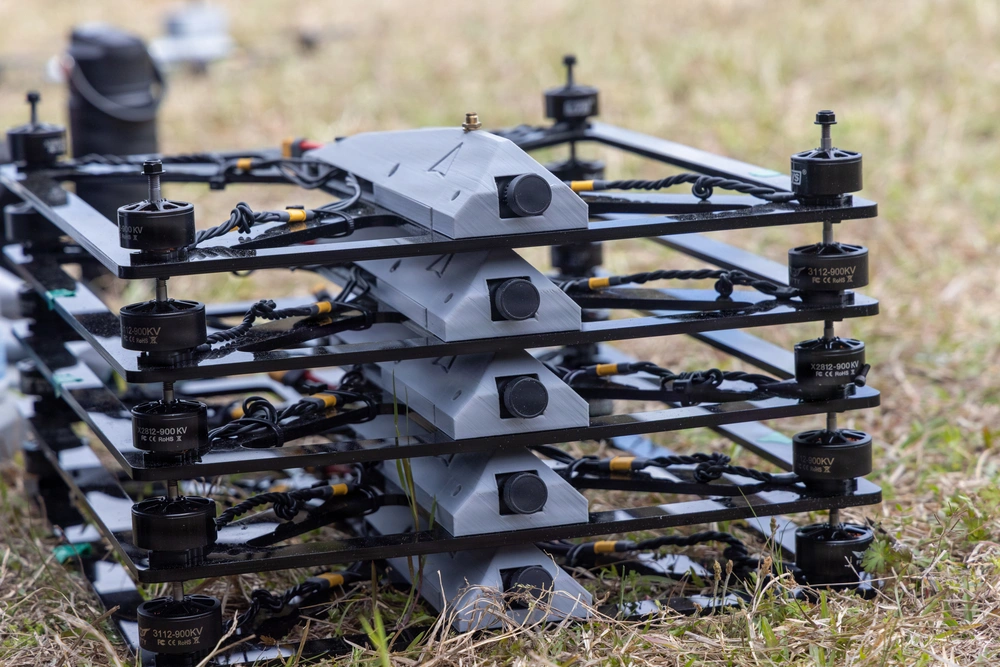
Quick Overview
What It Is
Drone swarm attacks involve coordinating multiple unmanned aerial vehicles to overwhelm traditional air defense systems through sheer numbers and synchronized tactics.
How It Works
Swarm attacks use distributed AI and communication protocols to coordinate multiple drones, allowing them to adapt in real-time, share intelligence, and execute complex multi-vector attacks.
Drone Swarm Attack Tactics
The emergence of drone swarm technology represents one of the most significant tactical developments in modern warfare. By coordinating dozens or hundreds of unmanned aerial vehicles, military forces can execute complex, multi-vector attacks that can overwhelm traditional air defense systems and fundamentally change the nature of aerial combat.
Tactical Principles
Distributed Operations
Unlike traditional air attacks that rely on a few high-value platforms, drone swarms distribute risk across many low-cost units. The loss of individual drones does not compromise the overall mission, making swarms inherently resilient to defensive countermeasures.
Overwhelming Defense
Swarm tactics are designed to saturate enemy air defenses by presenting more targets than can be effectively engaged. This numerical superiority forces defenders to make difficult prioritization decisions and often allows portions of the swarm to reach their objectives.
Adaptive Coordination
Modern swarm algorithms enable drones to adapt their tactics in real-time based on battlefield conditions, enemy responses, and mission objectives. This adaptive capability makes swarms unpredictable and difficult to counter with static defensive measures.
Attack Patterns
Wave Attacks
Sequential waves of drones approach targets from different directions and altitudes, forcing defenders to engage multiple threat vectors simultaneously while preserving swarm strength for follow-on attacks.
Saturation Attacks
Simultaneous launch of maximum available drones to overwhelm point defenses through sheer numbers, accepting higher individual losses in exchange for mission success.
Decoy and Strike
Mixed formations using cheaper decoy drones to mask the approach of more capable strike platforms, forcing defenders to reveal positions and expend interceptors on false targets.
Swarming Convergence
Drones approach from widely dispersed locations, converging on targets at predetermined times to concentrate effects while minimizing exposure to area defenses.
Technological Enablers
Artificial Intelligence
Machine learning algorithms enable swarm coordination without constant human control, allowing rapid decision-making and adaptive responses to changing battlefield conditions.
Communication Networks
Mesh networking protocols allow drones to share information and coordinate actions even when individual units are jammed or destroyed, maintaining swarm cohesion.
Miniaturization
Advances in electronics, sensors, and propulsion have enabled effective weapons systems to be packaged in increasingly small and inexpensive platforms.
GPS-Denied Navigation
Modern swarms incorporate multiple navigation systems including visual odometry, terrain matching, and inertial guidance to operate in GPS-denied environments.
Counter-Swarm Challenges
Detection Difficulties
Small individual radar cross-sections and low flight altitudes make swarm detection challenging for traditional air defense radars.
Engagement Economics
The cost disparity between expensive interceptor missiles and cheap drones creates unfavorable engagement economics for defenders.
Multiple Vector Defense
Defending against attacks from multiple directions simultaneously requires distributed defensive systems and careful coordination.
Electronic Warfare Limitations
While jamming can disrupt some swarm communications, distributed mesh networks and autonomous operation modes limit EW effectiveness.
Future Developments
Heterogeneous Swarms
Future swarms will likely combine different drone types with specialized roles including ISR, strike, decoy, and electronic warfare platforms operating in coordination.
Artificial Intelligence Evolution
More sophisticated AI algorithms will enable even more complex coordination and adaptive behavior, potentially including real-time tactical innovation.
The proliferation of drone swarm technology represents a fundamental shift in military tactics that will require new approaches to both offensive operations and defensive planning.
Key Features
- Coordinated Attack
- AI Swarm Logic
- Overwhelming Defense
- Adaptive Behavior
Advantages
- Overwhelms point defenses
- Distributed resilience
- Cost-effective scaling
- Adaptive tactics
Limitations
- Complex coordination required
- Communication vulnerabilities
- Limited individual payload
- Regulatory restrictions
Real World Application
Observed in conflicts in Ukraine, Middle East, and demonstrated in military exercises worldwide, showing potential to revolutionize modern warfare.