Latvia Suggests AI May Have Redirected Ukrainian Drones
AI Analysis
Latvian military experts suggest Russian electronic warfare (EW) systems, potentially utilizing AI, are redirecting Ukrainian drones, causing them to deviate into Baltic and NATO airspace. Two Ukrainian drones crashed in Latvia near an oil facility, and Russia is accused of deliberately manipulating drone flight paths. This incident highlights a new dimension of asymmetric warfare and challenges to air defense systems.
Key Takeaways
- Russia is suspected of using GPS jamming and spoofing to alter Ukrainian drone trajectories.
- AI within drones may contribute to misidentification of targets, particularly visually similar oil infrastructure.
- NATO fighter jets (Romanian F-16s) intercepted and downed a drone in Estonian airspace – the first such event in the Baltics.
- Detecting low-flying drones remains a significant challenge for traditional radar-based air defense systems.
- Recent drone incursions have led to political fallout in Latvia, including the resignation of the defense minister and prime minister.
Why It Matters
The alleged redirection of Ukrainian drones poses a direct threat to NATO airspace and infrastructure, potentially escalating the conflict. This demonstrates Russia’s capability to exploit vulnerabilities in drone navigation systems and underscores the need for enhanced counter-UAS technologies and improved airspace monitoring. The incident also highlights the political instability that can result from such incursions, even if unintentional.
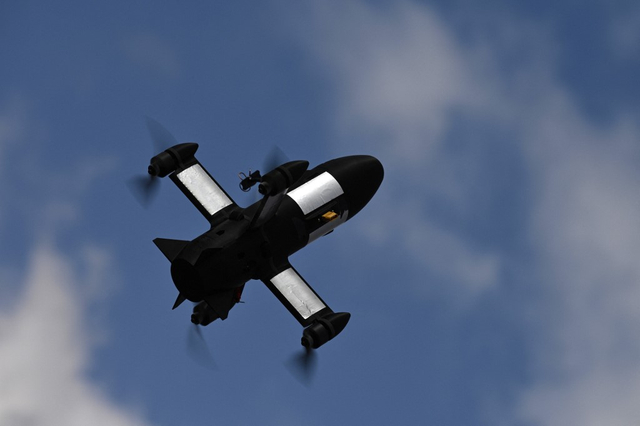
Latvian military experts said on Friday, May 22, that artificial intelligence (AI) and Russian electronic warfare (EW) systems may explain why Ukrainian drones recently crashed in the same location in eastern Latvia.
According to Latvian public broadcaster LSM, two drones crashed near an oil facility in the city of Rēzekne on May 7 and May 8 after apparently deviating from their original flight paths.
Follow our coverage of the war on the @Kyivpost_official.
The incidents raised questions in Latvia over whether the drones mistakenly identified the same location as a target.
“There are early forms of artificial intelligence in long-range drones,” Modris Kairišs, head of Latvia’s National Armed Forces Autonomous Systems Competence Center, told LSM.
“They search for targets pre-programmed into them. It is possible the drone struck oil terminal barrels visually similar to targets inside Russia,” he added.
However, Latvian officials said there is currently no direct confirmation explaining why both drones crashed in nearly the same place.
According to LSM, Ukrainian drones entering Baltic airspace are likely “victims” of Russian EW systems designed to interfere with satellite navigation signals.
GPS works by triangulating the time it takes signals to travel between the satellite and the device, giving the drone an external reference point to adjust its flight path accordingly.
Experts said Russia uses both GPS jamming and “spoofing,” which involves providing false satellite time-stamp signals to gradually alter their trajectory without triggering autopilot corrections.
As a result, drones may believe they remain on their programmed course while actually flying elsewhere.
On May 19, Ukrainian foreign ministry spokesman Heorhiy Tykhyi said Russia was deliberately redirecting Ukrainian drones toward Baltic countries using EW systems, commenting on the downing of a drone over Estonia.
“Moscow is doing this deliberately, combining it with intensified propaganda. We apologize to Estonia and all our Baltic friends for such unintentional incidents,” he said.
LSM reported that NATO fighter jets stationed in Estonia and Lithuania are regularly scrambled whenever unidentified drones or possible airspace threats are detected near Latvia.
Earlier this week, NATO aircraft participating in the Baltic Air Policing mission reportedly shot down a drone in Baltic airspace for the first time.
According to LSM, Romanian Air Force F-16 fighter jets carried out the interception operation over Estonia on May 19.
Experts told the outlet that detecting drones remains one of the main challenges for modern air defense systems because many drones fly at low altitudes and are difficult to detect with traditional radar systems designed for conventional aircraft.
Baltic countries have reported several drone-related incidents in recent months.
On March 23, Lithuania reported that a suspected drone entered its airspace and crashed into a frozen lake near the Belarusian border. Lithuanian officials suggested the drone may have originally targeted Russia’s Primorsk port during Ukrainian attacks on Russian energy infrastructure.
Latvia’s defense minister stepped down on May 10 following the drone incursions on May 8-9, with the prime minister resigning days later amid a coalition crisis triggered by the defense minister’s departure.
Kyiv Post is Ukraine’s first and oldest English news organization since 1995. Its international market reach of 97% outside of Ukraine makes it truly Ukraine’s Global – and most reliable – Voice.