How Russia is turning Ukraine’s drones against NATO
AI Analysis
Russia is actively employing GPS spoofing techniques to redirect Ukrainian drones into NATO airspace, resulting in several incidents including damage in Romania and Latvia, and forcing NATO to scramble interceptor aircraft. The number of Russian spoofing transmitters has significantly increased, expanding their range of interference across the Baltic region. While NATO has condemned these actions, no collective defense measures have been invoked.
Key Takeaways
- Russia is utilizing GPS spoofing, not jamming, to manipulate Ukrainian drone navigation.
- Spoofing transmitters, concentrated in Kaliningrad, are broadcasting false GPS signals, redirecting drones.
- Incidents have occurred in Lithuania, Latvia, Romania, and Estonia, with one Ukrainian drone downed by a Romanian F-16 over Estonia.
- Long-range Ukrainian drones targeting Russian infrastructure along the Baltic coast are most vulnerable.
- The number of Russian spoofing transmitters has increased dramatically from 3 to 36 in early 2024, reaching a potential range of 450km.
Why It Matters
Russia's use of GPS spoofing represents a novel and escalating form of hybrid warfare, exploiting the reliance on satellite navigation and creating a risk of unintended escalation with NATO. This tactic demonstrates Russia's willingness to operate in the gray zone, probing NATO's response capabilities and potentially creating justification for future actions. The incidents highlight the vulnerability of GPS-dependent systems and the need for improved resilience and counter-spoofing technologies.
KYIV, Ukraine — Russia is using GPS spoofing to steer Ukrainian strike drones off course and into NATO airspace, Lithuania said this week, days before one of Moscow’s own drones hit a Romanian apartment block and wounded two civilians — likely the first casualties on NATO soil since Russia’s 2022 invasion of Ukraine.
Russia’s interference reached Lithuania’s capital on May 20, when a drone forced Vilnius into shelters, shut its airport and cleared parliament, the first such alert in the city since 2022.
The jamming has been escalating for nearly three years, since Russia began disrupting signals around the 2023 NATO summit in Vilnius, and now spikes whenever Ukrainian drones fly toward Russian targets.
“This is the new reality of what the Baltic states face,” Lithuanian Defense Minister Robertas Kaunas said last week.
Romanian F-16s scrambled in response, President Nicușor Dan said.
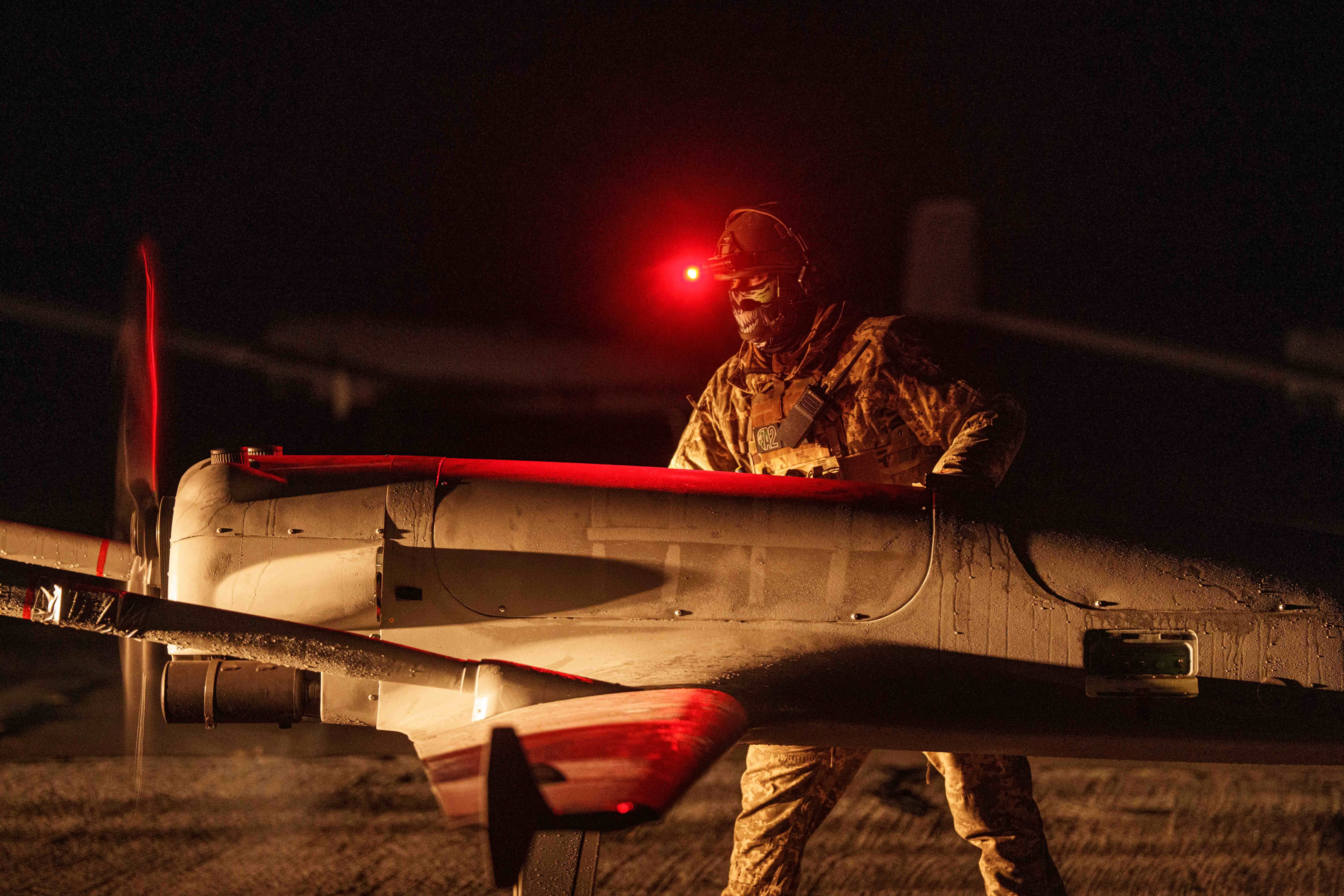
Unlike the attacks that struck homes in Romania on Friday, most of the drones that have crossed into Baltic airspace over the last few months have not been launched by Russia, but instead have been operated by Ukraine and thrown off course by Russia.
Both strike drones launched at refineries and ports inside Russia and interceptor drones meant to take out incoming attacks have been steered off course and into NATO airspace by Russian spoofing several times over the last few years.
They have already done damage on allied soil: one struck a Latvian oil depot on May 7, exploding on impact. On May 19, a Romanian F-16 on NATO patrol shot another down over Estonia, the first time an allied jet had downed a drone believed to be Ukrainian.
From Kaliningrad, Russian transmitters broadcast counterfeit satellite signals strong enough to seize a drone’s navigation in flight, feed it false coordinates and send it off course.
Lithuania counted 36 of those spoofing transmitters this week, up from three at the start of 2025, reaching 450 kilometers (280 miles) across the region, according to Reuters.
NATO has condemned each strike and scrambled jets to meet them, but has not threatened any retaliation.
Romania’s foreign minister said the Galați strike could justify emergency consultations under NATO’s Article 4, the treaty’s mechanism for talks when a member’s security is threatened.
After speaking with Dan on Friday, Secretary-General Mark Rutte said the alliance stands ready to defend “every inch” of allied territory.
No member, though, has invoked Article 5, the clause that treats an attack on one ally as an attack on all.
Spoofing, meanwhile, is a form of electronic warfare that works by deception rather than brute force.
While jamming overwhelms a drone’s receiver with noise until it can no longer fix its position, spoofing instead sends a stronger, counterfeit signal that the receiver treats as genuine.
“The idea behind spoofing is to create deception,” Thomas Withington, an electronic-warfare specialist at the Royal United Services Institute, told PBS.
When a drone is fed a false fix, it can fly on a completely different path than its operator intended.
The drones most exposed are Ukraine’s long-range models, which fly north toward Russian oil-export terminals on the Gulf of Finland, including Ust-Luga and Primorsk near St. Petersburg.
Their routes hug the Baltic coast, where Russian electronic warfare is densest, and a drone that loses its true fix drifts into allied airspace, according to the Atlantic Council.