Russian Military Tech Plant, Major Oil Refinery Hit as 289 Drones Pound Russia Overnight
AI Analysis
A large-scale drone attack targeted Russian infrastructure overnight, successfully striking a key military tech plant (VNIIR-Progress) producing electronic warfare systems and components for precision-guided munitions, as well as an oil refinery (KINEF). Russia claims to have intercepted 289 drones, but the Cheboksary strike indicates vulnerabilities in their air defenses. The attacks caused significant disruption, including airport closures across multiple regions.
Key Takeaways
- VNIIR-Progress, a facility producing electronic warfare (EW) systems (Kometa) and components for Russian weapons (Shahed drones, Iskander, Kalibr), was damaged in Cheboksary.
- The Kirishinefteorgsintez (KINEF) oil refinery in the Leningrad region was also targeted, marking a repeat attack and potentially impacting 7% of Russia's refining capacity.
- Russia reported intercepting 289 drones across 18 regions, but notably, no interceptions were reported over Chuvashia during the attack on VNIIR-Progress.
- The scale of the drone attack necessitated temporary closure of airports in at least 17 Russian cities.
- Ukraine’s General Staff confirmed VNIIR-Progress develops EW systems designed to counter signals used by NATO and Ukraine.
Why It Matters
The successful strike on VNIIR-Progress is strategically significant as it degrades Russia’s capacity to produce and maintain critical electronic warfare capabilities and components for advanced weaponry. Targeting oil refineries demonstrates a Ukrainian strategy to disrupt Russia’s economic capacity to sustain the war effort. The sheer number of drones employed and the penetration of Russian air defenses highlight the evolving threat posed by UAS and the challenges Russia faces in countering them.
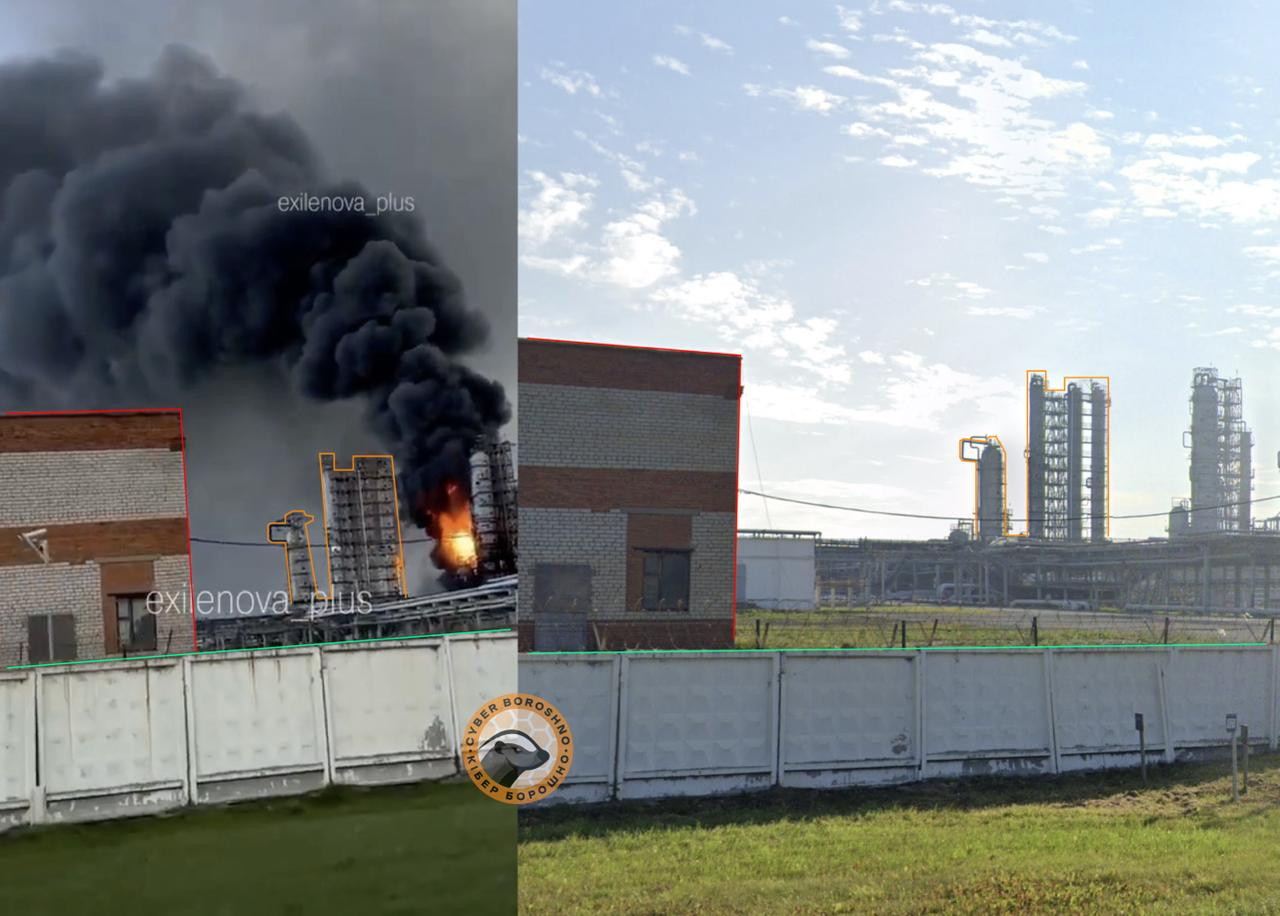
Russia’s VNIIR-Progress military plant in Cheboksary was reported to be on fire following an overnight strike, according to Russian Telegram media channels and videos posted by local residents on social media.
The facility, officially known as JSC VNIIR-Progress, is located in Cheboksary, the capital of Russia’s Chuvash Republic. Photos and videos circulating online appeared to show a large fire and smoke rising from the site after explosions were heard in the area.
Follow our coverage of the war on the @Kyivpost_official.
Air raid alerts warning of a missile threat were reportedly issued in the region before the explosions occurred.
According to Ukraine’s General Staff, VNIIR-Progress develops electronic warfare systems, including Kometa antenna arrays designed to interfere with satellite, radar, and radio signals.
The plant also produces satellite GNSS receivers and antennas for GLONASS, GPS, and Galileo. These components – including Kometa-type modules – are integrated into a range of Russian weapons, such as Shahed-type drones, Iskander and Kalibr missile systems, and UMPK guidance kits for aerial bombs, all of which have been widely used in strikes against Ukrainian cities and infrastructure.
Throughout the night, Russian social media reported explosions in the area. The shopping and entertainment center “MTV Center,” located directly opposite the attacked defense plant “VNIIR-Progress,” was damaged in Cheboksary.
Separately, Ukrainian drones carried out a mass attack on Russia’s Leningrad region overnight, governor Alexander Drozdenko said. He reported a fire in an industrial zone in the city of Kirishi, adding that emergency crews had been deployed to contain the blaze.
According to Drozdenko, Russian air defenses shot down 18 drones over the region. No casualties were reported.
Kirishi is home to one of Russia’s largest oil refineries – the Kirishinefteorgsintez (KINEF) plant, owned by Surgutneftegaz.
The facility has processed around 18 million tons of oil annually in recent years, accounting for roughly 7% of Russia’s total refining capacity.
The refinery was previously targeted by drones on March 26 and later resumed operations at reduced capacity.
Russia’s Defense Ministry said air defenses intercepted and destroyed 289 drones overnight across 18 regions, including Moscow, Leningrad, Tula, Ryazan, Pskov, Novgorod, Tatarstan, and occupied Crimea.
Notably, no interceptions were reported over Chuvashia, where the Cheboksary strike occurred.
Airports across at least 17 cities temporarily suspended operations during the attacks, including in Kazan, Nizhny Novgorod, Samara, Saratov, Perm, Ufa, Pskov, and Cheboksary.
Kyiv Post is Ukraine’s first and oldest English news organization since 1995. Its international market reach of 97% outside of Ukraine makes it truly Ukraine’s Global – and most reliable – Voice.