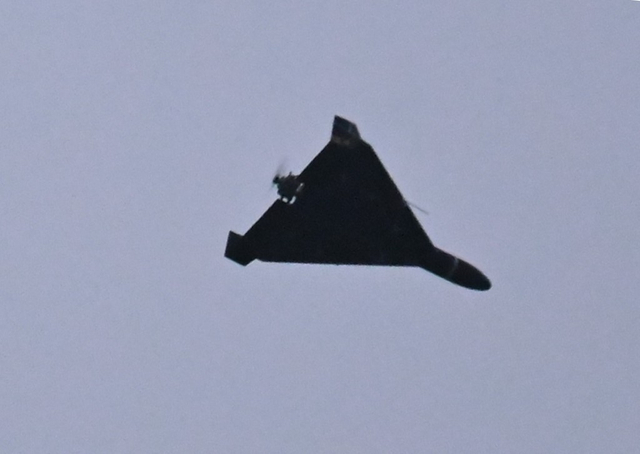
Ukraine Says Private Air Defense Unit Downed High-Speed ‘Jet Shahed’ Drone
AI Analysis
Ukraine's private air defense unit successfully intercepted a high-speed 'jet-powered' Shahed drone in the Kharkiv region, marking a significant development in counter-UAS capabilities. This initiative is part of a broader strategy to enhance Ukraine's air defense through private sector involvement and technological innovation.
Key Takeaways
- Private air defense unit in Ukraine downed a high-speed 'jet-powered' Shahed drone.
- The drone was traveling at speeds over 400 km/h, posing a greater interception challenge.
- Ukraine is integrating private air defense units into its military command structure.
- The UNITE – Brave NATO program aims to develop counter-drone technologies.
- Ukraine's tech cluster Brave1 is collaborating with NATO on defense innovation projects.
Why It Matters
The successful interception of a high-speed drone by a private air defense unit demonstrates Ukraine's adaptive approach to countering advanced drone threats. This initiative not only strengthens Ukraine's defensive capabilities but also highlights the growing role of private sector innovation and international collaboration in modern warfare.
Ukraine’s Defense Minister Mykhailo Fedorov said on Friday, April 17, that a private air defense unit had for the first time shot down a high-speed “jet-powered” Shahed-type drone.
The interception took place in the Kharkiv region, where privately operated air defense groups are being deployed to help protect critical infrastructure.
Follow our coverage of the war on the @Kyivpost_official.
According to Fedorov’s Telegram update, the drone was traveling at speeds exceeding 400 kilometers per hour (around 249 miles per hour), making it significantly more difficult to intercept than standard Shahed drones.
“This is a new level of complexity,” Fedorov said, adding that Russia is scaling up the use of faster and more advanced drones.
Ukraine has been developing a system of so-called “private air defense” units to supplement its military capabilities.
These groups, currently being formed at 19 enterprises, are integrated into the Air Force’s command system and operate as part of Ukraine’s broader air defense network. The selected staff receive military training, while air defense systems and ammunition are temporarily transferred to enterprises on a case-by-case basis.
The initiative, which started in early March, aims to rapidly expand defensive capabilities without placing additional strain on frontline military units. In late March, the first company participating in the project managed to shoot down Shahed and Zala drones in the Kharkiv region.
Fedorov said the next phase of the project will focus on scaling up operations to increase interception rates and improve response times.
On March 25, Fedorov said that Ukraine’s tech cluster Brave1 – a one‑stop hub for defense innovation in the country – has launched a new €10 million ($12 million) competition alongside NATO to develop technology to counter drones and improve navigation under electronic-warfare conditions.
The program, called UNITE – Brave NATO, is carried out in collaboration with the NATO Communications and Information Agency (NCIA). It focuses on urgent battlefield needs, as drone attacks and signal jamming continue to play a major role in Russia’s war against Ukraine.
Yuliia Zavadska is a news writer at Kyiv Post. She has experience in breaking news coverage, fact-checking, and digital journalism, with a focus on fast, accurate reporting and clear storytelling. Before joining Kyiv Post, she worked as a news feed editor for several leading Ukrainian media outlets.