Ukraine Aims to Intercept 95% of Air Targets as 27 Private Enterprises Join Air Defense Project
AI Analysis
Ukraine is bolstering its air defense capabilities through a collaborative project involving 27 private enterprises, aiming for a 95% interception rate of aerial targets. The initiative focuses on integrating interceptor drones, EW systems, and radar with Ukrainian Air Force coordination, and developing low-cost interceptor missiles to counter Shahed drones, including jet-powered variants. Recent successes include the downing of approximately 20 Shaheds and reconnaissance drones by enterprise-based air defense groups.
Key Takeaways
- Ukraine aims to achieve a 95% interception rate of all air targets.
- 27 Ukrainian private enterprises are participating in an air defense project, forming their own air defense groups and acquiring equipment.
- Interceptor drone usage has increased, doubling the destruction rate of Shahed drones over the past four months.
- Ukraine is developing low-cost interceptor missiles specifically designed to counter Shahed drones, including faster jet-powered models.
- A new air defense model is being deployed, emphasizing mobile units, short-range systems, and interceptor drones, with a long-term goal of creating an 'anti-drone dome'.
Why It Matters
This initiative demonstrates Ukraine’s adaptation to Russia’s evolving drone warfare tactics and its commitment to decentralized, resilient air defense. Leveraging private sector resources is crucial for supplementing limited military assets and protecting critical infrastructure. The development of low-cost interceptors is vital for sustaining defense against mass drone attacks, and the focus on jet-powered drone countermeasures indicates anticipation of future threats.
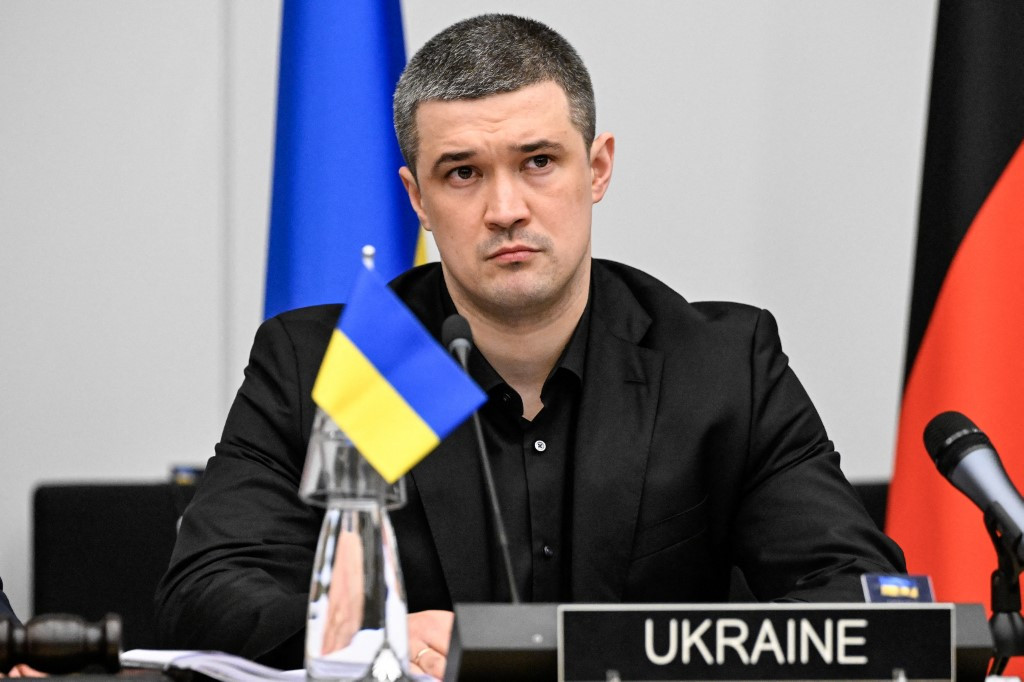
Ukraine’s strategic goal is to achieve a stable interception rate of 95% of aerial targets, Defense Minister Mykhailo Fedorov said during a closed meeting with journalists.
According to Fedorov, Ukraine continues to develop a “small” air defense system that has already significantly improved the interception of Russian Shahed drones.
Follow our coverage of the war on the @Kyivpost_official.
He said the share of Shaheds destroyed by interceptor drones has doubled over the past four months, despite Russia increasing the number of launched kamikaze drones by around 35% every month.
Over the same period, supplies of interceptor drones increased 2.6 times.
“Improving the air defense system is systematic work. Our strategic goal is to achieve a stable indicator of 95% interception of air targets. The introduction of after-action review played an important role in this process,” Fedorov said.
He explained that after-action review is a NATO-standard procedure involving a detailed analysis of combat operations after their completion.
“Together with the Air Force and military personnel, after each large-scale attack, we conduct a detailed analysis. We study the route of every missile and drone, interception points, technical details, and the reasons why certain targets were not shot down,” Fedorov said.
The process directly affects how Ukraine rebuilds its air defense system, including force deployment, command coordination, and the transition from temporary solutions to a permanent structure, Fedorov said.
“Currently, 27 enterprises of various forms of ownership from many regions of Ukraine have joined the pilot project,” he said.
The companies are located across Ukraine, including in the Kharkiv, Odesa, Kyiv, Zaporizhzhia, Poltava, and Zakarpattia regions.
The Defense Ministry granted participating companies authorization to carry out air defense tasks in coordination with the Ukrainian Air Force. The enterprises are now forming their own air defense groups, training personnel, and acquiring equipment, including interceptor drones, electronic warfare systems, radars, and automated turrets.
Some weapons are also being supplied from Armed Forces of Ukraine stockpiles.
Fedorov said interest in the project continues to grow as businesses seek additional ways to protect employees and critical infrastructure.
According to him, air defense groups from two enterprises in the Kharkiv and Odesa regions have already entered full combat duty in coordination with the Air Force and have destroyed around 20 Russian Shahed and reconnaissance drones.
He also confirmed the successful interception of a jet-powered Shahed drone in the Kharkiv region.
Several more enterprise-based air defense groups are expected to begin combat duty in the near future.
Fedorov stressed that any use of weapons by private air defense groups requires mandatory approval from the Air Force Command.
Fedorov also said Ukraine is developing low-cost interceptor missiles to shoot down Shahed drones, with several systems already undergoing testing.
According to Fedorov, the program was launched on the orders of President Volodymyr Zelensky and focuses on scaling affordable air defense solutions against Russia’s mass drone attacks.
The systems are also being designed to counter future threats, including faster jet-powered Shahed variants.
“We want to scale and reduce the cost of interceptor missiles in order to prepare for the emergence of jet-powered Shaheds,” Fedorov said. “This will help additionally protect critical infrastructure alongside drone interceptors.”
He added that Ukraine is issuing grants, expanding production, and reopening recruitment for development teams.
The push comes amid continued pressure on Ukraine’s air defense network. Earlier, Zelensky said Ukrainian forces are already intercepting more than 90% of Russian attack drones, but stressed that protection against ballistic missiles remains insufficient.
He also said Ukraine is deploying a new air defense model based on mobile units, short-range systems, and interceptor drones to improve protection against mass drone attacks.
Fedorov said Ukraine’s long-term goal is to build an “anti-drone dome” capable of destroying aerial threats before they reach critical infrastructure.
Kyiv Post is Ukraine’s first and oldest English news organization since 1995. Its international market reach of 97% outside of Ukraine makes it truly Ukraine’s Global – and most reliable – Voice.