Ukraine missile maker targets ‘game changer’ air defense system by 2027
AI Analysis
Ukraine's Fire Point is developing a new air defense system aimed at reducing the cost of intercepting ballistic missiles to under $1 million by 2027. The company is collaborating with European firms and seeking investment to enhance its capabilities, while also expanding its missile arsenal.
Key Takeaways
- Fire Point aims to launch a low-cost air defense system by 2027.
- The system is intended as an alternative to the Patriot system, targeting a cost below $1 million per intercept.
- Fire Point is in discussions with European companies for collaboration on radar and missile systems.
- The company is developing new supersonic ballistic missiles, including the FP-7 and FP-9.
- Ukraine is leveraging battlefield experience to innovate in low-cost defense technology.
Why It Matters
The development of a cost-effective air defense system by Ukraine could significantly alter the strategic landscape, providing an affordable alternative to existing systems like the Patriot. This initiative reflects Ukraine's growing role as an innovator in defense technology and could influence global military procurement strategies, especially amid increasing demand for air defense solutions.
Fire Point, maker of Ukraine’s Flamingo cruise missile, is in talks with European companies to launch a new air defense system by next year, a senior executive told Reuters, creating a low-cost alternative to the increasingly hard-to-get Patriot system.
With governments seeking to defend their skies as the wars in Ukraine and Iran sow global instability, Fire Point’s co-founder and chief designer Denys Shtilierman said it aimed to slash the cost of intercepting a ballistic missile to below $1 million.
Shtilierman also said Fire Point was awaiting government approval for an investment by a Middle Eastern conglomerate that valued the company at $2.5 billion and would open the door to new business opportunities, including low-orbit satellite launches.
Years of know-how gained on the battlefield fighting Russian forces have made Ukraine a leading innovator in low-cost defense tech. With the outbreak of war in the Gulf, Kyiv has leveraged that expertise to sign security agreements with governments across the region.
Many Ukrainian defense firms are now seeking to export their excess capacity and cash in on a global boom in military spending. While the government recently loosened wartime export restrictions, each proposed deal is still subject to stringent checks and state approval.
Ukraine and many other Western-allied nations rely heavily on the U.S.-made Patriot system to stop ballistic missiles.
But Patriot missiles are in increasingly short supply amid extensive deployment in the Gulf against Iranian attacks. And Europe’s only anti-ballistic system, the Italo-French SAMP/T, is produced in relatively small numbers.
To bring down a ballistic projectile, the Patriot system - manufactured by Raytheon and Lockheed Martin - often requires two or three air defense missiles, each costing several million dollars, Shtilierman said.
“If we can decrease it to less than $1 million, it will be ... a game changer in air defense solutions,” he said in an interview. “We plan to intercept the first ballistic missile at the end of 2027.”
Shtilierman declined to name the European companies involved in the discussions to develop the new system but said Fire Point is “deeply interested” in collaboration on radar, missile target-seeking and communications systems - areas where it lacks expertise.
European companies including Weibel, Hensoldt, SAAB and Thales have good radar solutions, he noted.
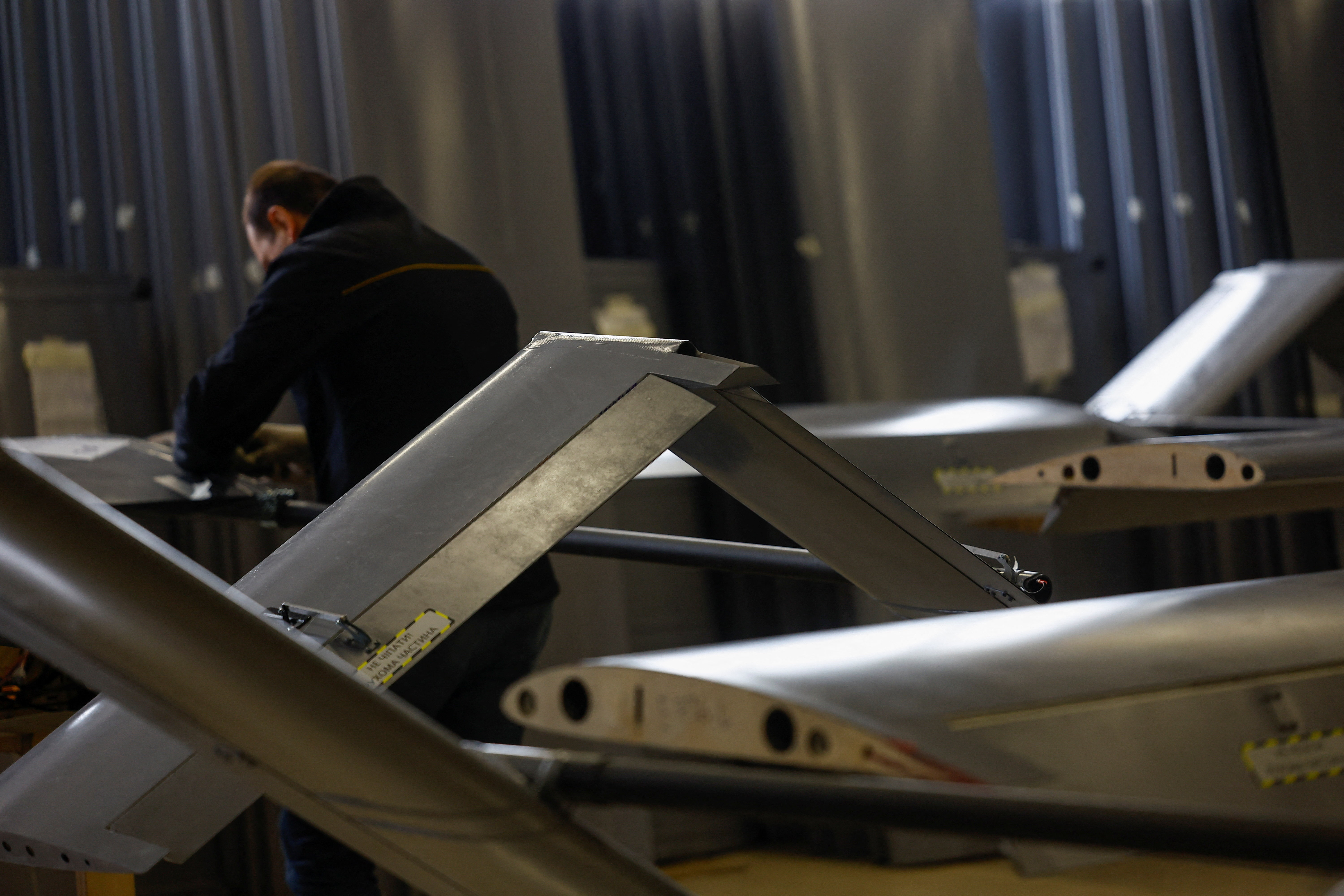
Founded after Moscow’s 2022 invasion, Fire Point is Ukraine’s biggest maker of the long-range drones used in the majority of strikes deep inside Russia.
In recent months, its FP5 long-range cruise missile - commonly known as the Flamingo - has also been used to hit Russian military facilities and arms factories, including a ballistic missile plant nearly 1,400 km (870 miles) inside Russian territory.
Shtilierman said Fire Point was now in the final stages of developing two supersonic ballistic missiles.
The smaller FP-7 missile, with a range of around 300 km, will have its first military deployment “in the close future”, he said, describing it as similar to Lockheed Martin’s ATACMS short-range ballistic system.
The larger FP-9, capable of carrying an 800 kg warhead up to 850 km, is about to enter testing and would place Moscow within range of Ukraine’s ballistic arsenal, he added.
Shtilierman said strikes on Moscow, which is ringed by some of the world’s most formidable air defenses, would cause a “mass shift in the Russian mind and the mind of top guys in Russia.”
Russia’s defense ministry did not respond to a request for comment.
Fabian Hoffmann, a missile expert and senior researcher at the Norwegian Defence University College, said that, while Russia has experience in successfully downing ATACMS, more widespread use of ballistic missiles could stretch Russian air defenses, already degraded by Ukrainian strikes.
And while Fire Point’s 2027 target for launching a low-cost air defense system was “ambitious”, he said that, beyond Ukraine’s own military needs, there would be strong demand from governments even if its kill rates per missile were less effective than the Patriot’s.