Ukraine’s Baltic Port Attacks Cost Russia Nearly $1B in Oil Revenue in 1 Week
AI Analysis
Ukrainian drone attacks on Russia's Baltic ports have significantly disrupted oil exports, highlighting vulnerabilities in Russian defenses. Despite efforts to counter these threats, Russian electronic warfare systems are largely ineffective against advanced Ukrainian drones.
Key Takeaways
- Ukrainian drones attacked Russia's Baltic oil export terminals, causing nearly $1 billion in revenue loss.
- Russian defenses struggle against Ukrainian drones flying on pre-programmed coordinates.
- Businesses in Russia are independently funding anti-drone measures due to inadequate state support.
- Russia's electronic warfare systems are ineffective against new Ukrainian drone models.
- Ukraine's drone industry is advancing faster than Russia's countermeasures.
Why It Matters
The attacks expose critical weaknesses in Russia's counter-UAS capabilities, potentially altering the strategic balance in the region. The economic impact and the need for private enterprises to fund their own defenses indicate a significant strain on Russian resources and infrastructure security, which could influence future military and economic strategies.
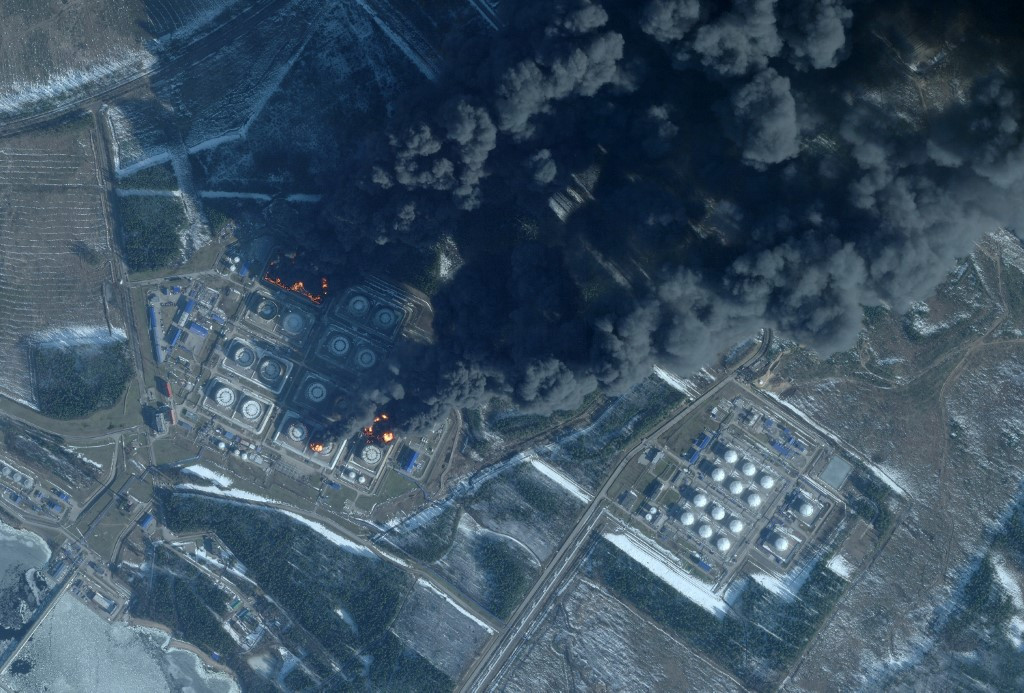
Five Ukrainian drone strikes on Russia’s key Baltic oil export terminals Primorsk and Ust-Luga, cost Russian energy exporters roughly $970 million in revenues in the week ending March 29, according to estimates from the Kyiv School of Economics (KSE) cited by FT.
The two ports together handle more than 40% of Russia’s seaborne crude export capacity. At Primorsk alone, the attacks destroyed an estimated $200 million worth of oil, a Western security official told the Financial Times.
Follow our coverage of the war on the @Kyivpost_official.
However, the figure seems small compared to $160 billion from Russian oil revenues in 2025, according to KSE estimates.
The full capacity remains weeks away as burned storage tanks may take months to rebuild, Vladimir Nikitin, crude analyst at Seala AI, told the FT. Repairs to processing lines at Novatek’s Ust-Luga terminal could take more than a month, he added. Lukoil’s Norsi refinery in the Nizhny Novgorod region sustained damage from drone debris, FT wrote.
Meanwhile, Russian media outlet The Bell claimed that Primorsk had largely returned to full capacity “within days of the strike” and that Ust-Luga retained at least partial export ability. A sustained halt to Baltic port operations, The Bell wrote on Sunday in its newsletter, citing Russian energy analyst Sergey Vakulenko, would require Kyiv to maintain the frequency of March’s attacks indefinitely.
But Russia’s drone defenses, built around electronic warfare systems designed to target remotely operated drones flying at least 35 meters (115 feet) above ground level (AGL), are largely ineffective against the latest Ukrainian models. The latter, FT wrote, fly on pre-programmed coordinates without a radio link, according to a report leaked by Dallas, a Ukrainian private intelligence firm.
The failure has forced businesses to absorb the cost themselves. One senior Russian businessman told the FT he spent at least 1.5 billion rubles ($19.1 million) on anti-drone towers and protective netting across his plants. By spring 2025, up to 80% of civilian enterprises in Russia had installed anti-drone defenses, the Kommersant newspaper reported.
State-run Rosneft, Russia’s largest oil exporter, operates its own electronic warfare systems, but they offer little protection against the newer generation of drones. The cost burden is generating discontent: businesses are funding their own defenses rather than receiving state support.
Kremlin spokesperson Dmitry Peskov acknowledged the limits of Russia’s response on Tuesday, saying Moscow was making “intense” efforts to protect energy infrastructure but could not keep facilities “100% secure from such terrorist attacks” – a concession that drew anger from pro-war Telegram bloggers.
Ukraine’s long-range drone industry is outpacing Russia’s countermeasures, despite Moscow’s continued strikes against Ukrainian drone manufacturers, a person close to the Russian defense ministry told the FT.
Olena Hrazhdan is the Business Reporter at Kyiv Post, covering Ukraine’s markets, business, and economic policy. While she reports broadly on economic issues, her core focus is banking, finance, monetary and fiscal policy. Olena previously wrote for leading Ukrainian business media and became a Fellow of the International Monetary Fund’s Journalism Fellowship in 2024.