'A Coffin With Funny Fans': Russia Tests Bizarre Cable-Spinning Robot Against FPV Drones
AI Analysis
Russia has unveiled a prototype counter-drone system based on its Depesha ground robotic platform, equipped with spinning cables designed to intercept FPV drones. The system has drawn criticism for its lack of armor, limited utility in real combat scenarios, and potential vulnerabilities to explosives and terrain challenges.
Key Takeaways
- Russia's Depesha robotic platform has been modified with spinning cables to counter FPV drones.
- The system is designed to knock down or deflect drones using high-speed rotating cables.
- Critics highlight significant vulnerabilities, including lack of armor, limited terrain adaptability, and exposure to explosives.
- The prototype is being tested in occupied Zaporizhzhia, with mixed reactions from analysts and social media users.
- Depesha was originally developed as a multi-purpose robotic platform capable of logistics, casualty evacuation, and strike roles.
Why It Matters
This development highlights Russia's ongoing efforts to adapt to the increasing threat of FPV drones in modern warfare. While innovative, the system's limitations underscore the challenges of designing effective counter-UAS solutions for dynamic and unpredictable combat environments.
Russian troops have equipped their Depesha ground robotic system with an unusual defense against kamikaze drones.
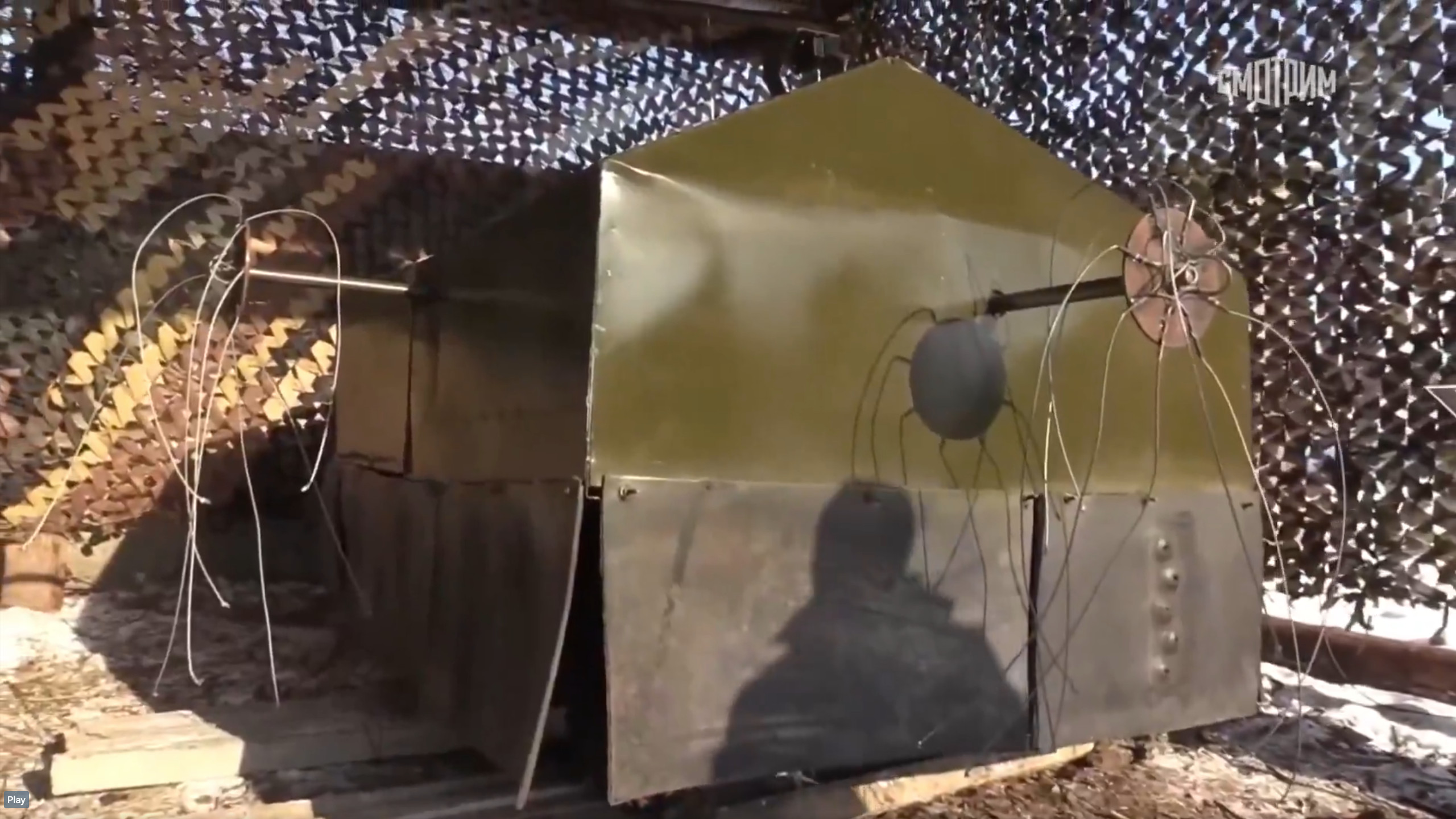
The vehicle, fitted with anti-drone “fans,” was shown in a report on the state propaganda channel Rossiya-1.
Follow our coverage of the war on the @Kyivpost_official.
Footage shows the robot covered by a solid steel grille to protect it from drone strikes. Shafts with thin cables extend from all four sides; when rotating, they are meant to create an additional protective layer.
The report reveals that the robot has no cargo compartment, no machine gun, and no armor.
“This is a test version. The idea is that the shafts rotate, setting this so-called fan with cables in motion,” the squad commander of the 70th Guards Motorized Rifle Regiment’s maintenance company told reporters.
“When an FPV [first-person view drone] tries to strike, the cables either knock it down or push it aside.”
According to the broadcast, the prototype is being tested somewhere in occupied Zaporizhzhia region.
Defense Express outlet reports that a similar concept – using full “blades” rather than cables – was patented by Russia in May 2025 as protection for light vehicles.
However, the analytical Telegram channel Btvt wrote back in December 2023 that Russia had already patented a cable-based version for defense against aerial threats, criticizing the idea at the time.
Returning to the latest prototype – described by some critics as a “shed with propellers,” cables do offer some advantages over rigid blades: they are lighter and less likely to be damaged if they hit the ground.
Still, the cable rotation mechanism occupies nearly all usable internal space inside the robot’s protective frame.
“In theory, such a design could provide mechanical protection against drones by striking them with high-speed rotating cables. However, questions remain about protection of the upper surface of this particular prototype,” Defense Express wrote.
The video shows the vehicle moving only across flat, unobstructed terrain - conditions unlikely to reflect real combat. It remains unclear how the cables would perform in bushes, tall grass, tree branches, or on uneven ground, raising doubts about durability and frequent entanglement.
Social media reactions have been mixed. Some Telegram users argue that while the design looks crude, it could still prove effective - pointing out that Ukrainians initially mocked Russian tank “barbecues” and mesh anti-drone corridors, only to later adopt similar solutions.
Others suggest the robot could help deliver ammunition, supplies, or evacuate wounded soldiers.
But critics warn the concept is dangerous.
“So, you’re proposing to move personnel under this thing? One rocket-propelled grenade (RPG) would tear it apart - it would be a mass grave. Just imagine what happens inside after a grenade. It’s not armored.”
Another commenter summed it up bluntly:
“In modern warfare, it’s a f***ing coffin with funny fans.”
Skeptics also note the prototype offers no protection against thermobaric or camouflage rounds, while even a standard anti-personnel mine could destroy it.
And even if FPV drones are intercepted by cables, their explosive charges could still damage the structure - especially if it is carrying people, ammunition, or supplies.
In January 2025, Russia’s defense holding company Vysokotochnye Kompleksi announced it had delivered a batch of Depesha ground robotic systems to Russian forces.
The platforms have been used earlier in the war against Ukraine, including as kamikaze ground drones.
Developed by Russia’s Signal Research Institute, Depesha was first unveiled at the Army-2024 defense forum.
The system is built on an all-wheel-drive wheeled chassis with independent suspension, with each wheel powered by a separate electric motor.
It is designed as a multi-purpose platform, capable of carrying payloads of up to 200 kilograms for logistics missions, casualty evacuation, or strike roles when fitted with a combat module.
Depesha can reportedly travel over rough terrain at speeds of up to 30 km/h. Its operational range and endurance have not been disclosed.
That said, cables have certain advantages over rigid blades: they are lighter and less prone to damage when contacting the ground.
Julia Struck is a Deputy Head of News and correspondent for Kyiv Post who has previously worked as a parliamentary editor, journalist, and news editor. She has specialized in covering the work of the Ukrainian parliament, government, and law enforcement agencies.