Pro-Ukrainian Partisans Claim Sabotage of Russian Communications Tower in Belgorod Oblast
AI Analysis
Pro-Ukrainian partisans from the Atesh movement claim to have sabotaged a Russian communications tower in Belgorod Oblast, disabling surveillance, radio, and electronic warfare systems. This action reportedly created a 'blind spot' for Russian forces and improved operational conditions for Ukrainian UAVs near the border.
Key Takeaways
- Atesh partisans sabotaged a Russian communications tower in Belgorod Oblast, disabling critical systems.
- The tower hosted Murum-P video surveillance systems and electronic warfare antennas used to suppress drone signals.
- The sabotage reportedly created a 'blind spot' for Russian forces and allowed freer operation of Ukrainian UAVs.
- The attack disrupted Russian command, control, and communications (C3) capabilities near the Ukrainian border.
- Russian efforts to repair the infrastructure are reportedly hindered by component shortages.
Why It Matters
The sabotage highlights the effectiveness of asymmetric warfare tactics in targeting critical infrastructure to disrupt Russian military operations. By disabling electronic warfare systems, Ukrainian UAVs gain greater freedom of movement, potentially enhancing their reconnaissance and strike capabilities in the region.
Pro-Ukrainian partisans say they have disabled a key piece of Russian military communications infrastructure in Russia’s Belgorod Oblast, disrupting coordination, surveillance and electronic warfare capabilities near the border with Ukraine.
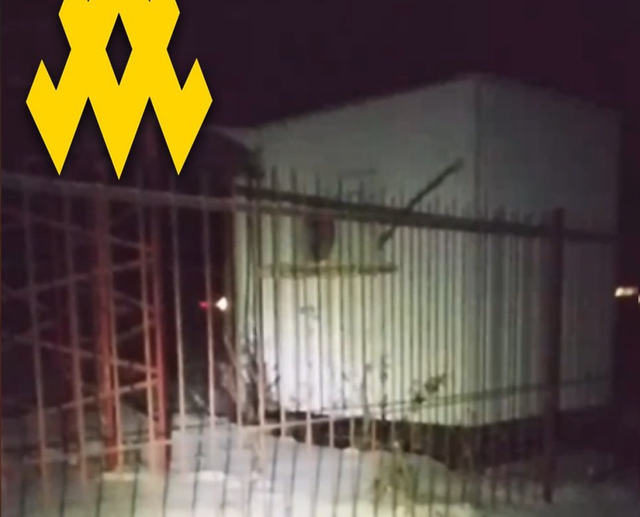
According to a statement published on Telegram by the Atesh partisan movement, one of its agents carried out a sabotage operation in a border area of Belgorod Oblast, setting fire to ground-based equipment at the base of a communications tower used by Russian forces.
Follow our coverage of the war on the @Kyivpost_official.
Atesh said the attack targeted an equipment module at the foot of the tower, cutting power to all systems mounted on the mast and rendering them inoperable.
“As a result of the destruction of the ground equipment, all devices placed on the mast were completely de-energized and disabled,” the group noted.
Before the sabotage, the tower hosted Murum-P video surveillance systems, which Atesh said transmitted real-time data on movements in the border zone. With the control equipment destroyed, the group claimed, the area has effectively become a “blind spot” for Russian forces.
The fire also destroyed radio relay units that supported stable communications between headquarters and forward positions, Atesh said.
According to the statement, the tower also served as a platform for electronic warfare antennas used to suppress drone signals. Its destruction, the group claimed, has opened a window for Ukrainian unmanned aerial vehicles to operate more freely in the area: “At the same time, the elimination of this technical post created conditions for unhindered operation of Ukrainian UAVs.”
The group added that Russian commanders are now facing difficulties repairing the damaged infrastructure due to shortages of components.
Atesh describes itself as a military partisan movement made up of Ukrainians and Crimean Tatars operating in Russian-occupied territories and inside Russia. Since 2022, the group has claimed responsibility for acts of sabotage, reconnaissance and targeted disruption of Russian military logistics and infrastructure.
Independent verification of Atesh’s claims is often not possible, and Russian authorities have not commented on the reported incident in Belgorod Oblast.
The claimed sabotage comes amid broader reports of strain on Russian military communications. Earlier this month, Atesh said Russian units along the front line were struggling after losing access to Starlink satellite internet, following measures by Ukraine and SpaceX to block Russian use of the service within Ukraine.
According to the group, widespread Starlink failures have left some Russian commanders unable to effectively control their troops, compounding existing coordination problems.
Together, these developments underscore the growing vulnerability of Russian command, control and communications systems as Ukraine and pro-Ukrainian actors intensify efforts to disrupt them both at the front and behind Russian lines.
Korbinian Leo Kramer is currently a news reporter for the Kyiv Post. He previously worked as a freelance journalist and photographer across eastern Ukraine, covering the human and social dimensions of Russia’s fullscale invasion. His reporting focuses on resilience, everyday life, and the realities of war in front-line regions.