Weaponized Commercial FPV Drones
Modified first-person-view racing drones and commercial quadcopters weaponized with improvised munitions, representing the single largest category of drone threat by volume in the Ukraine conflict.
System Overview
What It Is
Weaponized FPV (First-Person-View) drones are modified commercial racing quadcopters or purpose-built small drones carrying improvised explosive payloads. They have become the single most numerous drone type on the Ukraine battlefield, with both sides launching thousands per month. The concept uses cheap, commercially available drone components combined with improvised warheads to create precision-guided munitions costing $500-$2,000 each.
How It Works
An operator wearing FPV video goggles controls the drone in real-time, seeing through its onboard camera. The pilot flies the drone toward the target at high speed (often 100+ km/h) and guides it directly into the target in a final terminal dive or direct impact. Common payloads include RPG-7 warheads, hand grenades, shaped charges, and various improvised explosive devices attached to the drone frame. Some variants use drop mechanisms to release munitions, while others are true one-way attack systems that crash into the target.
Primary Capability
Low-cost precision strike against vehicles, personnel, and positions using operator-guided first-person-view flight with attached explosive munitions.
Combat Record / Operational History
FPV drones have become the defining weapon of the Ukraine war from 2023 onward. Both Ukrainian and Russian forces launch thousands per month, with estimates suggesting 50,000-100,000+ FPV drones deployed monthly by mid-2024 across both sides combined. They have destroyed or damaged thousands of armored vehicles, trucks, artillery pieces, and fortified positions. Ukrainian forces have used them to devastating effect against Russian tanks and APCs, often threading through reactive armor or hitting vulnerable points identified through prior reconnaissance. Russian forces have similarly employed them against Ukrainian positions. The phenomenon has spawned massive volunteer production networks, particularly in Ukraine, where civilian drone enthusiasts build and donate thousands of units. This has fundamentally changed the character of ground warfare, making it nearly impossible to operate vehicles or move in the open near the front lines without drone cover.
Overview
Weaponized FPV drones represent perhaps the most significant tactical innovation of the Ukraine war and a paradigm shift in ground warfare. Modified from commercial racing drone components or purpose-built using open-source designs, these small quadcopters carrying improvised explosive payloads have become the single most numerous weapon system on the battlefield. Both sides launch thousands per month, creating a constant overhead threat that has fundamentally changed how ground forces operate.
Technical Details
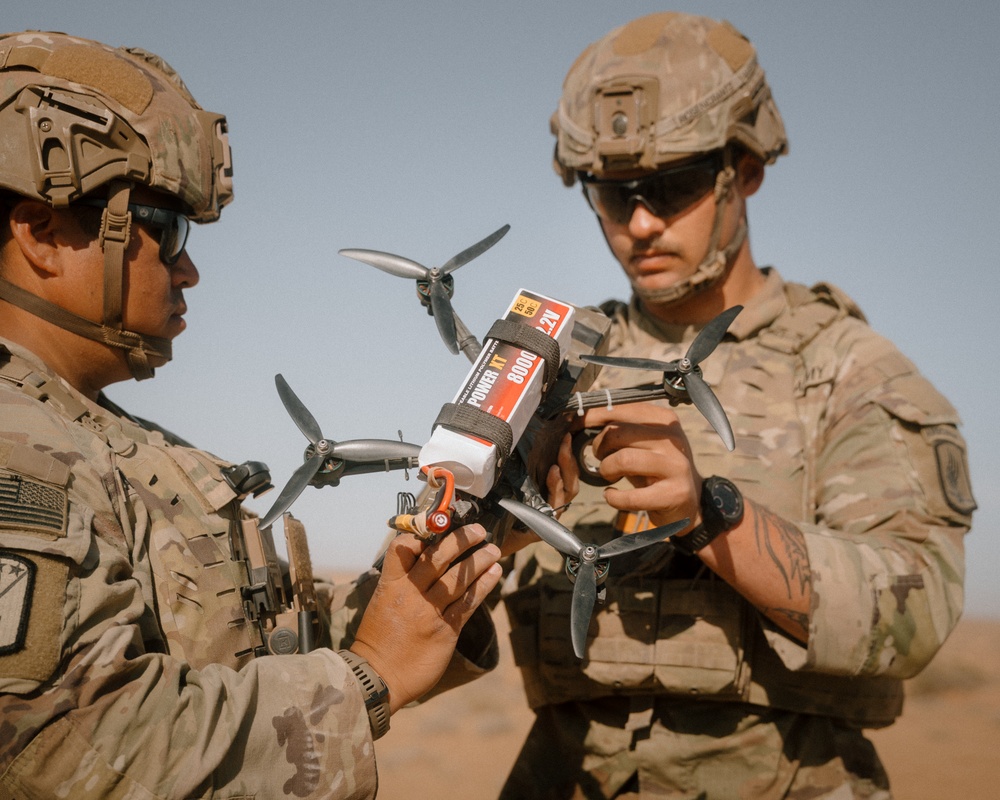
A typical weaponized FPV drone is built using commercially available components: a carbon fiber frame (5-10 inch propeller class), brushless electric motors, a LiPo battery, a flight controller, and an analog or digital FPV camera transmitting video to the operator's goggles. Total component cost ranges from $500 to $2,000 depending on quality. Warheads vary widely, from RPG-7 rockets and hand grenades to purpose-built shaped charges capable of penetrating armored vehicle roofs. Some designs incorporate 3D-printed tail assemblies to stabilize munitions in flight. The operator controls the drone in real-time via FPV goggles, guiding it at speeds of 100-180 km/h into the target.
Combat History
FPV drones began appearing in significant numbers in Ukraine in early 2023 and by mid-2023 had become ubiquitous. Both Ukraine and Russia have established massive production networks — Ukraine in particular has leveraged its civilian drone racing community and volunteer networks to produce tens of thousands monthly. By mid-2024, combined monthly deployments across both sides were estimated at 50,000-100,000+ units. These drones have destroyed or damaged thousands of armored vehicles, trucks, howitzers, and defensive positions. Dramatic footage of FPV drones threading through vehicle hatches or striking moving targets has become a staple of the conflict.
Strategic Implications
The FPV drone revolution has several profound implications for modern warfare. First, it has democratized precision strike, putting guided-munition capability into the hands of individual soldiers at negligible cost. Second, it has made the forward battlefield zone extraordinarily lethal for any exposed personnel or vehicles. Third, it has created an insatiable demand for electronic warfare countermeasures, as jamming the FPV control link is the most effective defense. Fourth, it has raised fundamental questions about the future of armored warfare, as even main battle tanks are vulnerable to $500 drones striking from above. The arms race between FPV drones and electronic countermeasures is driving rapid innovation on both sides.
Technical Specifications
- Size: Varies (typically 5-10 inch prop class)
- Weight: 0.5-3 kg (varies with payload)
- Payload: Typically RPG warhead, grenade, or shaped charge (0.5-2 kg)
- Range: 5-15 km (typical FPV radio link)
- Speed: 100-180 km/h
- Endurance: 10-30 minutes
- Cost: $500-$2,000 per unit
- Guidance: Operator-guided via FPV video goggles
- Power: LiPo battery, electric motors
Range
5-15 km
Compatible Platforms
Deployed By
Key Features
- Extremely low cost ($500-$2,000 per unit)
- Widely available commercial components
- Real-time operator control via FPV video
- High maneuverability and speed
- Effective against vehicles, fortifications, and personnel
- Can be produced in massive quantities by volunteers and small workshops
- Evolving rapidly with new designs appearing weekly
Advantages
- Extremely cheap — favorable exchange ratio against any target
- Components widely available globally
- Rapid iteration of designs and tactics
- High precision when guided by skilled operator
- Extremely difficult to defend against in volume
- Low training barrier (skilled civilian drone pilots adapt quickly)
- Agile enough to enter windows, hatches, and other small openings
Limitations
- Short range limited by radio link (5-15 km)
- Vulnerable to electronic warfare and jamming
- Requires skilled operator for precision strikes
- Small payload limits damage per unit
- Weather dependent (wind, rain degrade performance)
- Line-of-sight radio link can be blocked by terrain
- Battery life limits operational window