Saab Giraffe 4A
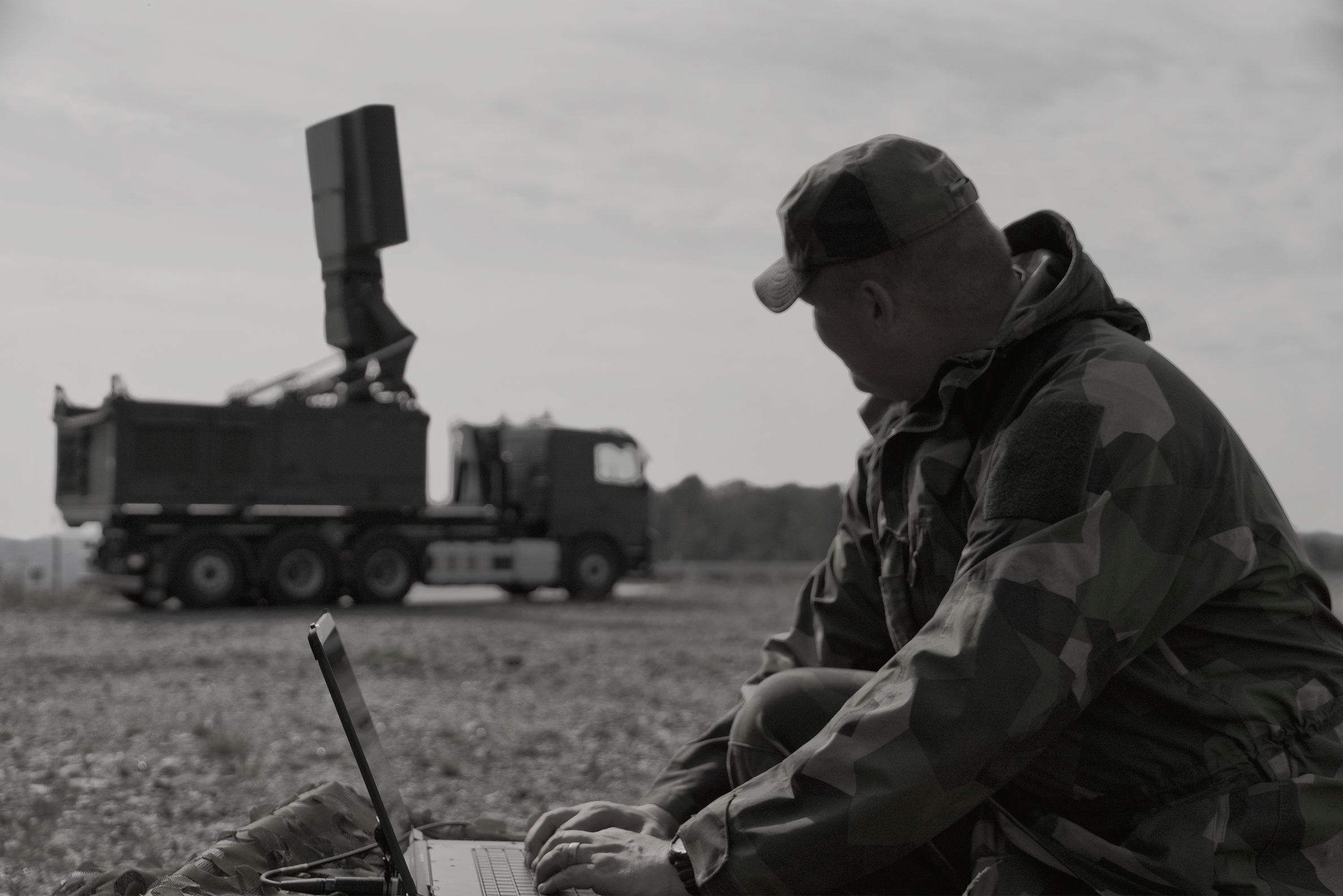
Saab Giraffe 4A is a Swedish multi-mission AESA radar providing simultaneous air surveillance, counter-battery, and counter-UAS capability in a single deployable system.
System Overview
What It Is
Saab Giraffe 4A is a state-of-the-art multi-mission AESA radar that performs air surveillance, counter-battery fire locating, and counter-UAS detection simultaneously. Part of the renowned Giraffe radar family, the 4A variant represents the latest in Swedish radar technology, providing a single sensor solution for multiple air defense missions.
How It Works
Giraffe 4A uses its AESA antenna to electronically form and steer multiple beams simultaneously, enabling it to perform air surveillance, track ballistic projectiles for counter-battery location, and detect small UAS targets — all at the same time. The radar automatically adjusts its waveform and processing for each mission, optimizing performance against different target types without the operator having to switch modes.
Primary Capability
Multi-mission 3D AESA radar for air surveillance, counter-battery, and counter-UAS detection and tracking.
Combat Record / Operational History
The Giraffe radar family has been deployed globally and is in operational service with multiple NATO and partner nations.
Overview
Saab's Giraffe 4A represents the pinnacle of the renowned Giraffe radar family, providing a true multi-mission capability that simultaneously performs air surveillance, counter-battery fire locating, and counter-UAS detection from a single mobile platform. In an era where military forces need to detect threats ranging from ballistic missiles to micro-drones, Giraffe 4A's ability to address all these missions concurrently without compromise is a significant operational advantage.
Development History
The Giraffe radar family has been Saab's flagship ground-based radar product line for decades, with successive generations providing increasingly capable multi-role performance. The 4A variant was developed to address the modern multi-threat environment where air defense forces must simultaneously contend with traditional air threats, indirect fire (rockets and artillery), and small unmanned aerial systems. By using advanced AESA technology, Giraffe 4A can allocate radar resources dynamically across all mission areas.
Operational Concept
In the counter-UAS role, Giraffe 4A leverages its AESA beam agility to dedicate a portion of its radar resources to scanning for small, low-altitude drone targets while simultaneously maintaining its primary air surveillance and counter-battery missions. The radar's advanced signal processing extracts small UAS targets from ground clutter and classifies them, providing early warning and tracking data to air defense command-and-control systems. This integrated approach means units equipped with Giraffe 4A gain counter-UAS awareness without needing to deploy additional dedicated drone detection radars.
Future Development
Saab continues to evolve Giraffe 4A with enhanced processing for improved small drone detection, AI-assisted classification, and deeper integration with counter-UAS effector systems. The radar's software-defined architecture allows capability updates through software rather than hardware changes, ensuring the system can adapt to emerging UAS threats throughout its service life.
Technical Specifications
- Type: AESA 3D multi-mission radar
- Detection range: 100+ km (air targets)
- UAS detection range: 20+ km (depending on target)
- Simultaneous air surveillance and counter-battery
- Counter-UAS detection mode
- Vehicle-mounted mobile configuration
Range
100+ km (air), 20+ km (UAS)
Compatible Platforms
Deployed By
Key Features
- True multi-mission: air, C-RAM, and C-UAS simultaneously
- AESA electronic beam steering
- Extended range performance
- Part of proven Giraffe radar family
- Mobile and rapidly deployable
Advantages
- One radar replaces multiple mission-specific sensors
- Excellent detection performance across target types
- Proven Saab radar technology and support
- Fully mobile for tactical deployment
Limitations
- Large and heavy system for mobile use
- High acquisition cost
- Sensor only — no effector capability
- Complex system requiring specialized operators