P-HEL
Palletized High Energy Laser — a 50 kW-class directed energy weapon designed for rapid deployment on standard military pallets, providing counter-UAS and counter-rocket capabilities.
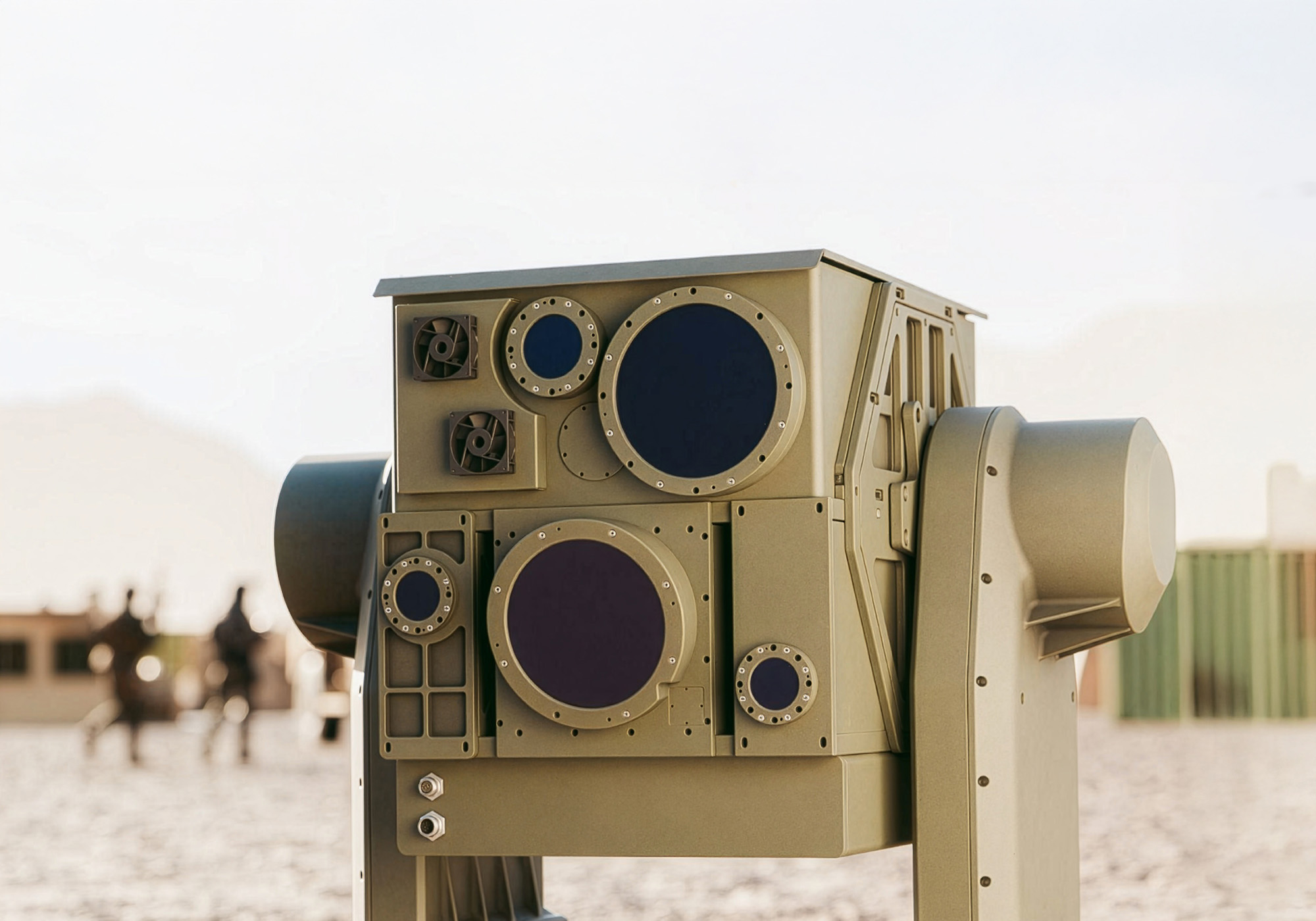
System Overview
What It Is
P-HEL (Palletized High Energy Laser) is a US Army program to field a 50 kW-class high energy laser weapon on a standard military pallet, enabling rapid air transport and deployment to any theater. The system is designed to provide an unlimited magazine, low cost-per-shot counter-UAS and counter-RAM (rockets, artillery, mortars) capability.
How It Works
P-HEL uses a high-energy solid-state laser focused through a precision beam director to concentrate destructive energy on an incoming threat. The tracking system follows the target and holds the laser on a critical point until the target is disabled or destroyed. The entire system — laser, power supply, cooling, beam director, and fire control — is packaged on a standard 463L pallet for C-130 airlift.
Primary Capability
Directed energy defeat of UAS, rockets, artillery, and mortar threats using a high energy laser.
Overview
The Palletized High Energy Laser (P-HEL) represents the US Army's push to field practical directed energy weapons for the counter-UAS and counter-RAM mission. By packaging a 50 kW-class laser and all supporting equipment onto a standard military pallet, P-HEL can be rapidly transported by C-130 aircraft and set up at forward locations within hours, providing an effectively unlimited magazine of laser engagements.
Development History
P-HEL emerged from the Army's Rapid Capabilities and Critical Technologies Office (RCCTO) as part of the broader directed energy modernization effort. Raytheon and Kord Technologies developed the system building on experience from earlier laser demonstrators. The program aimed to bridge the gap between laboratory laser demonstrations and practical field-deployable systems by solving the packaging, power, and cooling challenges that had previously limited laser weapon deployability.
Operational Concept
In operation, P-HEL is cued by external air defense sensors that detect an incoming threat. The system's beam director acquires and tracks the target, then the operator authorizes engagement. The high-energy laser beam is focused on the target's most vulnerable point — for drones, typically the airframe or propulsion system — and held there until the target is destroyed or disabled. Engagement times vary from fractions of a second for small drones to several seconds for more robust targets. The key operational advantage is that the system can engage indefinitely as long as it has electrical power.
Future Development
The Army plans to scale P-HEL laser power to 100 kW and beyond as solid-state laser technology matures. Integration with the Integrated Air and Missile Defense Battle Command System (IBCS) will enable P-HEL to participate in the broader air defense network. Improved beam control and adaptive optics will enhance performance in challenging atmospheric conditions.
Technical Specifications
- Laser power: 50 kW class
- Palletized for C-130 transport
- Beam director with precision tracking
- Power generation self-contained
- Compatible with standard 463L pallet
- Engagement range: several kilometers
Range
Several km
Compatible Platforms
Deployed By
Key Features
- Unlimited magazine depth (limited only by power)
- Very low cost per engagement
- Rapid air deployment on standard pallet
- Silent and invisible engagement
- No explosive ordnance logistics
Advantages
- Near-zero cost per shot
- Deep magazine eliminates ammunition resupply concerns
- Speed of light engagement
- Minimal collateral damage
Limitations
- Performance degrades in rain, fog, dust, and smoke
- Requires significant electrical power
- Dwell time needed to defeat hardened targets
- Thermal management challenges