NASAMS
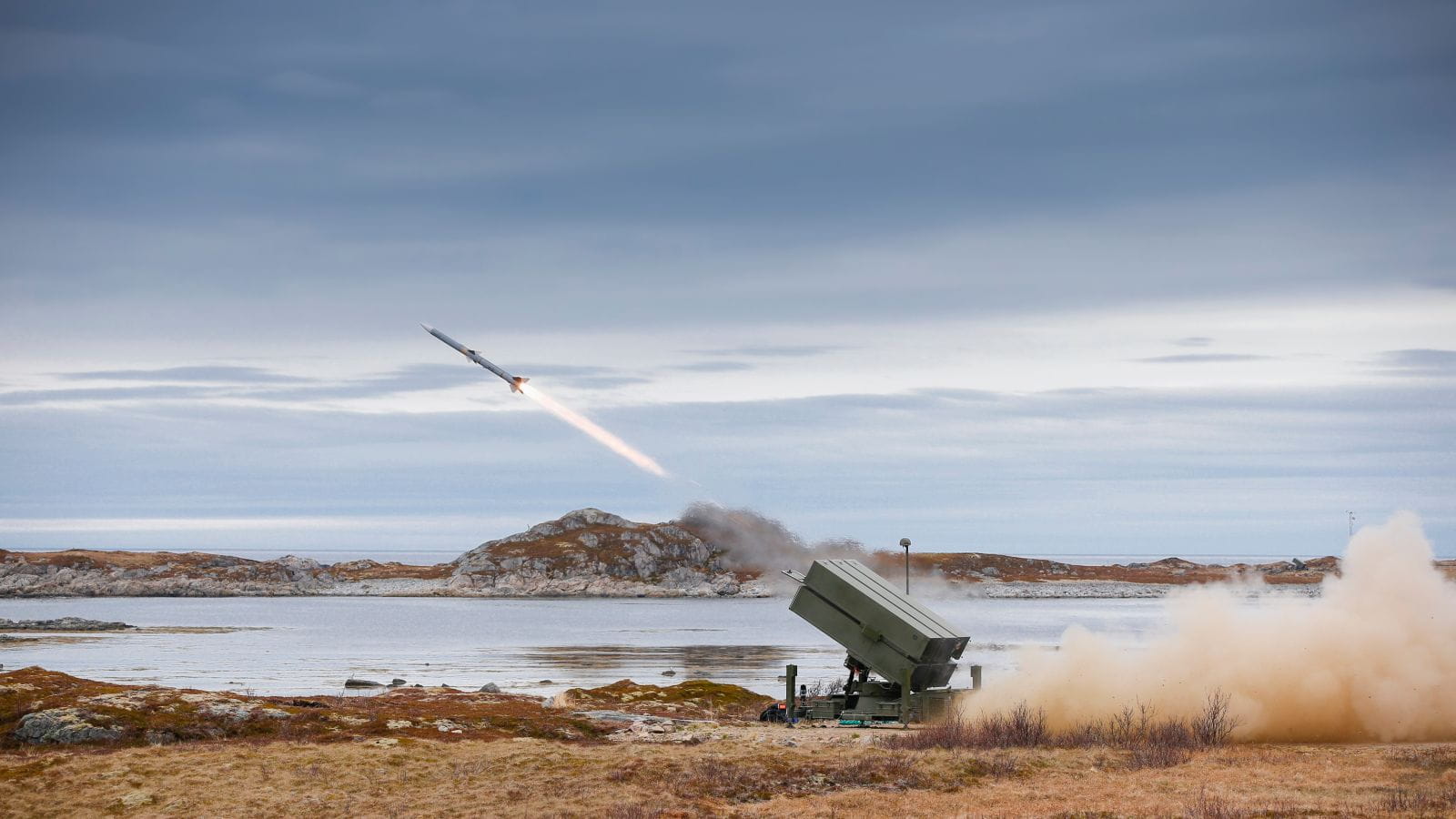
The National Advanced Surface-to-Air Missile System (NASAMS) is a distributed, networked medium-range air defense system with proven capability against UAS targets.
System Overview
What It Is
NASAMS (National Advanced Surface-to-Air Missile System) is a distributed, networked air defense system co-developed by Kongsberg Defence and Raytheon. While primarily designed for medium-range air defense against aircraft and cruise missiles, NASAMS has demonstrated effective capability against UAS targets and has been employed in the counter-UAS role in Ukraine.
How It Works
NASAMS uses a distributed architecture where Sentinel radars detect and track targets, fire distribution centers coordinate engagements, and dispersed launchers fire surface-launched AIM-120 AMRAAM or AIM-9X missiles. The networked design allows sensors and launchers to be spread across a wide area while maintaining coordinated fire control. Against UAS, the system can engage larger drones at extended range.
Primary Capability
Medium-range integrated air defense with capability against aircraft, cruise missiles, and UAS targets.
Combat Record / Operational History
Supplied to Ukraine where it has been credited with successfully engaging Russian cruise missiles and UAS, including Shahed-136 one-way attack drones. Protects the US National Capital Region.
Overview
The National Advanced Surface-to-Air Missile System (NASAMS) is a medium-range air defense system co-developed by Norway's Kongsberg Defence and America's Raytheon that has emerged as a significant counter-UAS platform, particularly against larger Group 3 drones and one-way attack UAS. Originally designed for defense against aircraft and cruise missiles, NASAMS has proven highly effective against drone threats in combat in Ukraine.
Development History
NASAMS was initially developed in the early 1990s as a joint Norwegian-American program to provide a modern, distributed air defense capability using the AIM-120 AMRAAM missile in a surface-launched configuration. The system entered service with Norway in 1994 and has since been adopted by over 12 nations. Its role expanded to include counter-UAS when the proliferation of medium and large drones created a threat that conventional short-range C-UAS systems could not address at sufficient range.
Operational Concept
NASAMS employs a distributed architecture where multiple sensors, fire control nodes, and missile launchers are networked together across a defended area. The Sentinel AN/MPQ-64 radar detects and tracks targets, and fire distribution centers coordinate engagements across multiple dispersed launchers. Against UAS threats, NASAMS can engage larger drones at ranges exceeding 25 km, providing a medium-range layer of defense that complements shorter-range dedicated C-UAS systems. The ability to fire AIM-9X Sidewinder missiles in addition to AMRAAM provides a lower-cost option for some engagements.
Future Development
The latest NASAMS III variant includes upgraded radars, new missile integration options, and enhanced networking capabilities. Kongsberg and Raytheon continue to optimize the system for the counter-UAS mission, including integration of lower-cost interceptors that improve the cost exchange ratio against drone targets.
Technical Specifications
- Missile: AIM-120 AMRAAM (surface-launched)
- Also fires AIM-9X Sidewinder
- Radar: Sentinel AN/MPQ-64
- Range: 25+ km (AMRAAM)
- Distributed networked architecture
- Multiple launcher configurations
Range
75 km (radar)
25+ km
Compatible Platforms
Deployed By
Key Features
- Distributed and networked architecture
- Multiple missile options (AMRAAM, Sidewinder)
- Proven combat record
- Scalable from battery to national defense
- Cooperative engagement capability
Advantages
- Long engagement range
- Battle-proven in Ukraine conflict
- Multiple missile options for cost optimization
- Widely fielded with strong logistics support
Limitations
- Missile cost too high for small drone targets
- Overkill for Group 1-2 UAS threats
- Requires significant support infrastructure
- Not optimized for low, slow, small targets