Ku-Band Sentinel
The AN/MPQ-64 Sentinel radar, a 3D X-band phased array air defense radar widely used for short-range air defense cueing with demonstrated capability detecting UAS targets.
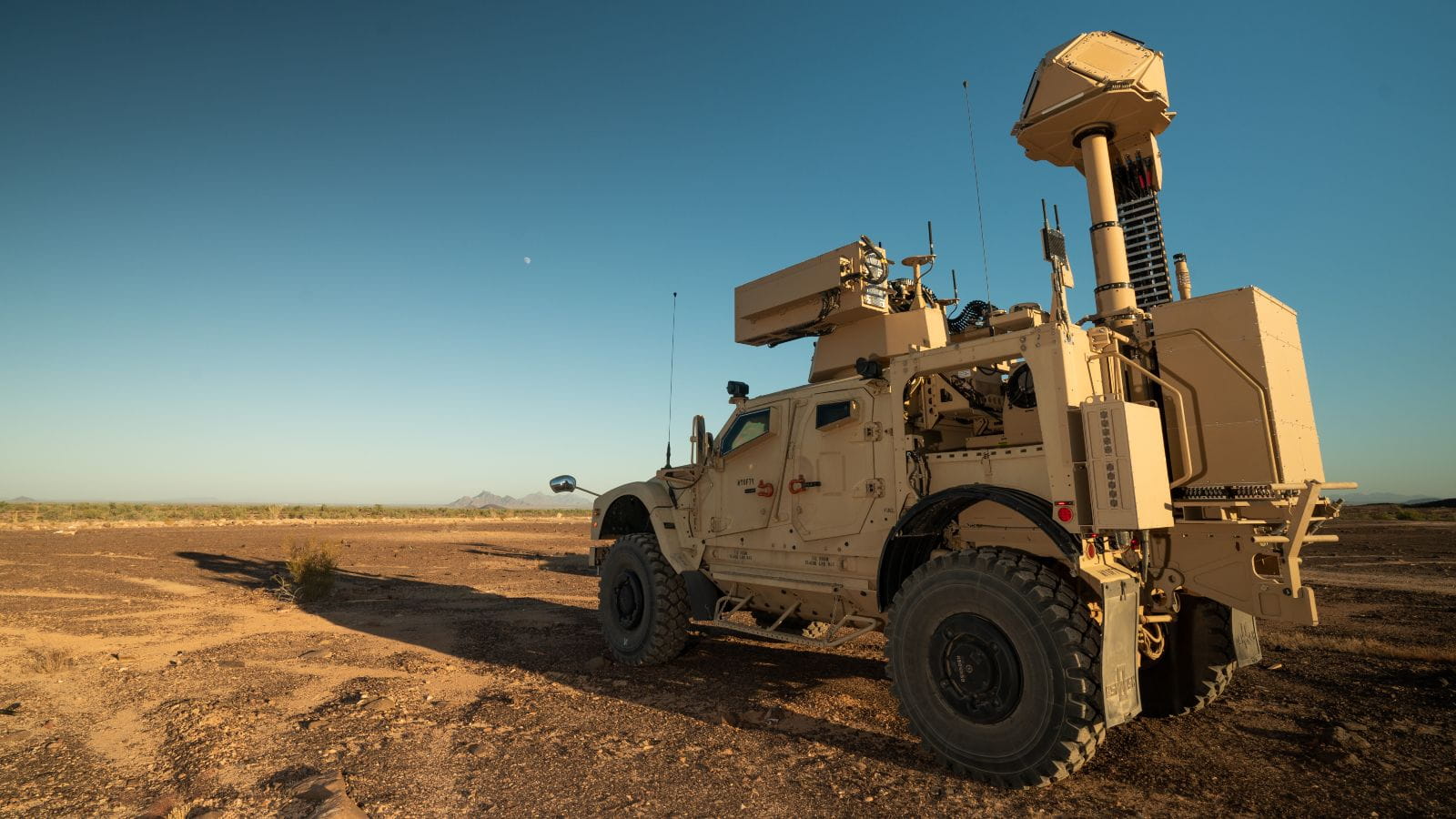
System Overview
What It Is
The AN/MPQ-64 Sentinel is a widely fielded 3D phased array air surveillance radar that serves as the primary short-range air defense cueing radar for the US Army and many allied nations. While designed for conventional air defense, its detection capability extends to UAS targets, making it a key component of counter-UAS sensor architectures.
How It Works
Sentinel uses a rotating X-band phased array antenna to provide 360-degree 3D surveillance of the surrounding airspace. The radar detects and tracks air targets including aircraft, helicopters, cruise missiles, and UAS, providing range, azimuth, elevation, and velocity data. Target tracks are passed to air defense command-and-control systems like FAAD C2 for engagement by SHORAD weapons. Against UAS, the radar can detect larger drones at operationally useful ranges.
Primary Capability
3D air defense surveillance radar providing detection and tracking of low-altitude air threats including UAS for cueing SHORAD systems.
Combat Record / Operational History
Deployed worldwide in support of US and allied SHORAD operations. Increasingly used in counter-UAS detection role with software updates to improve small target performance.
Overview
The AN/MPQ-64 Sentinel is one of the most widely deployed short-range air defense radars in the world, serving as the eyes of SHORAD units across the US military and more than 20 allied nations. While originally designed to detect conventional air threats like aircraft and helicopters, the Sentinel's 3D phased array capability has given it a growing role in counter-UAS operations as the primary cueing sensor for integrated air defense systems that now must contend with drone threats.
Development History
Raytheon developed the Sentinel as a replacement for the aging AN/MPQ-49 Forward Area Alerting Radar (FAAR), providing a modern 3D phased array capability for the SHORAD community. The radar entered service in 2003 and has been continuously upgraded with improved processing and software. As the UAS threat emerged, Sentinel received software updates to improve its ability to detect and track smaller, slower-moving drone targets that were not part of the original design requirements.
Operational Concept
Sentinel operates as the surveillance and cueing radar for SHORAD batteries, providing the air picture that enables engagement by weapons like Stinger, M-SHORAD, and NASAMS. In the counter-UAS role, Sentinel detects UAS targets within its capability and provides tracks to the fire control system for engagement. The radar is particularly effective against Group 2 and Group 3 UAS that present sufficient radar cross sections, though it is less capable against very small Group 1 drones that require specialized C-UAS radars like KURFS.
Future Development
Raytheon is developing Sentinel A4 with improved hardware and software specifically aimed at enhancing performance against small UAS and other emerging threats. The upgrade includes a new digital receiver, increased processing power, and counter-UAS optimized waveforms. Sentinel's position as the primary SHORAD radar ensures continued investment in keeping its capabilities relevant against evolving air threats.
Technical Specifications
- Type: X-band 3D phased array
- Detection range: 75 km (fighter-sized), reduced for small UAS
- 360-degree rotating antenna
- Elevation coverage: 0-60 degrees
- Target classification capability
- Trailer-mounted for mobility
Range
75 km (conventional air targets)
Compatible Platforms
Deployed By
Key Features
- 3D phased array detection
- 360-degree continuous surveillance
- Proven in SHORAD air defense role
- Trailer-mounted tactical mobility
- Widely fielded worldwide
Advantages
- Mature, proven radar with global support base
- Already integrated with SHORAD fire control
- Can detect medium/large UAS at useful ranges
- Large installed base across NATO
Limitations
- Not optimized for very small UAS detection
- Struggles with Group 1 micro-drones
- Aging design compared to purpose-built C-UAS radars
- Requires updates for enhanced UAS detection