IBCS
Integrated Air and Missile Defense Battle Command System - the next-generation command and control system enabling any-sensor-to-any-shooter air defense.
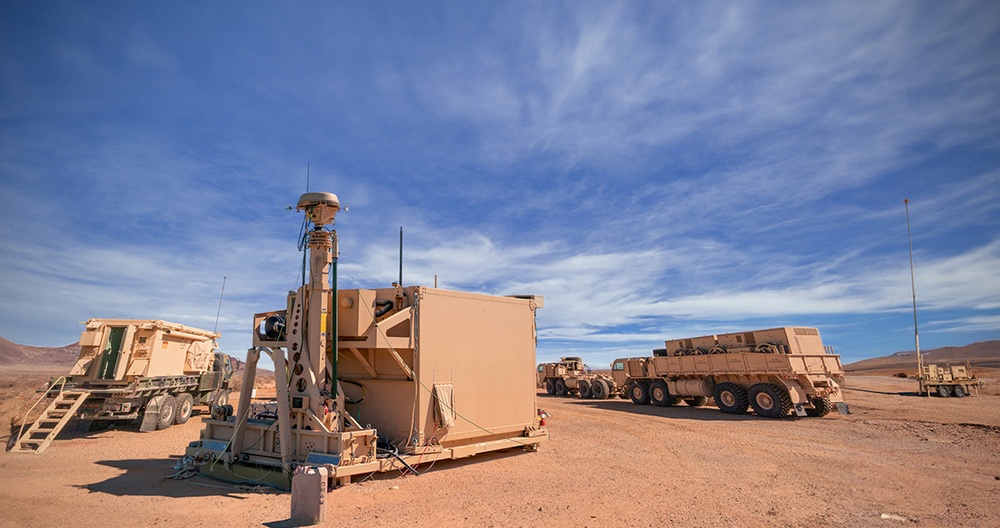
System Overview
What It Is
IBCS (Integrated Air and Missile Defense Battle Command System) is the US Army transformational command and control system that replaces eight legacy systems with a single, integrated network enabling unprecedented sensor-to-shooter connectivity.
How It Works
IBCS creates a distributed network where any connected sensor can provide targeting data to any available effector. The system uses advanced algorithms to fuse data from multiple sources, providing operators with a single integrated air picture and optimal engagement recommendations.
Primary Capability
Unified command and control for air and missile defense, connecting sensors and shooters across thousands of miles for integrated engagement operations.
Combat Record / Operational History
Achieved full-rate production approval in 2023. Initial operational units deploying with enhanced air defense capability.
Overview
IBCS represents a generational leap in air and missile defense command and control, fundamentally changing how the US Army conducts integrated air defense by enabling any sensor to cue any shooter.
Development History
Development began in 2009 with Northrop Grumman as prime contractor. After extensive testing, the system achieved full-rate production approval in 2023.
Operational Concept
The "any-sensor-to-any-shooter" concept means a radar in one location can provide targeting data to a missile battery hundreds of miles away. This distributed architecture dramatically increases defended area and engagement options.
Fielding Plan
The Army plans to field IBCS to two battalions per year from 2025 through 2031, progressively replacing legacy command and control systems.
Technical Specifications
- Any-sensor-to-any-shooter networking
- Integrated Fire Control Network
- Engagement Operations Center
- Distributed battle management
- Multi-domain data fusion
- Coalition partner integration
Compatible Platforms
Deployed By
Key Features
- Replaces 8 legacy C2 systems
- Connect sensors across thousands of miles
- Modular, open, scalable architecture
- Real-time track correlation
- Automated engagement coordination
Advantages
- Revolutionary sensor-shooter integration
- Dramatically improved defended area
- Reduced operator workload
- Future-proof architecture
Limitations
- Complex system integration
- High bandwidth requirements
- Extended fielding timeline