Fortem SkyDome
Fortem Technologies SkyDome is an AI-driven airspace awareness and counter-UAS platform combining TrueView radar, DroneHunter interceptors, and cloud-based command and control.
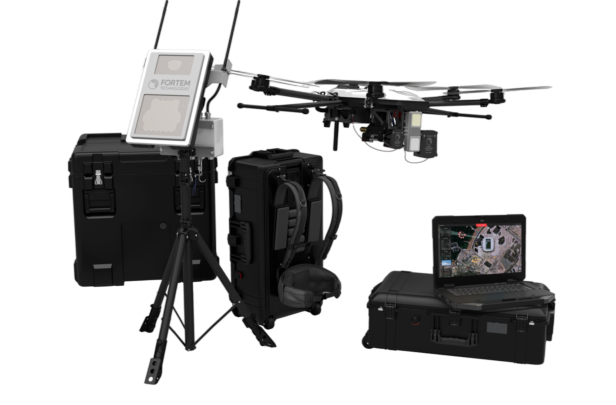
System Overview
What It Is
Fortem SkyDome is an integrated airspace security platform that combines Fortem's TrueView radar network, AI-powered threat classification, DroneHunter autonomous interceptor drones, and cloud-based command-and-control into a comprehensive counter-UAS solution. It provides wide-area airspace awareness and active defense capability.
How It Works
The SkyDome platform deploys a network of compact TrueView radars that provide continuous airspace surveillance, detecting and tracking all aerial objects. AI algorithms classify each detection and identify potential UAS threats. When a hostile drone is confirmed, the system can autonomously launch DroneHunter F700 interceptor drones that pursue and capture the threat using a tethered net, safely bringing it to the ground without destructive effects.
Primary Capability
Comprehensive AI-driven airspace awareness, drone detection, and autonomous drone-on-drone intercept.
Combat Record / Operational History
Deployed for protection of major events including the Super Bowl, used by DoD for installation protection, and deployed internationally.
Overview
Fortem Technologies' SkyDome platform represents one of the most comprehensive commercially available counter-UAS solutions, integrating radar detection, AI-powered classification, autonomous drone-on-drone intercept, and cloud-based command-and-control into a single ecosystem. The system has been deployed for protection of some of the highest-profile events and facilities in the United States, demonstrating its maturity and effectiveness.
Development History
Fortem Technologies, based in Pleasant Grove, Utah, was founded with the vision of creating autonomous airspace security. The company developed the TrueView radar specifically for drone detection, then created the SkyDome software platform to manage distributed sensor networks, and integrated its DroneHunter interceptor drone for active defeat. This full-stack approach — from sensor to effector to C2 — distinguishes Fortem from companies offering only individual components.
Operational Concept
SkyDome creates a persistent airspace surveillance bubble using distributed TrueView radars positioned around the protected area. These compact radars detect and track all aerial objects, with the AI engine classifying each as friend, foe, or unknown. When a hostile drone is identified, the system can autonomously scramble DroneHunter interceptors that fly to the target and capture it in a tethered net, safely lowering it to the ground. This non-destructive approach is critical for operations over populated areas where falling drone debris or explosive ordnance would be unacceptable.
Future Development
Fortem is developing enhanced radar capabilities for longer-range detection of smaller drones, improved AI algorithms for distinguishing drones from birds and other clutter, and faster-response DroneHunter variants for engagement of high-speed threats. The company is also expanding its SkyDome platform for integration with third-party sensors and effectors, positioning it as an open architecture for comprehensive airspace security.
Technical Specifications
- TrueView radar network
- DroneHunter F700 interceptor integration
- SkyDome Manager cloud C2
- AI-powered classification
- Autonomous intercept capability
- Distributed sensor architecture
Compatible Platforms
Deployed By
Key Features
- Comprehensive detect-to-defeat solution
- AI-powered autonomous operations
- Non-destructive drone capture via nets
- Cloud-based scalable architecture
- Distributed radar network for wide coverage
Advantages
- End-to-end integrated solution
- Safe non-destructive drone capture
- Scalable from single site to wide area
- Proven at major public events
Limitations
- DroneHunter limited by weather conditions
- Net capture may not work against all drone types
- Requires robust network connectivity
- Higher cost than sensor-only solutions