CUAS MMHEL
The Counter-UAS Mobile Multi-Mission High Energy Laser is a US Army directed energy program integrating a high-power laser onto a Stryker vehicle for mobile C-UAS defense.
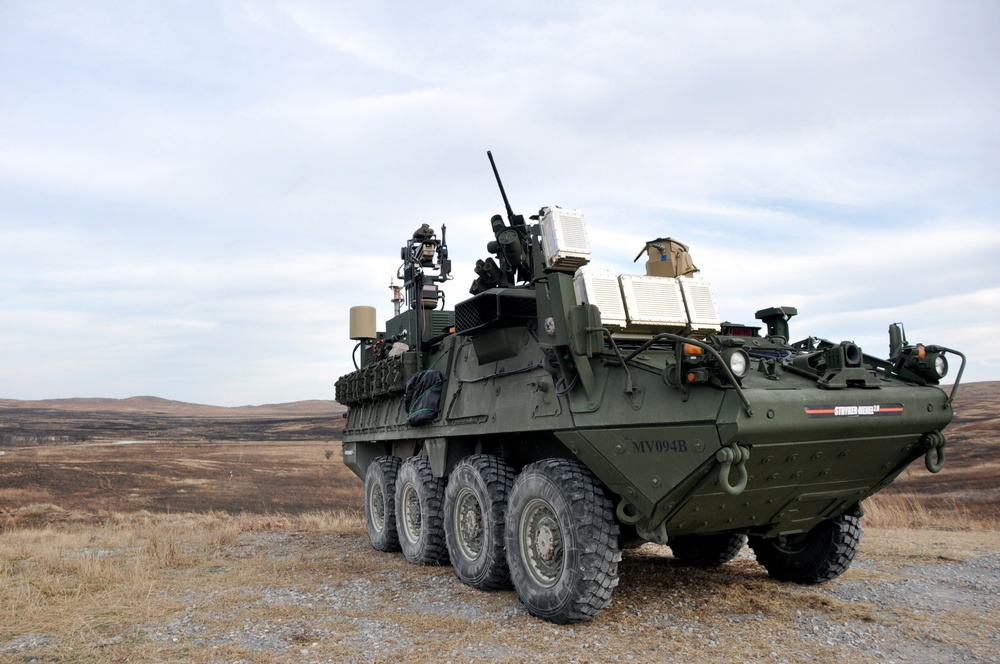
System Overview
What It Is
CUAS MMHEL is a US Army directed energy program that mounts a 50 kW-class high energy laser on a Stryker armored vehicle, providing mobile Stryker Brigade Combat Teams with an organic counter-UAS and counter-RAM capability that offers an effectively unlimited magazine.
How It Works
The system integrates a high-energy solid-state laser, beam director, power generation, and cooling systems onto a Stryker vehicle chassis. Guided by external air defense sensors or its own detection suite, the laser is aimed at incoming UAS or RAM threats and held on target until the threat is disabled. The vehicle-mounted configuration provides tactical mobility to maneuver with ground forces.
Primary Capability
Vehicle-mounted high energy laser for mobile counter-UAS and counter-rocket/artillery/mortar defense.
Overview
The Counter-UAS Mobile Multi-Mission High Energy Laser (CUAS MMHEL) program represents the US Army's effort to mount practical directed energy weapons on tactical combat vehicles. By integrating a 50 kW-class laser onto the Stryker platform, MMHEL aims to give Stryker Brigade Combat Teams an organic capability to defeat drones and rockets with near-unlimited ammunition at near-zero cost per shot.
Development History
MMHEL emerged from the Army's broader directed energy modernization initiative, which identified the need for mobile laser weapons that could accompany maneuver forces. Earlier programs demonstrated the feasibility of vehicle-mounted lasers, and MMHEL was designed to transition these demonstrations into an operationally useful capability. The Stryker was selected as the host platform due to its widespread fielding across Army brigade combat teams and its available space, weight, and power margins.
Operational Concept
In tactical operations, MMHEL vehicles would be positioned within a Stryker formation to provide air defense against drone threats and incoming rockets or mortars. When cued by air defense sensors — either organic to the formation or networked from higher echelon systems — the laser acquires and engages incoming threats at the speed of light. The system can engage dozens of targets in rapid succession without needing to reload, making it particularly effective against swarm attacks or sustained rocket barrages.
Future Development
The Army plans to increase MMHEL laser power to 100 kW and beyond as technology matures, and to integrate the system into the Integrated Air and Missile Defense architecture via IBCS. Long-term goals include autonomous engagement modes and multi-vehicle coordination for distributed laser defense.
Technical Specifications
- Laser power: 50 kW+ class
- Platform: Stryker 8x8 vehicle
- Mobile and tactically deployable
- Precision tracking and beam control
- Self-contained power generation
Range
Several km
Compatible Platforms
Deployed By
Key Features
- Tactically mobile on Stryker platform
- Unlimited magazine depth
- Very low cost per engagement
- Speed of light engagement
- Organic to brigade combat teams
Advantages
- Moves with maneuver forces
- No ammunition logistics tail
- Extremely low cost per shot
- Silent engagement
Limitations
- Atmospheric attenuation in adverse weather
- Significant power and cooling requirements
- Dwell time against hardened targets
- Still in development/testing phase