Blighter A800
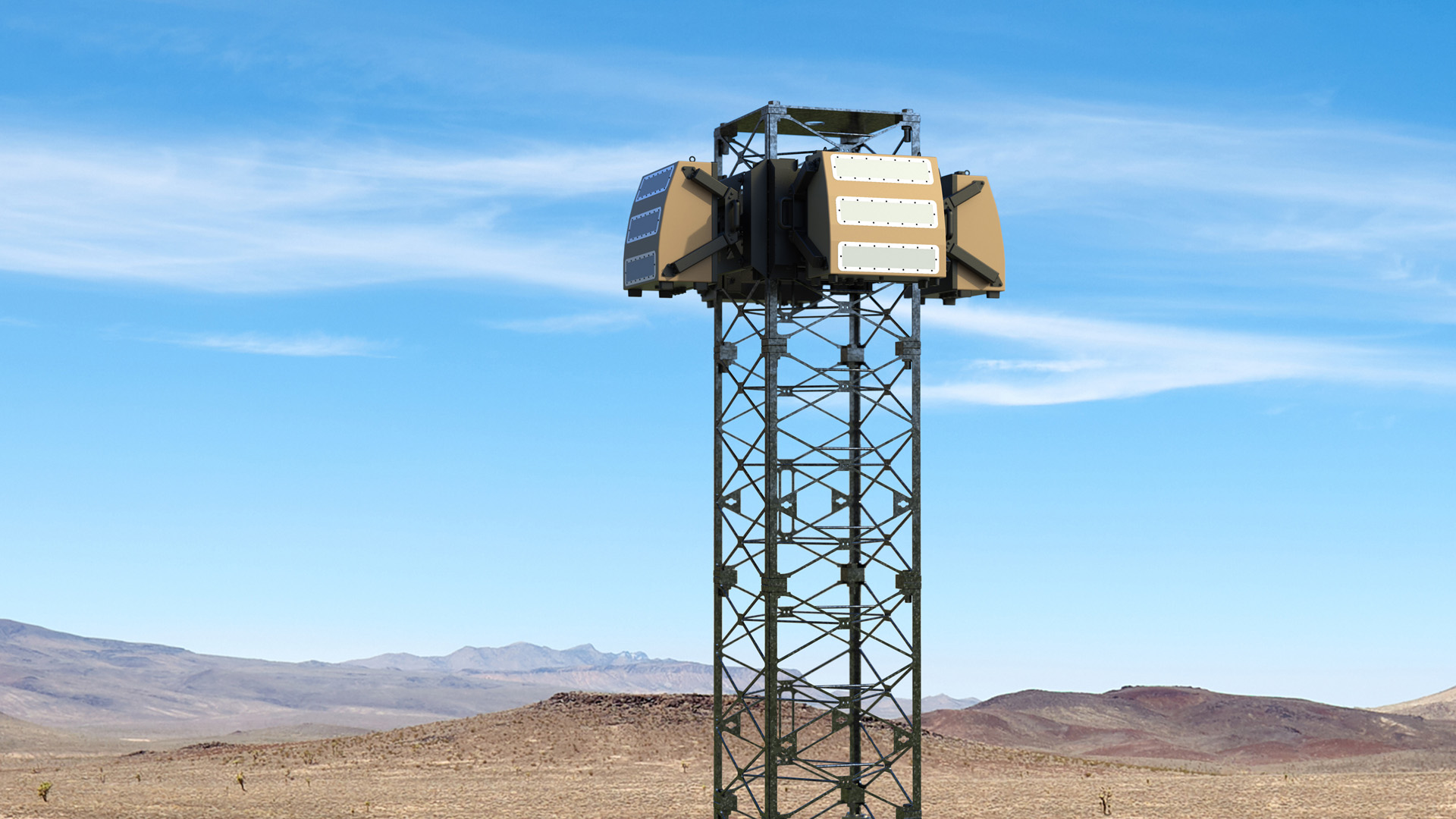
Blighter Surveillance Systems A800 3D multi-mode radar providing persistent wide-area drone detection and tracking for counter-UAS and perimeter security applications.
System Overview
What It Is
The Blighter A800 is a multi-mode 3D electronic scanning radar developed by Blighter Surveillance Systems for persistent detection and tracking of small drones, ground targets, and maritime threats. Using advanced FMCW Doppler technology with no moving parts, it provides reliable, maintenance-free operation for long-term counter-UAS surveillance.
How It Works
The A800 uses Frequency Modulated Continuous Wave (FMCW) Doppler technology with an active electronically scanned array to detect and track small moving targets in three dimensions. The radar distinguishes drones from birds and clutter using micro-Doppler signature analysis, which identifies the characteristic blade rotation patterns of multi-rotor drones. With no mechanical moving parts, the radar offers exceptional reliability and minimal maintenance requirements.
Primary Capability
Wide-area 3D radar detection and tracking of drones, people, vehicles, and other targets for C-UAS and security.
Combat Record / Operational History
Deployed globally for border security, critical infrastructure protection, and military counter-UAS applications. Component of the AUDS system.
Overview
The Blighter A800 3D multi-mode radar is a leading sensor for counter-UAS applications, providing wide-area persistent detection and tracking of small drones using advanced electronic scanning technology. Developed by Blighter Surveillance Systems in the United Kingdom, the A800 has earned a strong reputation for its ability to reliably detect and classify small drone targets while rejecting clutter from birds and other false alarm sources.
Development History
Blighter Surveillance Systems, based in Essex, UK, has been developing electronic scanning radar technology for over two decades. The A800 represents the latest generation of their FMCW radar family, incorporating 3D detection, AESA technology, and advanced signal processing specifically optimized for the counter-UAS mission. The company's radar technology is notably used as the detection component of the AUDS integrated counter-UAS system, where it has seen operational deployment.
Operational Concept
The A800 is typically deployed at fixed sites or on masts around a perimeter, providing continuous surveillance of the surrounding airspace. The radar's electronic scanning covers a wide sector without mechanical rotation, offering rapid revisit rates and high reliability. When a potential drone target is detected, the radar's micro-Doppler analysis examines the target's signature for the characteristic blade rotation patterns of multi-rotor drones, helping classify the detection as a drone rather than a bird or other false alarm. Confirmed detections are passed to command-and-control systems for operator assessment and potential effector engagement.
Future Development
Blighter continues to enhance the A800 with improved signal processing for detection of smaller and more evasive drone targets, extended range performance, and better classification algorithms leveraging AI and machine learning. Integration with a broader range of C-UAS command and control platforms is also a development priority.
Technical Specifications
- Type: FMCW Doppler radar
- 3D detection (range, azimuth, elevation)
- Detection range: 10+ km (small UAS)
- Electronic scanning (no mechanical rotation)
- AESA technology
- Low power consumption
Range
10+ km
Compatible Platforms
Deployed By
Key Features
- 3D detection with electronic scanning
- Micro-Doppler analysis for drone classification
- No moving parts for high reliability
- Multi-mode: air, ground, and maritime
- Low power and compact form factor
Advantages
- Excellent small drone detection capability
- Very high reliability with no moving parts
- Advanced clutter rejection and drone classification
- Low total cost of ownership
Limitations
- Sensor only — requires separate effectors
- Fixed sector coverage per unit
- Performance affected by terrain masking
- Requires integration into broader C-UAS solution