Bayraktar TB2
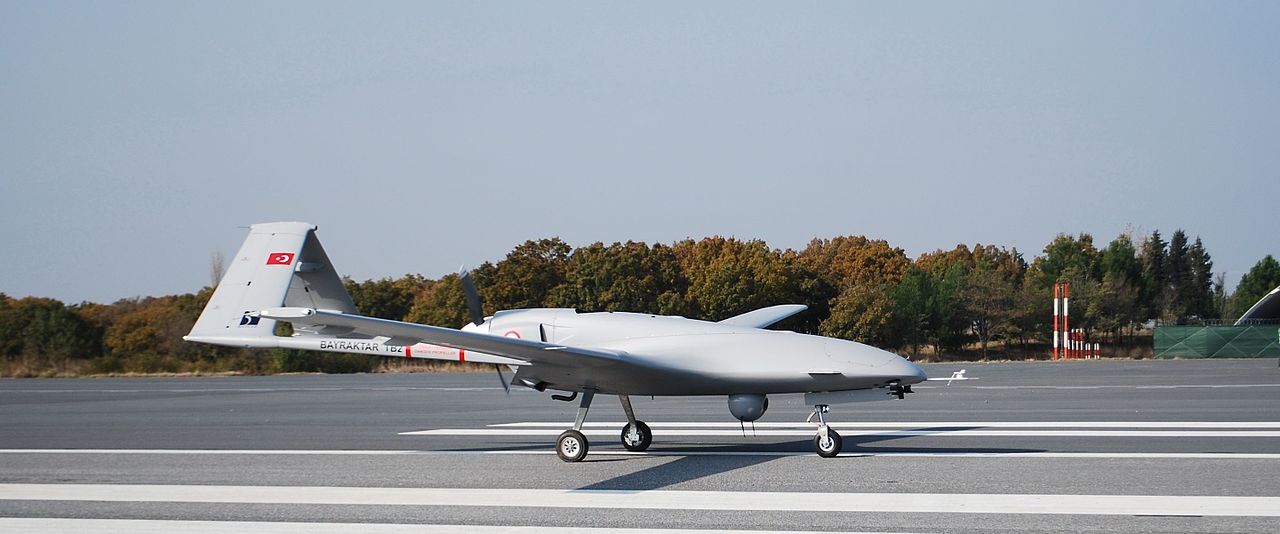
Turkish-made medium-altitude long-endurance tactical UCAV that has become the world's most combat-proven and widely exported armed drone, used in multiple conflicts across three continents.
System Overview
What It Is
The Bayraktar TB2 is a Turkish-designed and manufactured MALE-class tactical UCAV that has become the world's most widely exported combat drone. Produced by Baykar Defence, it carries laser-guided micro munitions and has been used in combat in at least six conflicts across three continents. It represents a game-changing proliferation of precision strike capability to countries and forces that previously lacked it. Note: The TB2 is used by both NATO-aligned and non-NATO forces, and in some contexts serves as a threat system.
How It Works
The Bayraktar TB2 operates from conventional runways with a minimum 600m strip. It is controlled via an encrypted C-band line-of-sight datalink from a ground control station. The aircraft carries a WESCAM MX-15D multi-sensor turret with daylight, infrared, and laser designator capabilities. It can carry up to four MAM-L (Smart Micro Munition) laser-guided bombs or MAM-C smaller munitions on under-wing hardpoints. The operator identifies targets through the sensor turret, designates them with the laser, and releases the munition for precision terminal guidance.
Primary Capability
Medium-altitude persistent ISR and precision strike using laser-guided munitions against ground targets, including armored vehicles, air defense systems, and personnel.
Combat Record / Operational History
The Bayraktar TB2 has the most extensive combat record of any modern UCAV. In Libya (2019-2020), Turkish-supplied TB2s destroyed Pantsir-S1 air defense systems, armored vehicles, and artillery supporting Haftar's LNA forces, demonstrating the vulnerability of Russian-made air defenses to drone attack. In the 2020 Nagorno-Karabakh war, Azerbaijani TB2s devastated Armenian armored columns, artillery positions, and air defense systems in a campaign that shocked military establishments worldwide. In Syria, Turkey used TB2s against Syrian government and Russia-backed forces in Idlib during Operation Spring Shield (2020). In Ethiopia, the government used TB2s against TPLF forces in the Tigray War. In Ukraine, TB2s achieved early successes against Russian convoys and logistics in the first weeks of the 2022 invasion, though their effectiveness diminished as Russia established layered air defenses. The TB2 has catalyzed a global rethinking of air defense, armored warfare, and drone proliferation.
Overview
The Bayraktar TB2, manufactured by Turkish firm Baykar Defence, is the most combat-proven and widely exported armed drone in the world. It has participated in at least six active conflicts across three continents and has been sold to more than 30 countries. Its combination of precision strike capability, long endurance, and relatively low cost has democratized UCAV capability, putting armed drone technology into the hands of nations and forces that previously could not access it.
Technical Details
The TB2 has a wingspan of 12 meters and a maximum takeoff weight of 700 kg. It is powered by a Rotax 912 piston engine (with newer models transitioning to the Turkish-made TEI PD170) providing up to 27 hours of endurance. It carries up to 150 kg of payload on four hardpoints, typically Roketsan MAM-L (Smart Micro Munition, 22 kg laser-guided) or MAM-C (smaller variant) precision bombs. The WESCAM MX-15D multi-sensor turret provides daylight, infrared, and laser designation capabilities for targeting. The aircraft communicates via an encrypted C-band line-of-sight datalink with a range of approximately 150 km.
Combat History
The TB2's combat debut in Libya (2019-2020) set the stage for its global reputation. Operating on behalf of the GNA, TB2s destroyed multiple Pantsir-S1 air defense systems, demonstrating that even modern short-range air defenses were vulnerable to drone attack. The 2020 Nagorno-Karabakh war was an even more decisive demonstration: Azerbaijani TB2s systematically destroyed Armenian armored vehicles, artillery, and air defense systems in a six-week campaign that fundamentally altered the conflict. In Ukraine, TB2s achieved notable early successes against Russian convoys, logistics vehicles, and even naval vessels (contributing to the sinking of patrol boats), though increasing Russian air defense density later reduced their operational freedom.
Proliferation and Strategic Impact
The TB2 has triggered a global drone arms race. Its success in Libya and Nagorno-Karabakh caused dozens of countries to seek armed drone capability, either purchasing TB2s or accelerating domestic programs. Turkey has leveraged TB2 sales as a diplomatic tool, strengthening relationships across Africa, Central Asia, and Eastern Europe. The drone has also forced a re-evaluation of air defense doctrine, as traditional systems designed to counter manned aircraft proved vulnerable to low-cost drone saturation. The TB2's legacy extends beyond its own capabilities — it has catalyzed a fundamental shift in how nations think about airpower and precision strike.
Technical Specifications
- Wingspan: 12 m
- Length: 6.5 m
- Maximum takeoff weight: 700 kg
- Payload: 150 kg (4 hardpoints)
- Endurance: 27 hours (ISR), ~20 hours (armed)
- Ceiling: 7,600 m (25,000 ft)
- Speed: 130 km/h cruise; 220 km/h max
- Range: 150 km (operational radius)
- Engine: Rotax 912 (100 hp) — later models use Turkish TEI PD170
- Armament: MAM-L/MAM-C smart micro munitions, Roketsan UMTAS missile
- Sensors: WESCAM MX-15D EO/IR/laser designator turret
- Datalink: Encrypted C-band LOS
Range
~40 km (WESCAM EO/IR sensors)
~8 km (MAM-L range); 150 km operational radius
Compatible Platforms
Deployed By
Key Features
- Laser-guided precision munitions (MAM-L, MAM-C)
- WESCAM MX-15D multi-sensor turret
- Long endurance (27 hours ISR)
- Encrypted C-band datalink
- Triple-redundant avionics
- Automatic takeoff and landing
- GPS-denied navigation capability
Advantages
- Combat-proven in multiple conflicts
- Precision strike with low collateral damage
- Long endurance for persistent armed overwatch
- Relatively affordable compared to Western MALE UCAVs
- Strong Turkish government export support
- Effective against armor, air defense, and soft targets
- Growing ecosystem of Turkish munitions
Limitations
- Vulnerable to modern integrated air defense systems (S-300, BUK)
- Line-of-sight datalink limits range
- Limited payload compared to MQ-9 Reaper class
- Rotax engine dependency (Western supply chain)
- Relatively slow and non-stealthy
- No satellite datalink for beyond-LOS operations