AUDS
The Anti-UAV Defence System (AUDS) is a combined detect-track-defeat counter-UAS system integrating radar, EO/IR tracking, and directional RF jamming into a single turret.
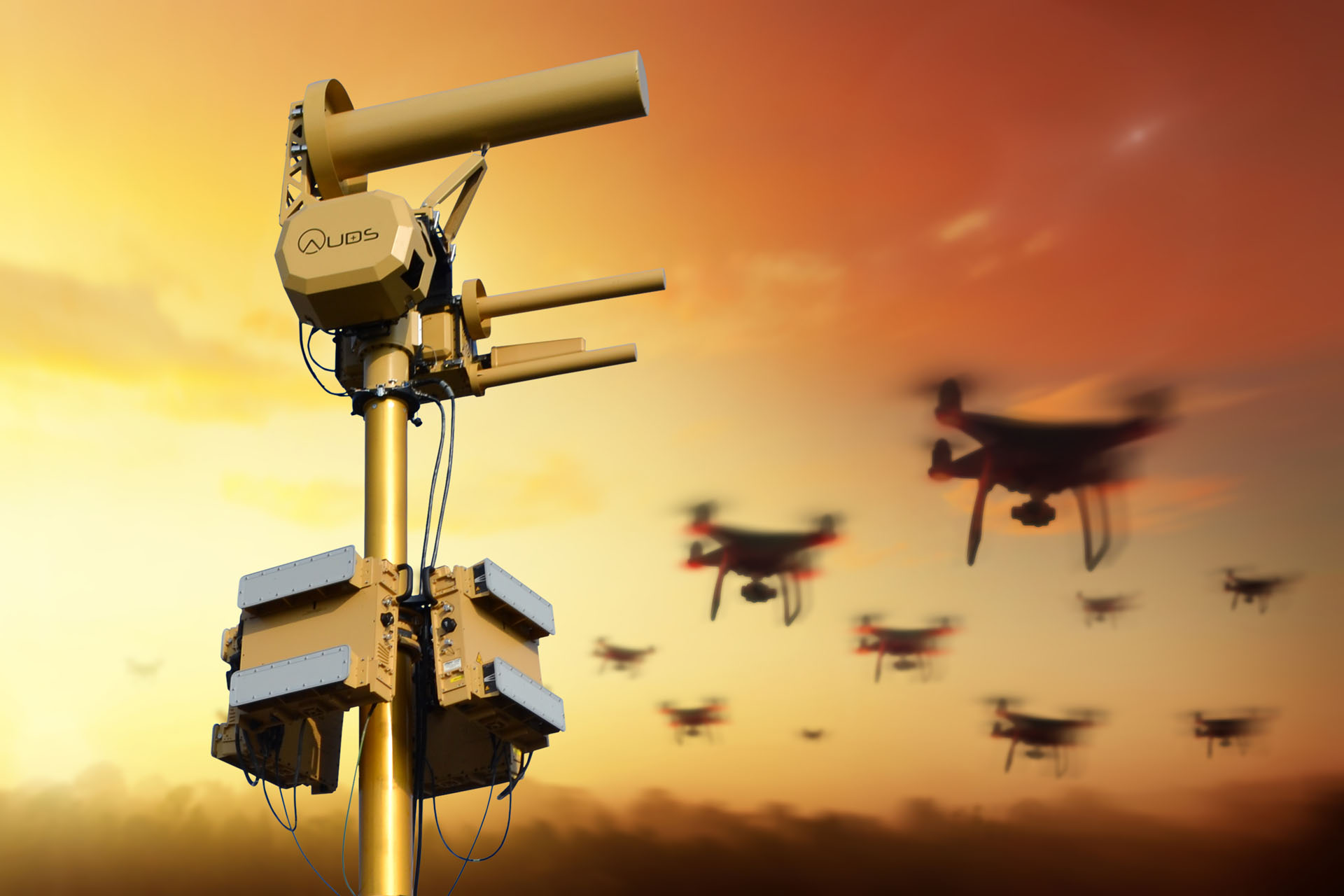
System Overview
What It Is
AUDS (Anti-UAV Defence System) is a fully integrated counter-UAS system developed by a consortium of British and American companies. It combines electronic scanning radar for detection, precision EO/IR cameras for tracking and identification, and a high-power directional RF jammer for non-kinetic defeat of drone threats.
How It Works
The system uses its Blighter A400 series radar to detect small UAS targets at ranges up to 10 km. Once detected, the Chess Dynamics Hawkeye EO/IR camera system automatically slews onto the target for visual identification. If the target is confirmed hostile, the operator activates the Enterprise Control Systems directional RF inhibitor, which jams the drone control and GPS links, causing the drone to land or return to its launch point.
Primary Capability
Integrated detection, tracking, identification, and RF jamming defeat of small UAS threats.
Combat Record / Operational History
Deployed to Iraq and Syria by coalition forces starting in 2016, where it was credited with disrupting numerous ISIS drone attacks. Also used for protection of high-profile events and critical infrastructure.
Overview
The Anti-UAV Defence System (AUDS) is a pioneering integrated counter-UAS solution that combines radar detection, electro-optical tracking, and directional RF jamming into a single, rapidly deployable turret. Developed by a consortium of three companies — Liteye Systems (US), Chess Dynamics (UK), and Enterprise Control Systems (UK) — AUDS was among the first purpose-built counter-drone systems to see operational combat deployment.
Development History
AUDS emerged from a UK Ministry of Defence requirement for counter-drone capability in the mid-2010s. Chess Dynamics contributed its Hawkeye EO/IR tracking platform, Enterprise Control Systems provided its directional RF jamming technology, and Liteye Systems served as the US distributor and integrator. The system was rapidly fielded to Iraq in 2016 to combat the growing ISIS drone threat, where it became one of the first counter-UAS systems used in combat operations.
Operational Concept
AUDS operates a three-phase kill chain. First, its electronic scanning radar detects small moving targets in the airspace and classifies potential UAS threats. The system then automatically cues its high-resolution EO/IR camera to the target for visual identification, giving the operator a clear picture of the threat. Once confirmed, the operator activates the directional RF inhibitor, which focuses jamming energy on the drone's control link and GPS receiver, disrupting the operator's ability to control the aircraft and forcing it to land or return home.
Future Development
The AUDS consortium continues to evolve the system with improved radar processing, expanded jammer frequency coverage to address new drone communication protocols, and integration with kinetic effectors for threats that are resistant to RF jamming. Enhanced AI-based target classification is also being incorporated to reduce operator workload and improve response times against fast-moving threats.
Technical Specifications
- Radar detection range: 10 km
- EO/IR tracking with thermal imager
- Directional RF inhibitor (jammer)
- Frequency bands: multiple drone control bands
- Rapid deployment time: <15 minutes
- Weight: ~100 kg (turret)
Range
10 km
2+ km (jammer)
Compatible Platforms
Deployed By
Key Features
- All-in-one detect, track, identify, defeat
- Directional jamming minimizes collateral interference
- Day/night EO/IR tracking capability
- Automated slew-to-cue between sensors
- Compact form factor for rapid deployment
Advantages
- Complete kill chain in a single system
- Non-kinetic defeat avoids falling debris hazards
- Rapid setup time
- Combat-proven system
Limitations
- RF jamming ineffective against autonomous drones
- Limited against multiple simultaneous threats
- Requires spectrum management coordination
- Jammer range shorter than detection range