Mobile and Dismounted C-UAS — Defense That Moves With the Fight
How vehicle-mounted and man-packable counter-drone systems protect maneuver forces on the move — M-SHORAD, MadIS, and the unique challenges of countering drones from a moving platform.
Quick Overview
What It Is
Mobile C-UAS systems are vehicle-mounted or man-portable counter-drone solutions designed to protect maneuver forces on the move, rather than fixed sites like air bases. They include short-range air defense vehicles (M-SHORAD), Marine Corps integrated systems (MadIS), and dismounted electronic warfare kits carried by infantry.
How It Works
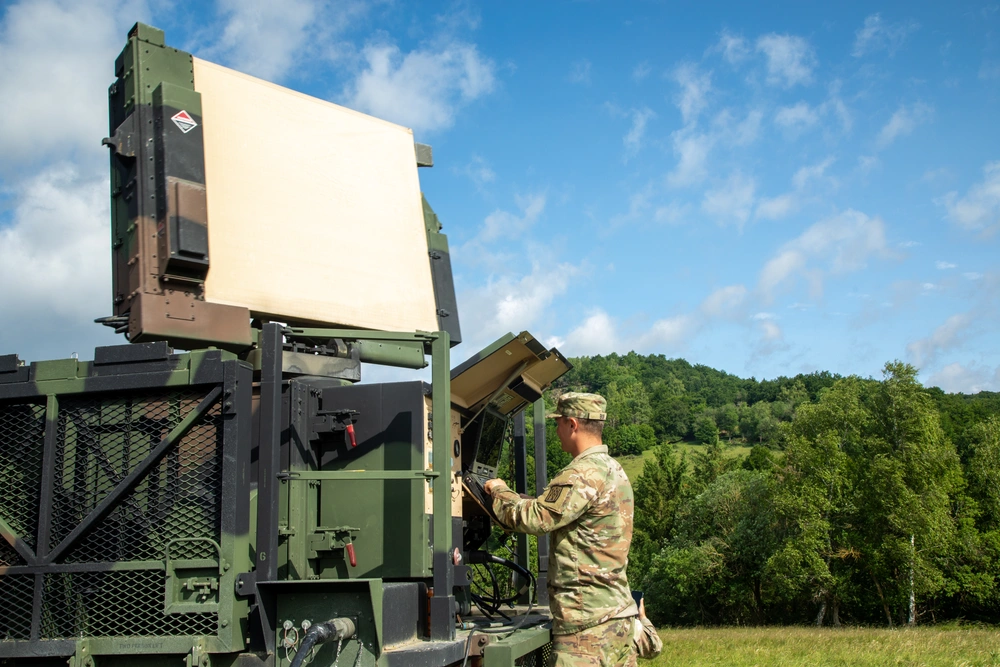
Mobile systems integrate detection sensors and effectors onto tactical vehicles or into man-packable configurations. They use compact radars, RF detectors, and EO/IR cameras optimized for size and power constraints, paired with vehicle-mounted guns, missiles, or EW systems — all designed to operate while moving, with crew served by the vehicle own soldiers or Marines.
Mobile and Dismounted C-UAS — Defense That Moves With the Fight
Fixed-site C-UAS protects air bases, headquarters, and critical infrastructure. But maneuver forces operating beyond the wire cannot bring the base defense suite with them. They need counter-drone protection that moves at their speed, operates on their vehicles, and does not require a dedicated C-UAS platoon to employ.
Mobile C-UAS is the answer — and it is one of the hardest problems in the counter-drone enterprise.
Why Mobile C-UAS Is Different
Protecting a fixed site from drones is architecturally straightforward, if not technically easy. You have permanent power infrastructure. You can position sensors at optimal locations and calibrate them precisely. Your operators work in climate-controlled shelters with multiple displays. Your rules of engagement for airspace above your own base are clear.
Now take that problem and put it on a Stryker moving at 45 mph through contested terrain.
Power constraints. A fixed-site radar can draw from the base power grid. A vehicle-mounted radar draws from the vehicle alternator, competing with communications gear, electronic warfare systems, and the vehicle own systems. Everything must be sized for the available power budget.
Sensor placement. Fixed sites can position sensors on towers with clear 360-degree coverage. Vehicle-mounted sensors are limited to what fits on the vehicle, in positions that may be blocked by the vehicle own structure, antennas, or other equipment.
On-the-move tracking. A static radar filters out ground clutter through careful siting and calibration. A moving radar must filter out the motion of its own platform, the vibration of the vehicle, and terrain features passing through the field of view — while still detecting small, slow drones against cluttered backgrounds.
Operator workload. The fixed-site C-UAS operator focuses on one mission. The vehicle crew is also navigating, communicating, maintaining security, and performing their primary combat function. The C-UAS interface must be simple enough to use under combat stress without becoming a full-time task.
Major Mobile C-UAS Systems
M-SHORAD (Maneuver Short-Range Air Defense)
The U.S. Army M-SHORAD program puts a complete short-range air defense and counter-drone suite on a Stryker A1 vehicle. The system includes:
- MHR radar: A multi-mission hemispheric radar providing 360-degree detection of Group 1-3 UAS, rotary-wing aircraft, and fixed-wing threats
- XM914 30mm cannon: Fires proximity-fuzed ammunition effective against drone targets
- Stinger missile pods: For longer-range engagement of larger threats
- Coyote interceptor integration: On some variants, the ability to launch Coyote Block 2 kinetic interceptors
- Electronic warfare suite: For non-kinetic defeat of drone control links and GPS
M-SHORAD is organic to maneuver brigades, meaning it moves with the formation rather than being attached from a separate air defense unit. This is a fundamental shift — air defense as an organic maneuver capability rather than a separate branch asset.
MadIS (Marine Air Defense Integrated System)
The Marine Corps MadIS takes a modular approach, mounting different C-UAS configurations on JLTVs and MRZR all-terrain vehicles:
- MadIS Increment 1: On JLTV, pairing the RADA MHR radar with EW systems and a 30mm cannon
- Light-MadIS: On MRZR, providing a highly mobile but capability-limited option for expeditionary operations
- Dismounted MadIS: Man-portable components that can be carried by Marines operating on foot
The Marine Corps emphasizes expeditionary capability — systems light enough to come off landing craft and operate in austere conditions without established infrastructure.
Dismounted Systems
At the smallest scale, individual soldiers and Marines carry handheld C-UAS systems:
- DroneDefender: A rifle-shaped RF jammer that disrupts drone control and GPS signals at close range
- Dronebuster: A compact handheld jammer with selectable frequency bands
- Smart Shooter SMASH: An optics system that mounts on standard rifles, using AI to calculate precise aim points against small drone targets
These systems give squad-level forces organic counter-drone capability without adding significant weight or requiring specialized operators. They are limited in range and capability but provide a critical last line of defense.
The Tactical Reality
Mobile C-UAS changes how maneuver forces think about air defense:
It is no longer a separate echelon. When every Stryker company has organic M-SHORAD, counter-drone becomes a company-level task rather than something coordinated at brigade or division. This speeds response time but requires every maneuver leader to understand C-UAS employment.
Coverage is never complete. A few M-SHORAD vehicles cannot provide umbrella coverage for an entire brigade. Mobile C-UAS provides point defense for key assets rather than area defense. Commanders must decide what to protect and accept risk elsewhere.
The cost equation shifts. Every Stinger missile fired at a $500 drone is a loss for the defense. Mobile C-UAS relies increasingly on guns and electronic warfare because they offer better cost-exchange ratios. Directed energy weapons are the next frontier — providing unlimited magazine depth at near-zero marginal cost per engagement.
Future Direction
The mobile C-UAS problem is evolving rapidly:
- Directed energy integration: The Army DE-MSHORAD prototype puts a 50kW laser on a Stryker, providing silent, invisible, cost-free engagements
- Autonomous C-UAS vehicles: Unmanned ground vehicles carrying C-UAS sensors could provide distributed detection without risking crews
- Networked fires: Mobile sensors cueing effectors on other platforms across the formation — your radar finds it, someone else gun kills it
- AI-assisted target recognition: Reducing operator workload by automating the detect-track-identify portion of the kill chain
Mobile C-UAS is the hardest variant of the counter-drone problem, but it is also the most necessary — because the fight does not stay at the air base.
Key Features
- Vehicle-mounted or man-portable
- On-the-move capability
- Integrated sensors and effectors
- Organic to maneuver units
Advantages
- Protects forces where fixed systems cannot reach
- Reduces dependence on base defense laydown
- Operates at the tactical edge
- Organic capability — no coordination delays
Limitations
- Power and weight constraints limit capability
- On-the-move tracking is harder than static
- Crew training burden on already-loaded units
- Limited magazine depth for kinetic effectors
Real World Application
M-SHORAD Strykers are deployed with U.S. Army units in Europe, providing mobile counter-drone and short-range air defense for maneuver brigades. The Marine Corps MadIS has been deployed on JLTVs with Marine Expeditionary Units, while dismounted DroneDefender and Dronebuster systems are carried at the squad level in multiple theaters.