Iranian Drone Proliferation
Iran has built one of the world's most consequential drone export programs, transforming cheap unmanned systems into a strategic tool for projecting force through proxy networks across three continents.
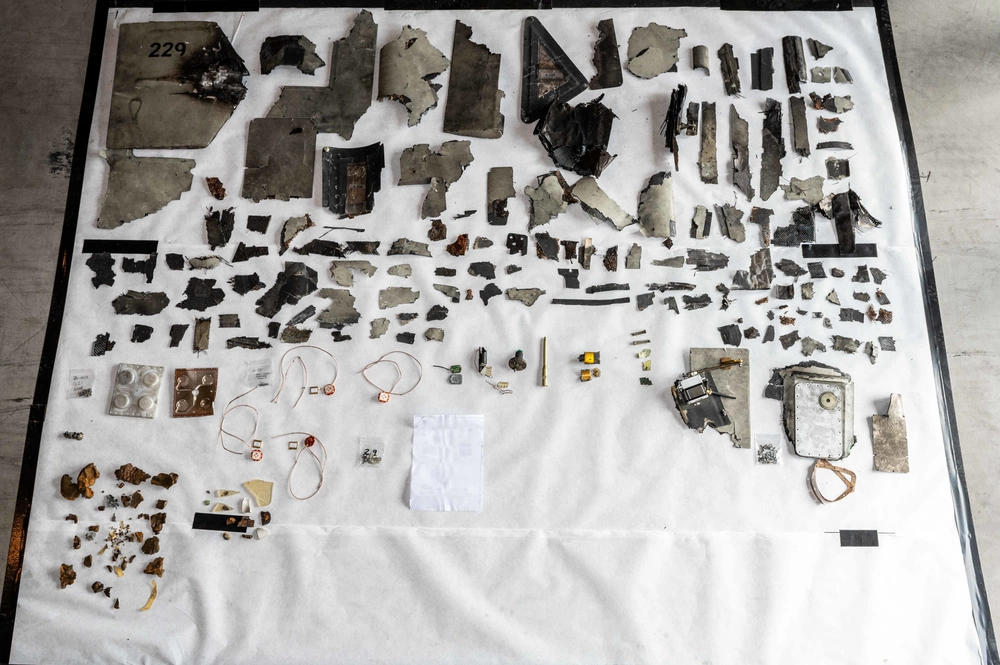
Quick Overview
What It Is
Iran's drone program represents the most significant example of a middle-power state using unmanned aerial systems to achieve strategic effects disproportionate to its conventional military capability. Beginning with reverse-engineered designs and evolving toward indigenous development, Iran now produces a family of combat drones ranging from short-range surveillance platforms to long-range one-way attack systems capable of striking targets over 2,000 km away. The strategic innovation is not the technology—most Iranian drones are technically inferior to US, Israeli, or Chinese equivalents—but the supply chain model: cheap, mass-producible systems exported or provided to proxy forces across the Middle East, enabling Iran to project destructive force without direct attribution and without risking Iranian military personnel. The Shahed family is the best-known component of this program, but it represents a fraction of the full portfolio. Iran operates armed ISR drones (Mohajer-6), medium-altitude long-endurance surveillance platforms (Fotros), and a growing range of systems specifically designed for proxy export. The combination of domestic production capability and willingness to transfer technology to non-state actors has made Iran the primary vector through which sophisticated drone capability has proliferated to groups that would otherwise have no access to it.
How It Works
The Shahed-136—Iran's primary long-range one-way attack system—is powered by a modified Mado MD550 engine, a derivative of the German Limbach L550E piston engine, which gives it cruise capability at approximately 185 km/h over distances reported at 1,700–2,500 km. The airframe is a delta-wing design with a distinctive distinctive acoustic signature (the "moped" sound that has become recognizable in Ukraine). Navigation uses GPS/INS in the transit phase with no terminal imaging seeker, limiting effectiveness to large fixed targets whose coordinates can be pre-programmed. The Shahed-131 is a smaller variant with roughly half the range and payload, optimized for shorter-range missions where the full Shahed-136 range is unnecessary. The Shahed-238 replaces the piston engine with a small turbojet, significantly increasing cruise speed to an estimated 350+ km/h and reducing the engagement window for point defense systems. Iran has claimed the 238 is operational but independent verification is limited. The Mohajer-6, Iran's premier armed ISR drone, uses an optical/IR sensor suite and can carry Qaem precision-guided munitions. Unlike the Shahed series, the Mohajer-6 is a reusable system designed for reconnaissance and precision strike, more analogous to the MQ-9 Reaper in mission profile though far less capable. Houthi forces have operated Mohajer-6 variants, designated Qasef series, against Saudi targets since 2016.
Iranian Drone Proliferation: The Strategic Calculus of the $30,000 Weapon
When three US soldiers died at Tower 22 in Jordan on January 28, 2024, killed by a one-way attack drone launched by Iranian-aligned Iraqi militias, it represented the operational maturation of a strategy Iran has been developing for over a decade. The drone that killed them cost a small fraction of the personnel it targeted, was supplied or designed by a country with which the US is not formally at war, and was operated by a non-state actor whose relationship to Iranian command authority is deliberately ambiguous. That combination—cheap, attributably deniable, effective—is the core of Iran's drone strategy.
The Technical Foundation: Reverse Engineering and Indigenous Development
Iran's drone program did not emerge from original research. It began with acquisition and reverse engineering of foreign systems, primarily American platforms captured in various circumstances over the past two decades.
The most significant acquisition was the RQ-170 Sentinel, a stealthy US reconnaissance drone that Iran claims it captured largely intact after a 2011 forced landing near Kandahar, Afghanistan, apparently caused by a GPS spoofing attack. Iran subsequently displayed what appeared to be the airframe and claimed to have extracted significant technical data. Western analysts dispute the extent of the technology transfer, noting that Iran's subsequent drone designs show limited evidence of stealth shaping. What the capture did provide was political validation—evidence that Iran could challenge US technical superiority—and accelerated domestic investment in drone development.
Earlier acquisitions came from Hezbollah operations: Iranian drones overflying Israel were intercepted and provided technical intelligence that Israel used defensively and that Iran used to understand what was detectable. The Ababil-1, Iran's earliest operational system, was a derivative of commercial designs supplemented by Soviet-era concepts from Iraqi stockpiles captured after the 1980-1988 war.
The Shahed family represents the mature output of this developmental program. The Shahed-136 design—a catamaran-wing (twin tail boom) delta-wing with piston propulsion—is optimized not for performance but for producibility. The airframe uses simple composite construction. The engine is derived from an easily manufactured commercial design. The guidance system relies on GPS, which requires no specialized sensor manufacturing. The warhead is a standard shaped charge or blast-fragmentation design. Every engineering choice reflects a manufacturing imperative: build thousands of these reliably and cheaply.
The Shahed Family: Technical Details
The Shahed-136, Iran's most prolific export system, deserves detailed technical treatment because it represents the design philosophy of the entire program.
Dimensions: Wingspan approximately 2.5 meters, length approximately 3.5 meters. Delta-wing planform with twin vertical stabilizers.
Propulsion: Modified Mado MD550 engine, a derivative of the German Limbach L550E producing approximately 50 horsepower. This piston engine gives the system its characteristic buzzing acoustic signature—the "moped" nickname comes from its similarity to a two-stroke scooter engine. Cruise speed approximately 185 km/h, cruise altitude typically 1,000–3,000 meters MSL.
Range: Officially claimed and operationally demonstrated range of 1,700–2,500 km depending on payload and profile. This is enough to reach most of the Middle East from Iranian launch sites and, when launched from Russian-occupied Ukraine, to reach targets across central Ukraine.
Guidance: GPS/INS for full-route navigation. No imaging seeker. Accuracy against large fixed targets (power substations, industrial facilities, bridges) is adequate; against point targets smaller than approximately 10 meters, accuracy degrades unacceptably. This is an infrastructure destruction weapon, not a precision strike weapon.
Warhead: Approximately 40–50 kg warhead of blast-fragmentation or shaped-charge design. Effective against industrial equipment, transformers, radar systems, and lightly protected military vehicles.
Launch: Catapult launch from a ground-based launcher—no runway required. Typical launcher is a modified commercial trailer carrying 5–8 pre-loaded Shaheds. Salvo launch allows simultaneous multi-axis attack with minimal operator time at the launcher.
The Shahed-131 is a smaller variant with approximately 900 km range and 15 kg warhead. It serves as the standard system for shorter-range proxy employment where the full Shahed-136 would be excessive.
The Shahed-238 replaces the piston engine with a small turbojet (believed to be a derivative of the TJ100 or a Chinese equivalent), increasing cruise speed to approximately 350+ km/h. This is significant for defense: the Shahed-136's low speed is one of its defensive weaknesses. An aircraft traveling at 185 km/h is relatively easy to engage with small-caliber anti-aircraft fire. At 350 km/h, engagement windows shrink considerably, and autocannon systems require significantly better fire control solutions.
The Export and Proxy Model
Iran's strategic innovation is not in the technology—it is in the distribution model.
Iran does not simply export drones and walk away. It provides training, maintenance support, and in some cases embeds Iranian technical advisors with proxy operators. It supplies munitions through channels designed to complicate attribution. It transfers production technology in some cases, enabling proxies to develop limited local manufacturing capability. And it integrates drone employment into broader strategic coordination that allows multiple proxy networks to act simultaneously, creating multi-front pressure on targeted states.
Hezbollah in Lebanon has operated Iranian drones for ISR since at least 2012, when Israel shot down a Hezbollah-operated Shahed-129 over Israeli territory. Hezbollah's drone inventory includes surveillance variants and, more recently, one-way attack drones used in strikes on Israeli border communities and military positions during 2023-2024 conflict escalation. Hezbollah has demonstrated the ability to penetrate Israeli air space with drones small enough to defeat Iron Dome's engagement envelope, forcing the Israeli Air Force to intercept manually.
Houthi forces in Yemen have been the most operationally prolific Iranian proxy drone operators. Beginning in 2016 with simple commercial-derived systems, Houthi drone and missile capability has progressively improved to include Shahed-136 equivalents (designated Shahed or Qasef locally), anti-ship one-way attack drones, and cruise missiles. The September 2019 Aramco strike demonstrated what a sophisticated coordinated attack could achieve: 18 drones and cruise missiles hit specific process modules at Abqaiq with sufficient precision to take 5% of global oil supply offline for weeks. Saudi air defenses, oriented primarily toward ballistic missile threats from the north, failed to intercept a low-altitude attack from the south and west.
Houthi attacks on Red Sea shipping from October 2023 onward have demonstrated sustained operational capability: over 100 attacks in six months against commercial and naval vessels, forcing significant rerouting of global container traffic and enabling a 100%+ increase in Suez Canal fees before the rerouting fully shifted to the Cape of Good Hope route. The economic damage to global trade from a non-state actor with Iranian-supplied drones exceeds the direct military effect by orders of magnitude.
Iraqi militia networks—Kata'ib Hezbollah, Asa'ib Ahl al-Haq, and affiliated groups—have conducted hundreds of attacks on US bases and facilities in Iraq and Syria since October 2023. The Tower 22 strike that killed three US soldiers used a one-way attack drone that apparently confused US air defenders when it approached in the vicinity of a returning US drone. This demonstrates not only technical capability but developing tactical sophistication in drone employment timing.
Russia's Acquisition and the Ukraine Deployment
Iran's delivery of Shahed-136 systems to Russia beginning in September 2022 fundamentally changed the strategic calculus of the Ukraine war. Russia had exhausted significant portions of its precision cruise missile stocks in the first six months of the conflict. The Shahed provided a cheap, mass-producible replacement for infrastructure attack missions, freeing Russia's more expensive systems for higher-priority targets.
Russia received an estimated 1,700+ Shahed-136s from Iran through 2023, with negotiations for licensed production within Russia ongoing. By 2024, Russia had begun domestic production of the system under the Geran-2 designation. The transfer represents a significant technology sharing arrangement—Iran provided not just systems but manufacturing data.
The Ukraine deployment provided Iran with the most extensive real-world performance data ever collected on the Shahed-136. Ukrainian countermeasures—F-16 intercepts, Gepard autocannon engagement, mobile jamming systems, and simple machine gun fire from pickup trucks—provided continuous feedback on vulnerability. This data is operationally valuable for both improving the design and training proxy operators on how to exploit defensive gaps.
Production Scale and Supply Chain
Iran's ability to produce Shahed-136 systems at scale depends on both domestic manufacturing and access to imported components. The Mado engine depends on components that are theoretically subject to export controls, though Iran has demonstrated the ability to procure them through third-country intermediaries and gray-market channels.
Estimated Iranian production capacity is 1,500–2,000 Shahed-136 equivalent systems per month across multiple facilities. This output, combined with Hezbollah, Houthi, and Iraqi militia deployments plus Russian resupply requirements, represents a significant industrial undertaking. Western sanctions have targeted specific Iranian drone manufacturing entities but have not succeeded in closing the supply chain gaps Iran exploits.
Counter-proliferation efforts have focused on interdicting Iranian drone shipments to Russian and Houthi recipients. The US Navy has seized multiple shipments of Iranian weapons destined for Yemen under UN Security Council Resolution 2216. These interdictions, while operationally significant, have not halted the overall flow.
Strategic Implications
Iranian drone proliferation has achieved several Iranian strategic objectives that conventional military approaches could not.
Iran has imposed significant military and economic costs on Saudi Arabia, the UAE, and Israel without direct Iranian military engagement. It has forced the US to maintain costly air defense postures at regional bases. It has demonstrated to other states—particularly those considering acquiring Iranian-allied status—that Iran can provide meaningful military capability without the full procurement cost of conventional systems.
The proliferation also degrades regional stability in ways that are difficult to attribute and therefore difficult to diplomatically counter. A Houthi drone strike on a Saudi oil facility is, legally, a Yemeni action against Saudi Arabia, not an Iranian action—even if the drone was Iranian-manufactured, Iranian-supplied, and the strike was Iranian-coordinated. This attribution gap is not an accident; it is the strategy.
For US and allied force planners, the implication is clear: any operation in the Middle East or Eastern Europe now occurs under the assumption of one-way drone attack risk from Iranian or Iranian-proxy forces. The architecture of forward operating bases, logistics nodes, and air defense postures must account for cheap, mass-employed systems that can saturate point defenses. That planning requirement represents a strategic tax on US power projection that Iran has imposed at extremely low cost to itself.
Key Features
- Mass production at low unit cost ($20,000–$50,000 per Shahed-136) enables attrition-tolerant employment
- Modular warhead design supports multiple mission types from infrastructure strike to area denial
- Piston engine propulsion reduces acoustic and thermal signature compared to jet-powered alternatives
- GPS/INS navigation provides adequate accuracy for large fixed targets without requiring precision-guidance supply chains
- Technology transfer model extends Iranian strategic reach through proxy forces without direct military commitment
- Diverse proxy network creates multiple simultaneous attribution problems for targeted states
Advantages
- Cost asymmetry: a $30,000 Shahed-136 can destroy infrastructure protected by $400,000+ interceptors, imposing sustainable attrition on defenders
- Proxy employment provides Iran with strategic distance and deniability in attribution
- Simultaneous activation of multiple proxy networks (Hezbollah, Houthis, Iraqi militias) creates multi-front pressure that overwhelms targeted state responses
- High production volume (estimated 1,700+ delivered to Russia plus domestic and other proxy stockpiles) creates strategic depth
- Low-altitude, low-speed flight profile exploits gaps in radar coverage designed for faster, higher-altitude threats
Limitations
- GPS-only terminal guidance limits effectiveness to large fixed targets; mobile high-value targets require more sophisticated seeker systems
- Distinctive engine acoustic signature provides warning to civilian populations and air defense operators
- Piston engine variants have predictable cruise speed and altitude band, simplifying intercept fire control solutions
- Dependence on imported engine components (or reverse-engineered equivalents) creates supply chain vulnerability subject to sanctions interdiction
- Proxy operator capability limits the tactical sophistication of employment—systems are often used suboptimally
Real World Application
Houthi forces in Yemen have operated Iranian-supplied drones against Saudi Arabia and UAE infrastructure since 2016, with the September 2019 strikes on Aramco's Abqaiq oil processing facility (a coordinated 18-drone and cruise missile attack) causing the largest single disruption to global oil supply in history. Iraq-based Iranian-aligned militias have conducted hundreds of drone strikes on US forces in Iraq and Syria since October 2023, with a January 2024 strike killing three US soldiers at Tower 22 in Jordan. Hezbollah has routinely employed Iranian drones for ISR over Israel and in limited strike missions. Russia began receiving Shahed-136s in September 2022 and has used them by the thousands in coordinated attacks on Ukrainian energy infrastructure, with the most intensive campaign during winter 2022–2023 causing widespread power and heating outages. Ukraine's air defense has engaged and destroyed thousands of Shahed-136s, providing the most extensive real-world data set on low-cost loitering munition effectiveness and countermeasure performance.