All Articles
Latest articles and analysis on counter-UAS technology and drone warfare

DroneShield Awarded $13.8 Million By JIATF-401 For Anti-Drone Systems On Southern Border - Defense Daily
DroneShield has been awarded a $13.8 million contract by JIATF-401 to supply counter-UAS systems for deployment along the U.S. southern border. The systems, DroneSentry-X Mk 2, will support both DHS and CBP in detecting and mitigating drone threats. Delivery will occur in phases.

Motorola Solutions to Acquire D-Fend Solutions, an Industry Leader in Counter-Drone Systems
Motorola Solutions is acquiring D-Fend Solutions, a leading counter-drone technology provider, for $1.5 billion. This acquisition aims to bolster Motorola Solutions’ capabilities in airspace security and threat mitigation. The deal coincides with increased US legislative support for state and local law enforcement to counter drone threats.
DroneShield Wins $33 Million in JIATF-401 Counter-Drone Awards - Inside Unmanned Systems
DroneShield has been awarded $33 million in contracts from JIATF-401 for counter-UAS capabilities, including a $13.8M contract for the Southern Border and a $19.3M IDIQ task order with options. DroneShield will act as a systems integrator, incorporating technologies from Echodyne, Silentium, and Sentrycs. This builds on JIATF-401’s recent $500M IDIQ announcement for broader C-UAS procurement.

DroneShield Announces US Joint Interagency Task Force 401 Contract
DroneShield has been awarded a $24.9 million contract from the US Joint Interagency Task Force 401 (JIATF 401) to provide drone detection and counter-UAS (C-UAS) capabilities. The contract focuses on equipping JIATF 401 with DroneShield's technology to combat illicit drone activity. This represents a significant win for DroneShield and expansion of its presence within US national security infrastructure.
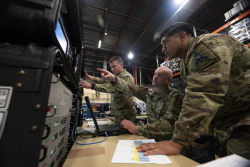
Space Force Wants 5 New Tactical Ops Centers for Electronic Warfare
The Space Force intends to establish five new tactical Electronic Warfare (EW) centers, both domestically and internationally, to bolster resilience in EW capabilities. This initiative suggests a heightened focus on contesting and protecting space-based assets. The move is likely a response to increasing threats in the electromagnetic spectrum.
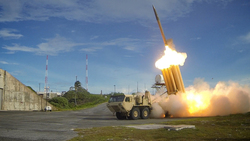
U.S. Army Requests 857 THAAD Interceptors for Indo-Pacific
The U.S. Army has requested 857 THAAD interceptors, signaling a substantial investment in bolstering air defense capabilities. This procurement is specifically intended to enhance defenses within the Indo-Pacific region. The request suggests an anticipated increase in potential aerial threats.
Ukrainian Winged FPVs reportedly Reach 102 km — Hybrid Drones Extend Strike Range Deep Behind Russian Lines - CRBC News
Ukrainian developers have reportedly achieved a 102km range with modified FPV drones utilizing detachable wings, significantly extending their strike capabilities. These 'hybrid' drones cost approximately $640 each, with wing kits as low as $25 at scale, and are being rapidly deployed with Ukrainian military support. The innovation combines the maneuverability of quadcopters with the endurance of fixed-wing designs.
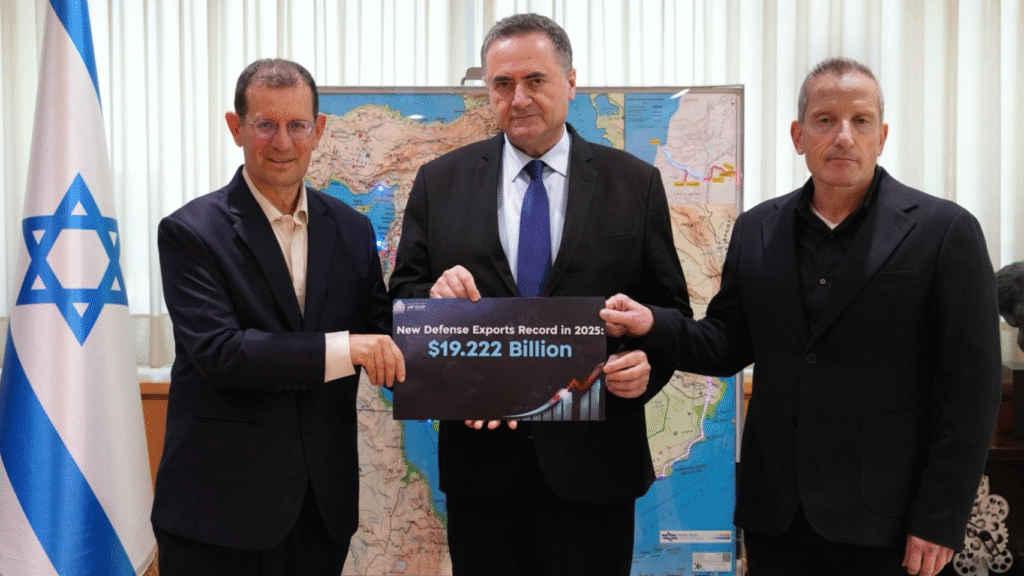
Israel’s defense exports reach record $19 billion in 2025
Israeli defense exports reached a record $19 billion in 2025, demonstrating continued strong international demand for Israeli military technology. Missile, rocket, and air defense systems comprised 29% of these exports, indicating a significant focus on these capabilities. This success highlights Israel's position as a leading defense exporter.
Ukraine: Lessons in Pick-and-Mix Defense - CEPA
Ukraine has successfully integrated a diverse, rapidly evolving mix of drone systems sourced from various suppliers – including military units, startups, and volunteers – demonstrating a functional operational capability despite fragmented procurement. This contrasts with European efforts to achieve defense unification through standardized systems, which have faced political and industrial obstacles. The article suggests Ukraine’s ‘pick-and-mix’ approach offers a potential model for adaptable defense strategies.
Laser Photonics’ Laser Shield Anti-Drone System Selected by Department of War Under MEIA Vulcan Call for Solutions – Laser Photonics
Laser Photonics’ Laser Shield Anti-Drone System (LSAD) was selected by the Department of War under the MEIA Vulcan Call for Solutions, specifically in the Counter C5ISR-T category. This selection triggers a technical exchange with government engineers to validate the system's scalability and mission alignment. The LSAD utilizes directed-energy technology to address critical UAS capability gaps.