All Articles
Latest articles and analysis on counter-UAS technology and drone warfare

FPV Drones Are the Logical Evolution of Hezbollah’s Warfighting Doctrine
Hezbollah is increasingly utilizing First-Person View (FPV) drones, particularly those guided by fiber-optic cables, in its conflict with Israel. These drones are inexpensive, difficult to counter with current electronic warfare methods, and are employed not only for kinetic attacks but also for sophisticated psychological warfare operations. Hezbollah leverages the footage from these drones to shape narratives and demoralize the opposition.

Picogrid Enables Integration of Ukraine-Proven Shahed Interceptors into US Expeditionary Air Defense Network
Picogrid is integrating Ukraine-proven Shahed interceptors into US expeditionary air defense networks using its open-systems integration technology. This involves a distributed mesh network connecting sensors and autonomous interceptors, enhancing the ability to counter low-cost drone threats. The system utilizes Picogrid's Helios and Portal ECNs with its Legion platform, alongside Perennial Autonomy’s Merops Surveyor interceptor.

Ukraine Outpaces Russia in FPV Drone Warfare, Syrsky Says
Ukraine has surpassed Russia in FPV drone production and deployment (1.5:1 ratio), achieving significant battlefield impact through increased strikes on Russian targets, including command centers, logistics hubs, and oil refineries. Ukrainian drone warfare is evolving with improved coordination and increased use of ground robotic systems, though procurement challenges remain.
Russia reveals how its new automated drone defense system works
Russia has begun deploying its Zubr automated counter-drone system to protect critical infrastructure, showcasing its operational capabilities for the first time. The system utilizes a radar with a 1.5km range to detect and track drones, automatically presenting engagement opportunities to a human operator. Each Zubr system employs four firing modules, each equipped with four 7.62mm PKT machine guns, providing a significant volume of fire.
Europe Strengthens Counter-Drone Defenses With Airbus-Alta Ares AI Interceptors After Ukraine Lessons
Airbus and Alta Ares are integrating European counter-drone interceptors into Airbus’ air defense systems (Fortion IBMS/SAMOC) to create a more responsive and cost-effective defense against UAVs. This integration links detection, identification, and interception through AI-guided systems like Alta Ares’ Pixel Lock, Black Bird, and X-Lock. The move is directly influenced by lessons learned from the use of drones in Ukraine and the Middle East.
DIU Contract Advances Rapid Edge AI Retraining for Counter-Drone Systems | UST
The Defense Innovation Unit (DIU) has awarded a contract to UST to advance rapid edge AI retraining capabilities for counter-drone systems. This focuses on improving the speed and effectiveness of AI algorithms used in detecting, tracking, and mitigating drone threats. General Atomics Aeronautical Systems is highlighted as a key innovation partner.
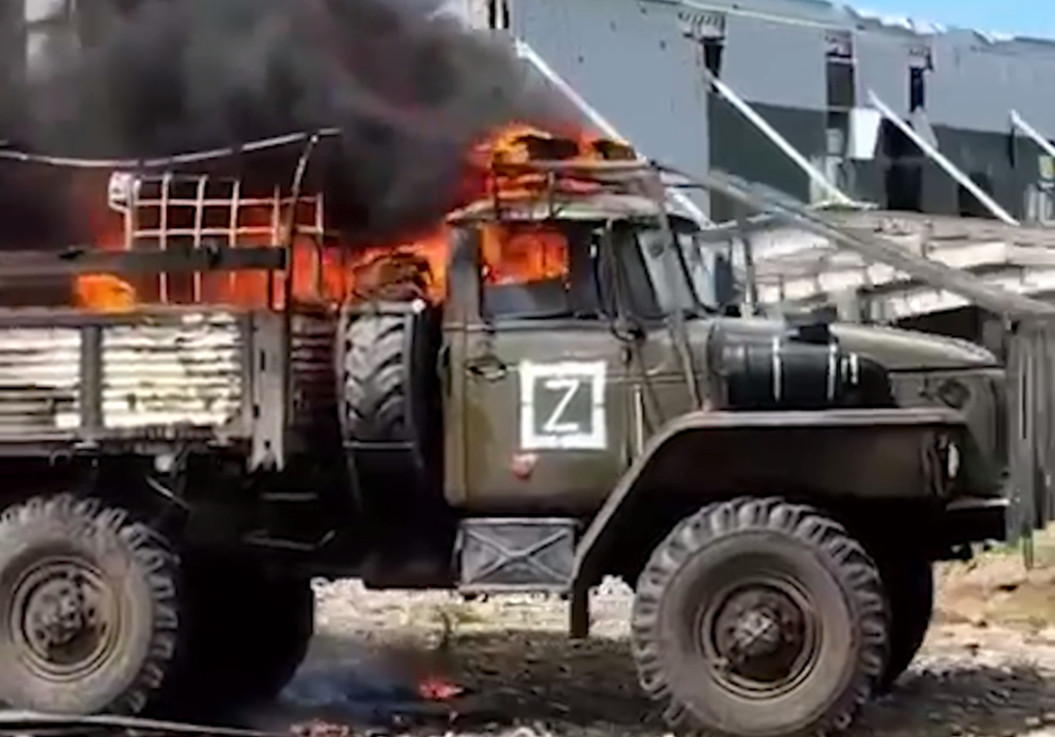
Bridge Strikes, Drone Swarms: Ukraine Targets Russia’s Key Crimea Supply Route
Ukrainian forces are actively targeting Russia’s R-280 supply route to Crimea with sustained drone attacks, causing a significant reduction (up to 71%) in military traffic. This is part of a broader Ukrainian strategy to disrupt Russian logistics and isolate occupied territories. The attacks focus on convoys, bridges, and rail links along the route.
How Drone Warfare Is Rewiring Geopolitics and Rewriting the Age of Superpowers
The article details a shift in modern warfare driven by the proliferation of cheap, commercially available drones, particularly First-Person View (FPV) drones, as demonstrated in the Russia-Ukraine conflict. This is challenging traditional military dominance based on expensive, high-tech weaponry and creating a new 'black zone' battlefield dynamic. The use of fiber-optic tethers is emerging as a counter to electronic warfare jamming.
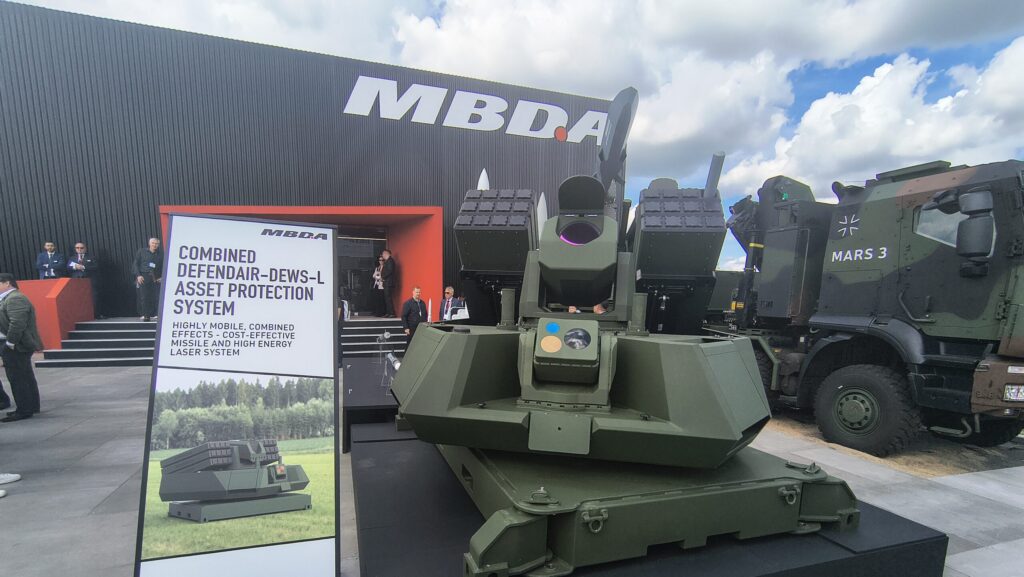
MBDA showcases hybrid high-energy laser, interceptor counter-drone system
MBDA is developing a hybrid counter-UAS system combining high-energy laser (HEL) and interceptor technologies. This system is specifically designed to counter small, fast, and low-cost drones, a growing threat in modern warfare. The system is projected to potentially enter service with the German military before the end of the decade.
US Marines Order More Counter-Drone Systems From SMARTSHOOTER
SMARTSHOOTER has received a $3.4 million (potential $5.8M) follow-on contract from the US Marine Corps for its SMASH 2000LE/3000SA counter-drone fire control systems. The system utilizes AI and computer vision to enhance squad-level drone neutralization capabilities. Deliveries are scheduled to begin in late 2026.