All Articles
Latest articles and analysis on counter-UAS technology and drone warfare

Ukraine’s DIY drones defy Russian jamming – GIS Reports
Ukraine is increasingly relying on domestically produced drones, particularly fiber-optic tethered FPV drones, to counter Russian electronic warfare and GPS jamming. A key innovation is the repurposing of the drone spool core – Ukrainians use it for avionics, while Russians prioritize explosive payload capacity despite reduced fragmentation. This highlights a strategic divergence: Ukrainian precision versus Russian saturation.
DroneShield, Terma sign MOU for layered counter-UAS - APDR
DroneShield and Terma have signed an MOU to integrate their counter-UAS technologies, focusing on layered defense solutions. The collaboration aims to enhance interoperability, sensor fusion using AI, and provide a more comprehensive approach to UxS detection and mitigation. Target markets include Denmark, the Middle East, and the Asia-Pacific region.
DroneShield & Terma agree counter-drone collaboration
DroneShield and Terma have partnered to integrate DroneShield's AI-powered counter-UAS software with Terma's air defense and electronic warfare systems, creating a layered defense approach. The collaboration focuses on interoperability testing and coordinated marketing, particularly in Denmark, the Middle East, and Asia-Pacific. This partnership aims to enhance situational awareness and improve response times against evolving drone threats.
China's War Wolves: From Commercial Tech to Combat Power - FDD
The PLA is rapidly integrating commercial robotics, termed "robotic wolves," into its military strategy, focusing on networked, autonomous systems for reconnaissance, obstacle breaching, and logistical support. The US is urged to counter this by disrupting China's supply chains, exploiting system vulnerabilities, and developing a dedicated counter-robotics strategy. This shift represents a doctrinal change towards 'intelligentized warfare' prioritizing machine execution under human oversight.
Shahed Drone: Iran’s Attrition Weapon and the Cost-Exchange Crisis of 2026 - Quwa
Iran's Shahed drone family, particularly the Shahed-136 and newer Shahed-238, is proving to be a highly effective asymmetric weapon, overwhelming Western air defenses in a simulated 2026 conflict. Production capacity, boosted by Russian manufacturing, is estimated at 400-500 units per month. The drones' low cost and high volume are creating a significant 'cost-exchange crisis' for opposing forces.
Atlas Drone Swarm: China's UAV System & India's Defense Response - Anantam IAS
China's demonstrated 'Atlas Drone Swarm' – a system of nearly 100 autonomously coordinated drones controlled by a single operator – represents a significant advancement in drone warfare capabilities. This development is prompting India to accelerate its counter-drone efforts, focusing on layered defenses and indigenous system development. The emergence of such swarms challenges traditional air defense systems designed for single, high-value targets.
The Kinetic Metamorphosis: Unmanned Systems and the Reconstruction of Modern Warfighting in Ukraine - SARVision
The conflict in Ukraine is demonstrating a fundamental shift in modern warfare, characterized by the proliferation of affordable drones and a move away from traditional air superiority models. This 'democratization of air power' allows technologically inferior forces to effectively contest airspace and project force. The conflict highlights the critical importance of electronic warfare, adaptable tactics, and decentralized operations in a high-attrition environment.
Palladyne AI Selected as One of 14 Companies for AFRL’s Relentless Wolfpack Industry Day, Advancing Networked Collaborative Autonomous Weapon Systems
Palladyne AI (via subsidiary GuideTech) has been selected as one of 14 companies to participate in the AFRL's Relentless Wolfpack Industry Day, focusing on networked collaborative autonomous weapon systems. Their SwarmOS software and SwarmStrike cruise missile are key components of their offering, and SwarmOS is also being integrated by a separate Tier 1 defense prime. This demonstrates growing industry validation of Palladyne AI's technology.
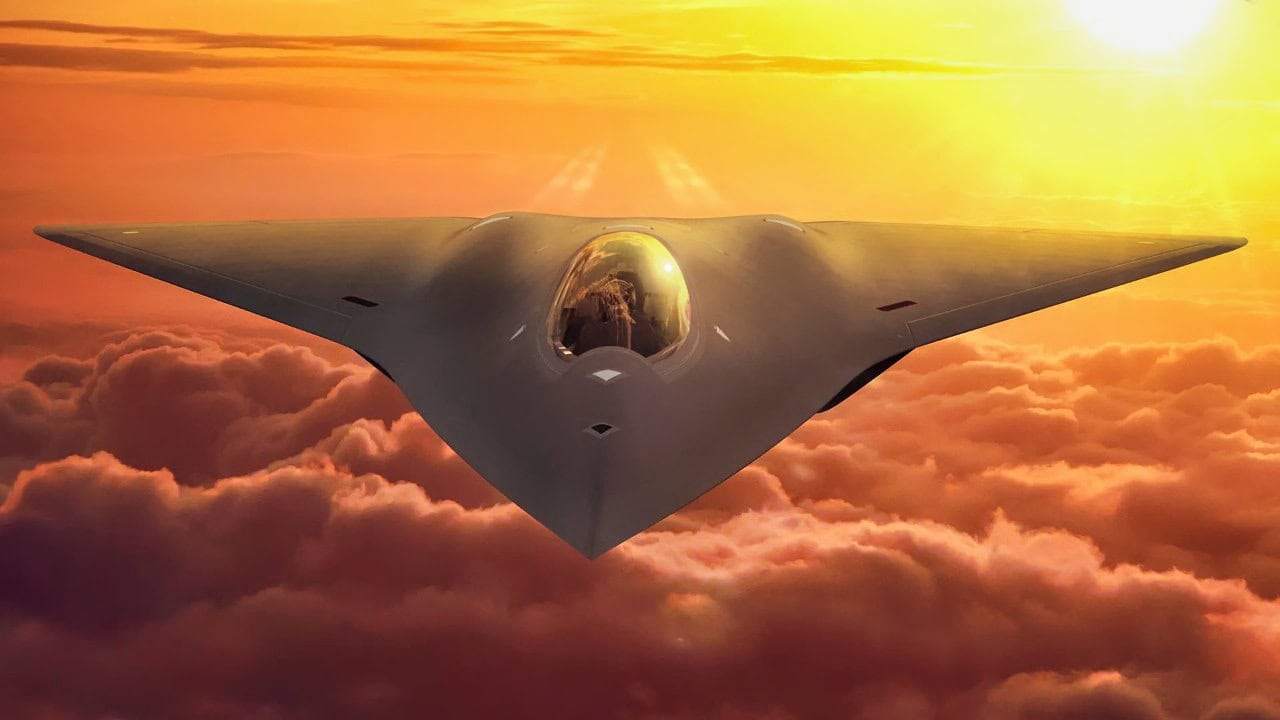
Forget the B-21 Raider or F-47: The NextRS Could Be a Mach 5 Bomber-Drone Hybrid Nothing Russia or China Could Match
DARPA and the U.S. Air Force are developing Next Generation Responsive Strike (NextRS), a hypersonic strike platform designed to achieve speeds exceeding Mach 5. The platform is envisioned as a reusable bomber-drone hybrid capable of penetrating advanced enemy air defenses. Some analysts suggest NextRS could supersede the F-47 NGAD program.

RAF Regiment Counter-UAS: Defending the Airspace and Turning Threat into Intelligence
The RAF Regiment is fielding a layered Counter-UAS capability utilizing systems like ORCUS, Ninja, and Rapid Sentry to detect, track, defeat, and potentially exploit hostile drones. A key focus is on not just neutralizing threats, but also recovering drones for intelligence gathering. These teams have been actively deployed in the Middle East supporting coalition operations.