All Articles
Latest articles and analysis on counter-UAS technology and drone warfare

The emergence of fiber-optic drones on the battlefield - The Beiruter
Fiber-optic guided FPV drones are emerging as a significant threat, bypassing traditional electronic warfare defenses like jamming and GPS spoofing. Initially developed and deployed in the Russia-Ukraine conflict, this technology is now being utilized by Hezbollah against Israel, presenting a new asymmetric warfare challenge. The drones' immunity to jamming, small size, and low flight altitude make them difficult to counter with existing systems.
Press Release (Data Sources) | HEIDELBERG
ONBERG, a new joint venture between HD Advanced Technologies (Heidelberger Druckmaschinen AG) and Ondas Autonomous Systems, unveiled a mobile, multi-layered Counter-UAS (C-UAS) system at the German Armed Forces Techshow. The system integrates detection, command & control, and effectors, designed for both military and critical infrastructure protection. It is immediately deployable and manufactured in Germany.
Modeling Small Attack Drones and Loitering Munitions
A new probabilistic model assesses the lethality of small attack drones, including FPV quadcopters, challenging the assumption that quantity alone guarantees effectiveness. The study highlights the limitations of relying solely on inexpensive drones like FPVs across all operational environments, citing differing needs based on geography, mission, and adversary capabilities. The USMC's procurement of loitering munitions (Rogue-1 & Bolt-M) exemplifies a move beyond a 'quantity over quality' approach.
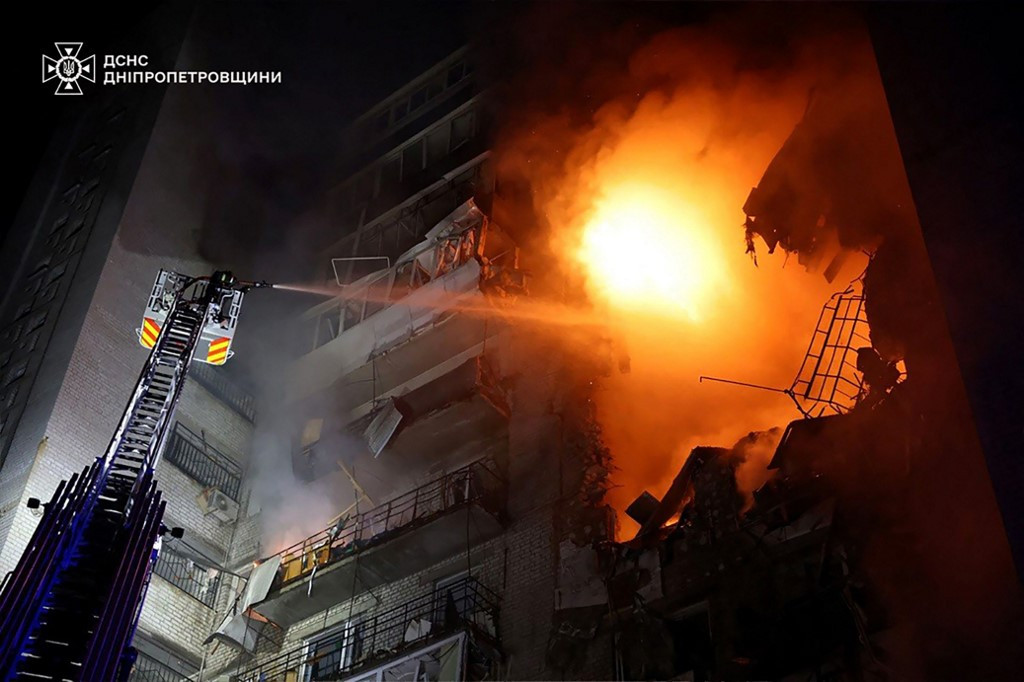
Russian Drones Target Kyiv and Dnipro Overnight
Russia conducted a widespread drone attack targeting Kyiv and Dnipro overnight, impacting civilian infrastructure and causing at least one injury. Ukrainian air defenses were active, intercepting drones but resulting in debris damage to a residential building in Kyiv. The attack occurred amidst continued heavy fighting along the eastern front.
Pentagon Selects 5 US Bases For Advanced Anti-Drone Defense Pilot Program | TheDefenseWatch.com
The Pentagon is initiating a pilot program deploying directed-energy counter-UAS systems (high-energy lasers and high-powered microwaves) at five key US military bases. This program, led by the Army's JIATF-401, aims to address the increasing threat of unauthorized drone activity near critical infrastructure. Operational testing will occur across diverse environments, including border security and strategic asset protection.

Explosions Heard in Kyiv as Russian Drones Target Capital
Kyiv was targeted by a Russian drone attack overnight, with debris falling on a residential building in the Obolonskyi district. Ukrainian air defenses reportedly intercepted 27 drones the previous night, and claim to have destroyed/suppressed 150 UAVs near Pokrovsk. Intense fighting continues across multiple axes, with Russia employing significant numbers of kamikaze drones.
Indian Strategic Studies: Drone Saturation: Russia’s Shahed Campaign
Russia is employing a strategy of drone saturation using domestically produced Shahed drones (originally Iranian) to overwhelm Ukrainian air defenses and erode morale. This campaign relies on readily available components, including Western electronics and Chinese parts, highlighting vulnerabilities in supply chain security. The article advocates for layered, cost-effective defenses and disruption of component supply to Russia.
GA-ASI Tests APKWS Integration on MQ-9A Reaper | Aeronautics and Defence Technologies
General Atomics Aeronautical Systems (GA-ASI) successfully tested the integration of the Advanced Precision Kill Weapon System (APKWS) onto the MQ-9A Reaper drone. The tests, conducted with the USAF, focused on engaging aerial targets, demonstrating a lower-cost, scalable solution for counter-drone operations and expanding the Reaper's payload flexibility. This integration allows for a higher volume of precision-guided munitions to be carried.
Unmanned Aerial Vehicle Technologies, Applications, and Regulatory Frameworks: A Scoping Review
This scoping review of 109 sources highlights the maturity of UAV technology for civilian applications, but identifies critical gaps beyond technical capabilities. Research is heavily focused on autonomy and AI, primarily within the US, Europe, and China. Successful deployment now hinges on regulatory compliance, economic viability, and ethical considerations.
Russian Offensive Campaign Assessment, May 11, 2026 | ISW
Despite a declared ceasefire, both Russian and Ukrainian forces continued limited offensive operations, including drone and artillery strikes. Ukrainian battlefield air interdiction (BAI) using drones, specifically Hornet models, is increasingly disrupting Russian ground lines of communication (GLOCs), particularly near Mariupol. Russian forces appear to be stockpiling Molniya fixed-wing drones for continued offensive use, even during ceasefire periods.