All Articles
Latest articles and analysis on counter-UAS technology and drone warfare

Army orders rifle-mounted smart scopes to down small drones
The U.S. Army has awarded Smart Shooter a $10.7 million contract for SMASH 2000LE rifle-mounted smart scopes to counter small drones, adding to a previous $6.1 million order by a Pentagon task force and a $6 million order by the Marine Corps. These systems utilize AI and computer vision to detect, track, and engage both ground and aerial targets, including tethered drones, and are part of a layered defense strategy.

Here’s how the Army plans to spend nearly $1 billion in procuring small counter drone tech
The U.S. Army's FY27 budget request allocates $994 million for small counter-UAS (c-UAS) technology procurement, funded entirely through discretionary funds. This represents a significant investment in addressing the growing drone threat. The specific systems being procured were not detailed in the provided excerpt.
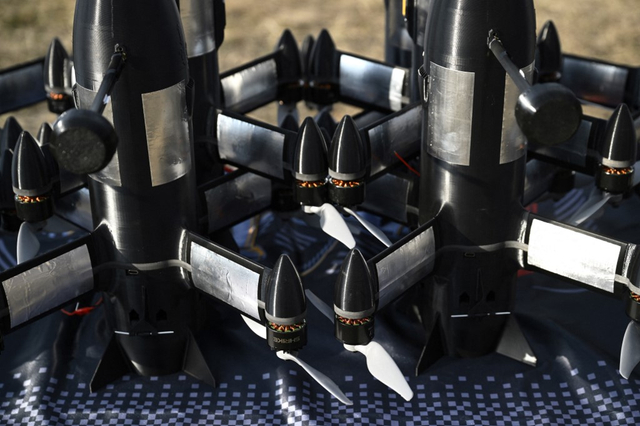
Sci-Fi or Battlefield Reality? Ukraine’s Bet on Drone Swarms
Ukraine is actively developing AI-driven drone swarms to offset Russia's numerical advantage, with initial systems already in limited combat use. While full-scale deployment is still years away, both nations are heavily invested in autonomous drone technology, viewing it as a critical component of future warfare. Ukrainian firms, like Swarmer, are leading development, while Russia is also prioritizing AI and drone capabilities.
Air Chief Marshal A.P. Singh: UAS & Counter-UAS Strategy 2026 | Mathrubhumi English
Indian Air Force (IAF) Chief Marshal A.P. Singh emphasized the evolving threat of UAS, now considered 'claws in the sky' rather than just reconnaissance assets, and the critical need for enhanced domain awareness and inter-service coordination. The IAF successfully defended against drone swarms during 'Operation Sindoor' utilizing the Integrated Air Command and Control System (IACCS). He highlighted the ongoing 'cat and mouse game' between offensive and defensive drone technologies.
Hydrix, NIOA Partner on Counter-Drone Payload for Australian Defense
Hydrix and NIOA Group have secured a $854,000 AUD contract to develop a telemetry-enabled, airborne counter-UAS payload for small drones, utilizing a kinetic effector and inert proximity fuze. The program aims for a demonstration in December and refinement through Q1 2027. This development aligns with Australia’s $5 billion investment in counter-UAS capabilities as part of its broader Integrated Investment Program.
War in Ukraine: Industrial competition, global logistics and drones | by Common Futures Conversations | Chatham House | May, 2026 | Medium
The war in Ukraine is characterized as a competition between the industrial output of democracies and authoritarian regimes, with Russia leveraging a Eurasian supply network. Ukraine has rapidly developed a leading counter-drone architecture and is evolving into a sovereign security partner. Low-cost drone technology is fundamentally altering the battlefield, challenging traditional doctrines and favoring rapid innovation.
How Fire Point's air defence system will work: specifications
Ukrainian company Fire Point is developing 'Freya', a unified air and missile defense system focused on ballistic threat interception, aiming for a 'pan-European air defense shield'. The system will utilize a domestically developed launch system, a Diehl Defence interceptor missile, and is integrating with existing Ukrainian defense infrastructure via the Link-16 protocol. Component sourcing is diversified across multiple European manufacturers.
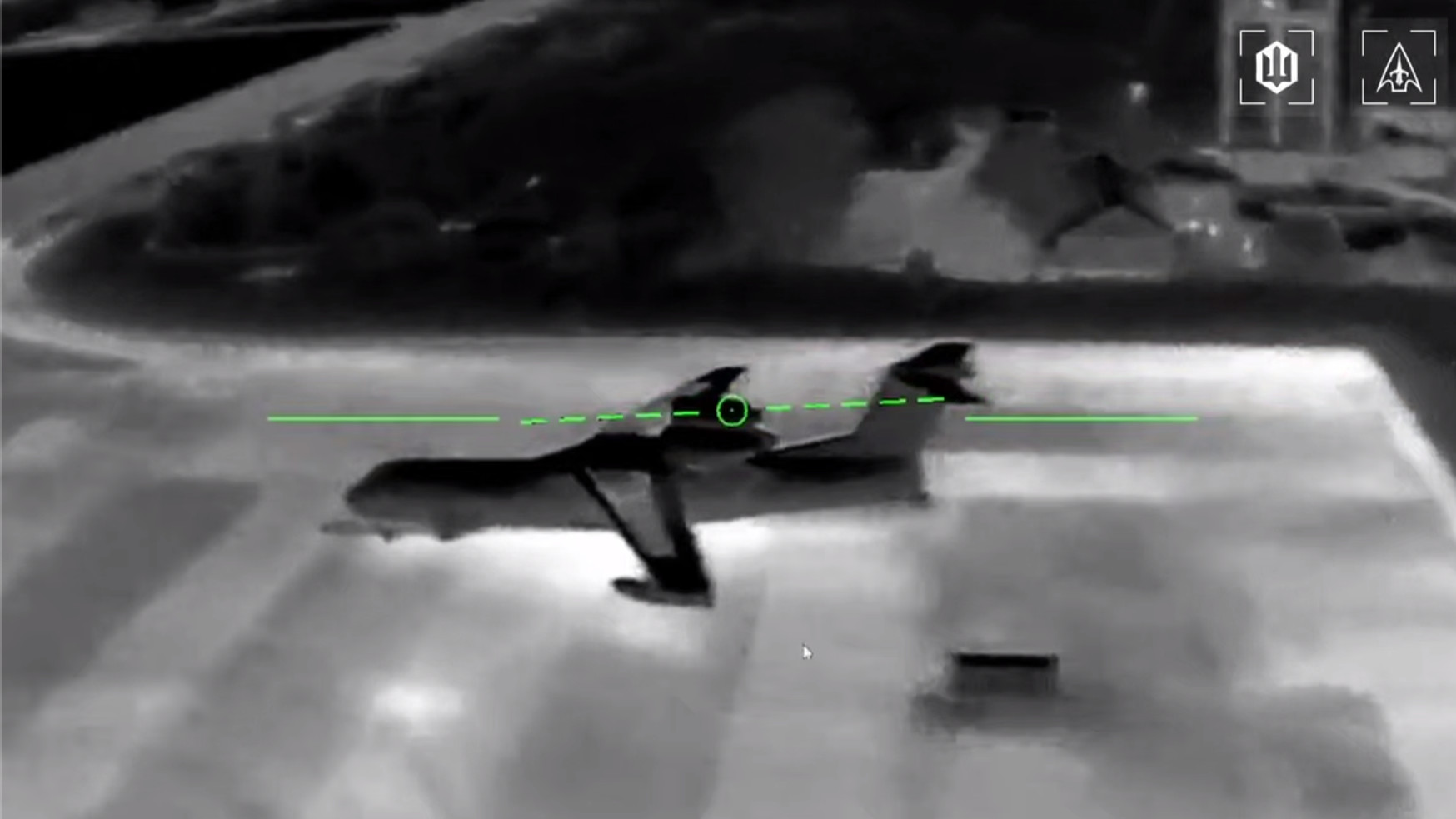
‘23 Targets Hit Overnight’ – Ukraine Unleashes Wave of Strikes on Russia, Hits Aircraft, Air Defenses, Ammo Ship
Ukraine’s Unmanned Systems Forces (USF) conducted a large-scale, coordinated drone strike against 23 Russian military targets, damaging or destroying aircraft, air defense systems, a naval helicopter, and a key oil refinery. The operation demonstrates Ukraine's expanding range and capability to strike deep within Russian territory and occupied regions. This is the latest in a sustained campaign targeting Russian military assets and logistical infrastructure.
AI Arms Race: How Autonomous Systems Are Reshaping Deterrence and Escalation Dynamics | Atlas Institute for International Affairs
The article details a rapidly escalating AI arms race in autonomous weapons systems, with the US, China, and Russia pursuing distinct strategies. The US focuses on integrated, human-supervised systems via the Replicator Initiative, while China prioritizes mass production and swarming tactics, and Russia leverages low-cost, AI-augmented systems proven in Ukraine. This competition is reshaping deterrence and escalation dynamics in a multipolar world.
S. Korea, U.S. agree to establish joint supply chain for drone, counter-drone systems | Yonhap News Agency
South Korea and the United States have signed a preliminary agreement to establish a joint supply chain for drone and counter-drone systems, aiming to enhance interoperability. This includes listing South Korean products on a U.S. Department of War online platform and working towards shared battery standards. A working group will be formed to coordinate future efforts.