300-Year-Old Church Destroyed By Russian Drone Strike in Kherson Region
AI Analysis
A Russian drone strike destroyed the nearly 300-year-old Holy Vvedenska Church in Beryslav, Kherson region, marking another attack on Ukrainian cultural heritage. The wooden church, a protected national monument, was one of the last surviving heritage sites in the area. This incident is part of a broader pattern of Russian forces targeting cultural sites since the full-scale invasion began in 2022.
Key Takeaways
- Russian drone strike on Aug. 2 destroyed the Holy Vvedenska Church, a 300-year-old wooden structure in Beryslav, Kherson region.
- The church was a protected national monument and a rare example of Zaporizhian ecclesiastical architecture, built without metal nails.
- The strike is part of a wider pattern of Russian attacks on Ukrainian cultural heritage, with over 1,707 sites damaged and 513 destroyed as of March.
- The church had survived repeated shelling since the area's liberation in 2022 but was ultimately destroyed by a drone.
- Ukrainian officials condemn the attacks as deliberate efforts to erase Ukraine's cultural identity.
Why It Matters
This attack highlights the use of drones for precision strikes against cultural heritage, underscoring the dual-use nature of drone technology in modern warfare. It also demonstrates Russia's systematic targeting of Ukrainian identity sites, which may constitute war crimes under international law. For defense analysts, this reinforces the need for enhanced cultural site protection and counter-UAS measures in conflict zones.
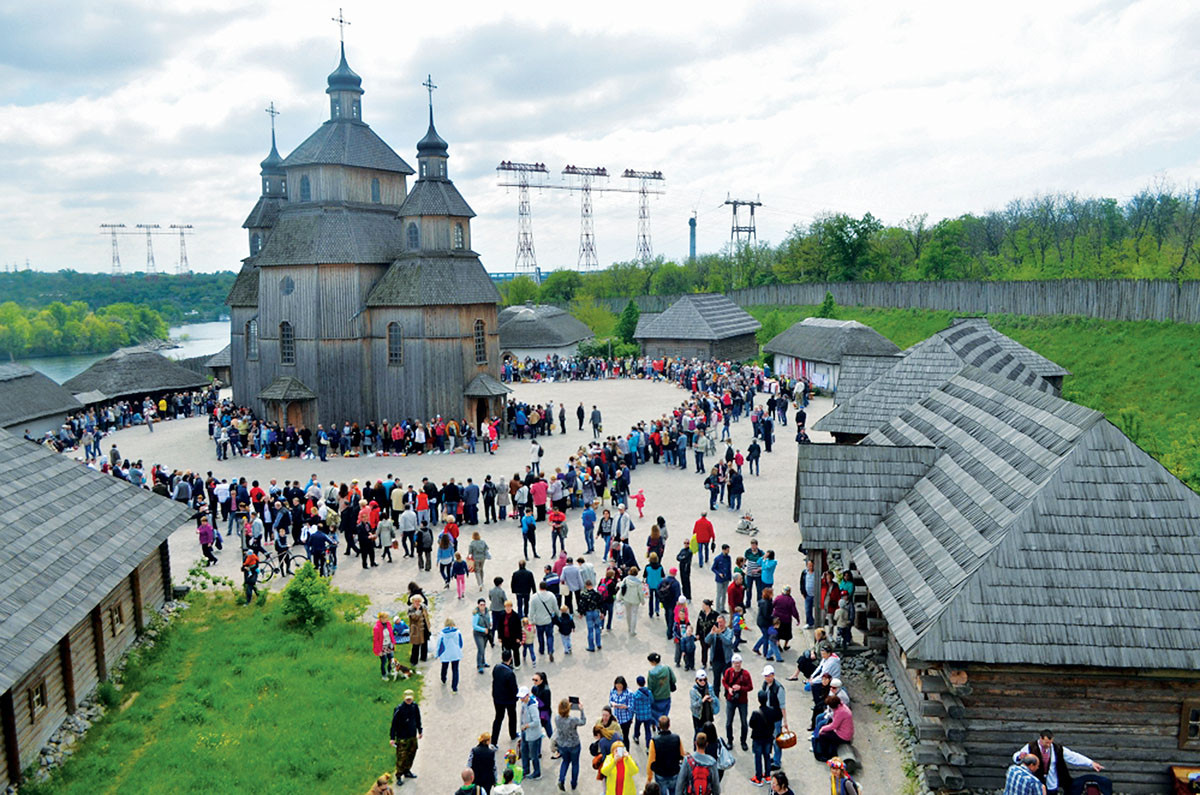
The Holy Vvedenska Church caught on fire in Beryslav, Kherson region, after a Russian drone struck the site, destroying a nearly 300-year-old wooden church that was listed among Ukraine’s protected national monuments.
The Kherson-based news outlet Most reported that the strike occurred on Sunday, Aug. 2, noting that the building, known locally as the “wooden church” was one of the last remaining religious sites in liberated parts of Kherson region to have escaped serious damage from repeated Russian barrages.
Follow our coverage of the war on the @Kyivpost_official.
The church was originally built in 1726 using oak timber and wooden pegs, completely without the use of metal nails, prompting historians to classify it as a rare example of Zaporizhian ecclesiastical architecture. It belonged to the architectural tradition of the Middle Dnipro.
Poltava Cossacks dismantled the structure in 1785 and carried its pieces along the Dnipro River from Perevolochna to the Kyzikermen Fortress, the site that later became Beryslav, according to Most.
Originally dedicated to Christ’s Resurrection, the church was relocated to the Vvedenske Cemetery on the outskirts of Beryslav in 1853, where it was rededicated to the Entry of the Most Holy Theotokos into the Temple.
Soviet authorities shut down the church after the Bolshevik takeover and converted it into a storage facility. Reportedly, authorities even considered dismantling the wooden structure for firewood.
Religious services resumed during World War II, when German forces occupying the area built a cemetery beside the church.
The church has remained under the authority of the Novokakhovka diocese of the Moscow-linked Ukrainian Orthodox Church, led by Metropolitan Filaret (born Yuri Zverev), a Russian citizen.
In 2023, the Beryslav City Military Administration appealed to Ukraine’s Ministry of Culture and Information Policy to transfer the monument back to state ownership, however, the request remained unanswered, according to Most.
Separately, United24Media reported that Russian occupation authorities in occupied Crimea have shrunk the protected perimeter around a medieval archaeological site in Sevastopol, clearing ground for a luxury hotel development tied to Russian billionaires Boris and Arkady Rotenberg – both longstanding allies of Kremlin leader Vladimir Putin.
Archaeologists reportedly excavated 245 square meters (about 2,637 square feet) to formally exclude the site from its protected heritage status. Roughly 211 square meters (about 2,271 square feet) of that area fell within the officially protected zone, United24Media reports.
The strike on Vvedenska Church fits a wider pattern. Since the beginning of Russia’s full-scale invasion of Ukraine in 2022, its armed forces have repeatedly targeted Ukrainian cultural and heritage sites, part of what Ukrainian authorities describe as a broader effort to erase Ukraine’s cultural identity.
As of March, a total of 1,707 cultural heritage sites and 2,503 cultural infrastructure facilities have been damaged, with more than 513 completely destroyed.
“Russia is purposefully destroying Ukraine’s cultural heritage and attacking civilians. We document every such crime. Cultural heritage cannot be a target,” said Deputy Prime Minister for Humanitarian Policy and Minister of Culture Tetiana Berezhna.
In a separate wave of strikes on June 15, Russian forces struck the UNESCO World Heritage site, Kyiv-Pechersk Lavra, damaging the historic Orthodox monastery in the capital and prompting the UN Security Council to convene.
Kyiv Post is Ukraine’s first and oldest English news organization, reporting since 1995. Its international reach – 97% of readers are outside of Ukraine – make it truly Ukraine’s global voice.