Israel’s IAI unveils ‘Hypnosis’ system for confusing enemy drone swarms
AI Analysis
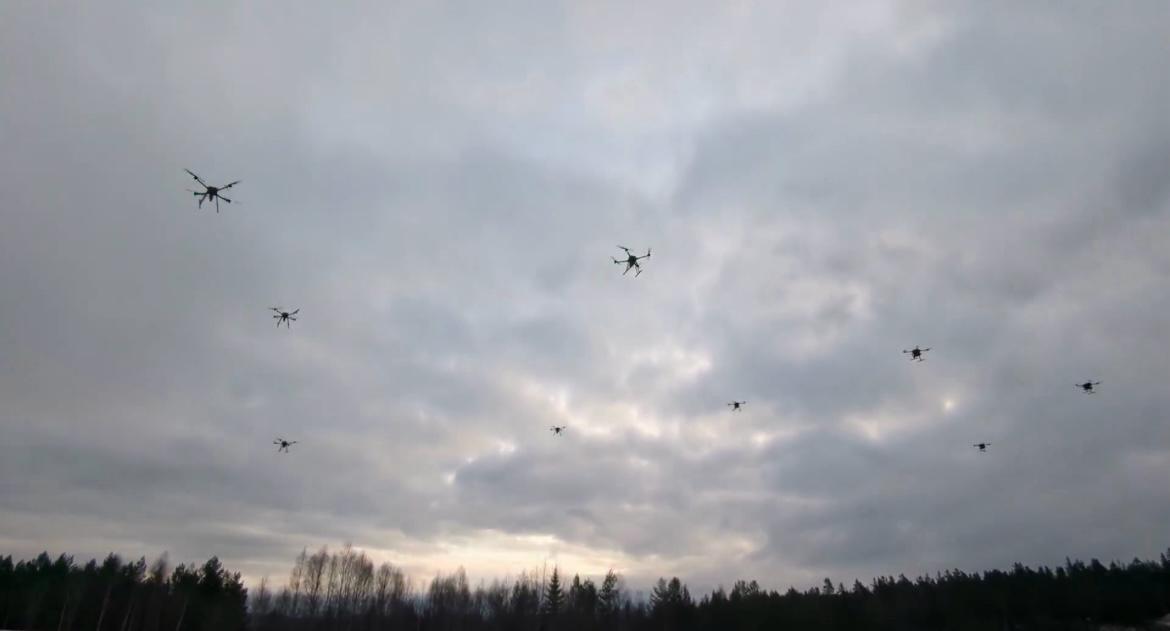
Israel Aerospace Industries has unveiled the 'Hypnosis' system, a soft-kill counter-UAS solution that uses mobile stations to jam and spoof satellite navigation signals of drone swarms. The system is designed to address the challenge of overwhelming numbers of drones that can saturate traditional kinetic defenses.
Key Takeaways
- IAI's Hypnosis system is a soft-kill (non-kinetic) air defense against drone swarms.
- It consists of an array of mobile stations that emit jamming and spoofing signals to disrupt command-and-control and satellite navigation of incoming threats.
- The system leverages IAI's expertise in navigation warfare (NAVWAR).
- Hypnosis is intended for scenarios where large numbers of drones make kinetic intercepts impractical.
- The unveiling comes amid heightened tensions in the Middle East and ongoing drone warfare in Ukraine.
Why It Matters
Drone swarms pose a growing threat to traditional air defense systems due to their ability to saturate defenses. Hypnosis offers a scalable, cost-effective soft-kill solution that can neutralize multiple drones simultaneously without expending expensive interceptors, potentially changing the calculus for defending critical infrastructure and military assets against swarm attacks.
JERUSALEM — Israel Aerospace Industries has unveiled a new air defense system designed to jam and spoof the satellite navigation signals that guide aerial threats, the company announced this weekend.
The system, called Hypnosis, consists of an array of mobile “stations” around a defended area, working in unison to disrupt the command-and-control signals of incoming threats, according to the manufacturer.
The company said the technology is the product of IAI’s experience in navigation warfare, of NAVWAR.
The soft-kill weapon is meant as a method for taking out large numbers of drones at once, in situations where hard-kill — or kinetic — intercepts would be tricky to execute because of the number of airborne objects.
The unveiling comes amid a resurgence of military confrontation between the United States and Iran and heightened tension across the Middle East as a result of it, as well as an intensifying exchange of missile and drone strikes between Russia and Ukraine.
Defense companies around the world have been working on technology enabling swarms of drones to attack targets with an inherent logic of their own.
Similarly, companies are also chasing defensive offerings for such scenarios.
Swarms are difficult to defend against because they can saturate and overwhelm traditional air defense networks, increasing the chances of at least one warhead making it through.
Tzally Greenberg is the Israel correspondent for Defense News. He has experience reporting on economic affairs as well as defense and cyber companies.