US Air Force seeking air defense missile system to protect air bases
AI Analysis
The U.S. Air Force has issued a Request for Information for a new Ground-Based Launcher air defense system to protect its installations from cruise missiles and drones, ranging from small Group 1 to large Group 5 UAVs. The system must have high magazine depth, rapid firing rates, and integrated command and control, reflecting lessons from recent drone and missile attacks on U.S. bases in the Middle East and the Russia-Ukraine war.
Key Takeaways
- The Air Force seeks industry partners for a Ground-Based Launcher to defend against cruise missiles and drones (Group 1 to Group 5).
- RFI requirements include high firing rate, large magazine depth, and seamless C2 integration for rapid sensor data dissemination.
- The system should be self-contained, transportable, with laser illuminator fire control and integrated sensing.
- Recent attacks on U.S. bases in the Middle East by Iranian drones and missiles, and the Russia-Ukraine conflict, highlight the need for robust air base defense.
- The RFI references the 2012 Joint Staff publication JP 3-01 on countering air and missile threats.
- There is ongoing debate about the Air Force relying on the Army for airfield air defense, with calls for the Air Force to develop its own capabilities.
Why It Matters
This initiative signals a major shift in U.S. Air Force doctrine toward self-sufficient air base defense, driven by real-world threats from drones and cruise missiles. A successful system could set a new standard for protecting expeditionary bases and reduce reliance on Army assets, with implications for global force posture and defense industry contracts.
The U.S. Air Force is out to find an air defense missile system to defend the service’s installations against cruise missiles and drones.
The goal is to “identify industry partners capable of providing a Ground-Based Launcher solution to protect United States Air Force assets,” according to a Request for Information submitted by the service. The request has a response deadline of Aug. 6.
The RFI lists requirements that suggest an air defense system that can handle a variety of threats. In addition to intercepting cruise missiles, the Air Force wants missiles that can destroy drones ranging in size from Group 1 (maximum gross takeoff weight of less than 21 pounds) to Group 5 (maximum weight of more than 1,320 pounds).
This would mean a single system that could stop everything from a small kamikaze drone to a giant Global Hawk-sized UAV.
The query comes as U.S. and allied military bases in the Middle East have been struck hard by Iranian drones and missiles.
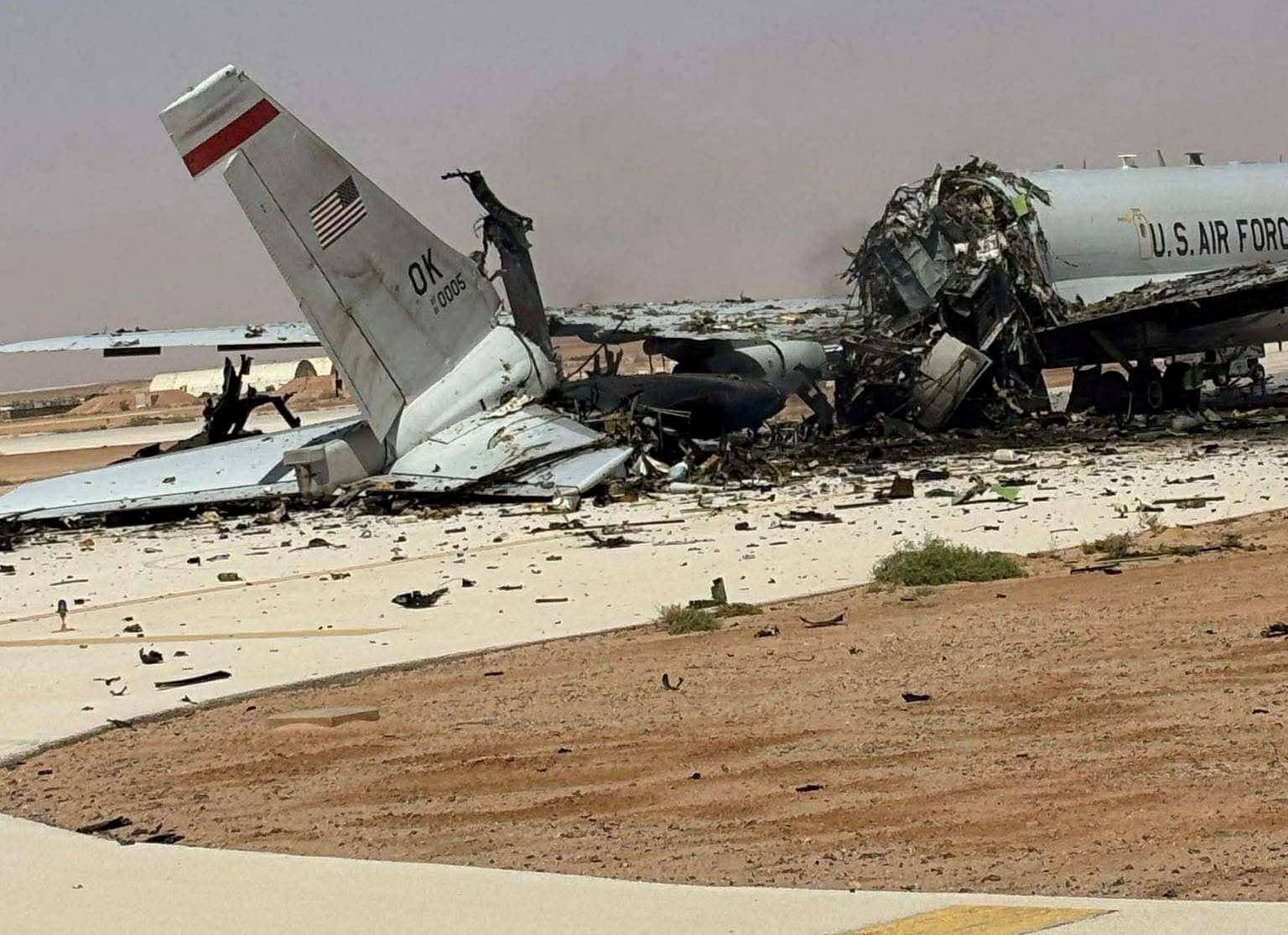
Iranian weapons destroyed a valuable U.S. E-3 Sentry AWACS, damaged at least five KC-135 tankers at Saudi airbases and devastated multiple air defense radars.
Likewise, Russia and Ukraine have been hammering each other with waves of drones and missiles that overwhelm air defenses and deplete stockpiles of interceptors.
Not surprisingly, the Air Force wants a defense system with plenty of ammunition. Contractors are asked to “outline operational performance metrics, specifically the firing rate across all magazines and the total magazine depth, while demonstrating seamless command and control (C2) system integration for rapid sensor data dissemination and weapons cueing.”
The RFI suggests a desire for a self-contained system that is easily transportable, uses a laser illuminator for fire control and possesses integrated sensing capabilities. The RFI lists 11 “critical baseline attributes” for the Ground-Based Launcher, including cost, transportability, manpower requirements and built-in testing diagnostics for maintenance and safety.
As background, contractors are asked to refer to the 2012 Joint Staff publication JP 3-01, “Countering Air and Missile Threats.”
Even before the Iran War, the defense of Air Force bases spurred debate. Last year, a strategist on the Air Staff argued that the Air Force should stop relying on the Army for primary air defense of airfields.
He warned that expeditionary airbases lack sophisticated systems like the Patriot, and that the Air Force’s own security forces are poorly equipped for air defense.
Michael Peck is a correspondent for Defense News and a columnist for the Center for European Policy Analysis. He holds an M.A. in political science from Rutgers University. Find him at theuncommondefense.com. His email is mikedefense1@gmail.com.