Anduril pitches a robot wingman for US Army helicopters
AI Analysis
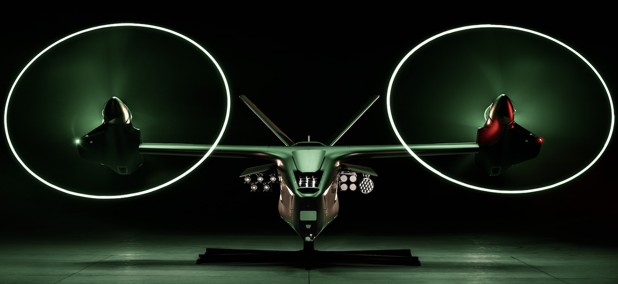
Anduril unveiled Thunder, an autonomous tiltrotor drone wingman for US Army helicopters, capable of carrying a variety of munitions including counter-UAS effectors. Developed with Archer Aviation, it aims to provide affordable, attritable air power, with first flight next year and production by 2030. The announcement follows Anduril's Air Force CCA contract win and targets both US and international customers.
Key Takeaways
- Anduril pitches Thunder, an autonomous tiltrotor drone wingman for US Army helicopters, developed with Archer Aviation.
- Thunder is group 5-sized, hybrid-electric, VTOL, and designed to fit in a standard shipping container.
- Can carry up to 10 Hellfire missiles, 16 launched effects, 76 70mm rockets, and 12 counter-UAS effectors.
- First flight planned for next year; production rate expected by 2030-2029 timeframe.
- Company claims Thunder will cost a fraction of an Apache and can be affordably lost if necessary.
- Anduril recently won the Air Force's CCA drone wingman contract; Thunder follows similar principles.
- Boeing also unveiled a similar tiltrotor drone wingman concept for the Army, leveraging MQ-28 Ghost Bat lessons.
Why It Matters
This development signals a shift towards integrating affordable, autonomous drone wingmen with manned helicopters, potentially transforming attack aviation by increasing firepower and reducing pilot risk. The inclusion of counter-UAS effectors also highlights the growing importance of drone defense in future battlefield scenarios.
Courtesy / Anduril
Stay Connected
Thomas Novelly
LONDON—One month after winning the U.S. Air Force’s drone wingman contract, Anduril announced plans to make an autonomous attack tiltrotor that the company hopes the U.S. Army will pair with its helicopters for future missions.
Nicknamed Thunder, the vertical-takeoff-and-landing rotorcraft is to be autonomous, heavily armed, hybrid-electric powered, and roughly group five-sized. It’s being designed to “be packed into a standard shipping container” for easy transport, Anduril said in a press release. It is being developed with Archer Aviation, another California-based firm, with first flight envisioned for next year.
Company officials say multiple uncrewed tiltrotors could accompany each crewed helicopter on a mission.
“By teaming three Thunder aircraft with each Apache, for example, a Combat Aviation Brigade will achieve a three times increase in available munitions without placing additional pilots in harm’s way, all at a fraction of the cost of a similarly-sized formation of exclusively crewed aircraft,” Anduril said in a statement.
In June, the Air Force announced that it would take the California-based firm's drone wingman prototype into production. The new tiltrotor concept is following some of those same principles, such as having a commercial product that can be affordably and efficiently produced, company officials told reporters.
“It's going to be an absolute, you know, a fraction of the cost of something like a Cheyenne or something like an Apache,” said Chris Brose, Anduril’s president and chief strategy officer. “It is going to be a system that you obviously want to get back when you launch it, but you can afford to lose it if you have to.”
“I think the Pentagon, and the Army in particular, have never been more open to these kinds of new ideas and sort of collaborations than ever before,” Brose said.
Chris Arnott, the company’s senior vice president of maneuver dominance, told reporters Thunder is being designed to hold a wide range of armament: up to ten air-to-ground missiles, such as Hellfires; 16 launched effects;’ or 76 70mm rockets, plus 12 counter-UAS effectors in the nose of the rotorcraft, Anduril’s press release said.
Arnott said they’ve been working on Thunder for around two to three years. He said that if it sells, Anduril could start building it by the end of the decade.
“Depending on kind of how quick the demand kind of goes from there, is then when we hit production, etc., but we're talking about being at rate production in the 2030-29 timeframe,” he said.
While the company officials repeatedly mentioned the Army during a roundtable with reporters, the decision to announce and debut a model at Farnborough means they want the attention of international customers.
“It's a global air show. You know, we'll have the eyes of pretty much everybody that we're interested in discussing this system with,” Brose said. “I think we look forward to discussing it, obviously in the U.K. with the U,K., but then obviously also with the many European partners that are going to show up to Farmborough and, obviously, the US Army as well.”
Other companies have similar ideas.
Last year, at the Association of the U.S. Army’s conference in Washington, D.C., Boeing officials unveiled their own tiltrotor drone wingman concept to support the service’s helicopter fleet. The company used lessons from its MQ-28 Ghost Bat aircraft to design the concept.
NEXT STORY:
Marines eye cloudless networks to keep AI tools running when the cloud goes down